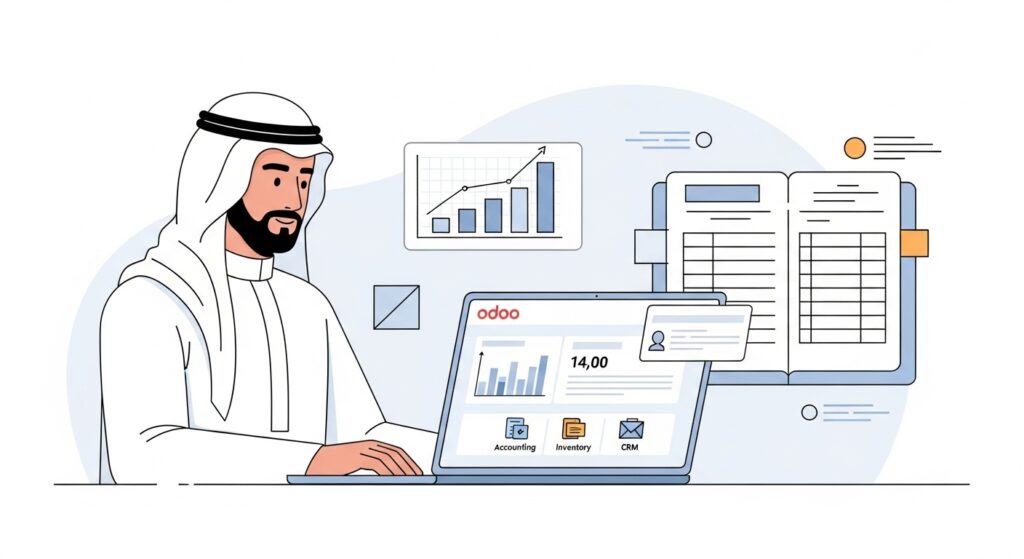

Your Safe Guide to Migrating to Odoo ERP Without Losing Company Data
It is completely normal to feel anxious about moving your company’s entire digital history into a new system. Embarking on a comprehensive digital transformation is one of the most critical milestones in a company’s growth cycle, but the fear of losing years of customer histories, complex financial ledgers, and intricate vendor agreements often paralyzes decision-makers. A botched transition can result in crippled operations, severely damaged customer relationships, and irreconcilable accounting errors. Transitioning to a modern, robust platform like Odoo does not have to be a gamble. When executed methodically, an Odoo implementation is a seamless, highly secure process that protects your intellectual property. In this comprehensive guide, we will walk you through the definitive blueprint for migrating your enterprise data safely, ensuring that your financial integrity remains pristine and your business operations never skip a beat. 1. Pre-Migration: The Power of the Ironclad Backup The golden rule of any IT infrastructure project is simple: never touch live data without a safety net. Before a single record is exported or a mapping script is written, your IT team must secure your current ecosystem. Creating the Immutable Snapshot The very first step is performing a comprehensive, encrypted backup of your existing databases. This snapshot should be stored in a secure, isolated environment (preferably an offline server or a highly secured third-party vault). This backup guarantees that no matter what anomalies occur during the data extraction or cleansing phases, you always have a pristine, untouched version of your historical data to revert to. Conducting a Data Audit Before moving to your new enterprise resource planning system, you must audit what you currently own. Not all historical data is valuable. Do you really need to migrate the contact information of leads from ten years ago who never made a purchase? An audit helps you identify “dead data,” allowing you to migrate only clean, actionable, and legally required information into your new Odoo database. 2. Structuring Financial Data and Setting Opening Balances Financial data is the most sensitive component of any migration. When transitioning to Odoo accounting software, precision is non-negotiable. Odoo operates on a strict double-entry accounting system, meaning your migrated financials must balance perfectly on day one. Mapping the Chart of Accounts Your legacy software’s Chart of Accounts (CoA) will likely differ from Odoo’s localized, standardized structures. During this phase, your accounting team must work closely with implementation experts to map legacy account codes to their new Odoo counterparts. This ensures that historical reporting remains continuous and coherent. The Critical Role of Opening Balances You cannot simply dump historical invoices into a new accounting system without establishing a baseline. The transition relies heavily on correctly setting your opening balances. This process ensures that your bank accounts, accounts receivable, accounts payable, and inventory valuations are perfectly aligned. Financial Data Migration Mapping Financial Component Legacy System State Target State in Odoo Accounting Software Chart of Accounts Fragmented, outdated numbering codes. Standardized, localized hierarchy aligned with current tax laws. Accounts Receivable Open invoices mixed with closed historical data. Active open invoices imported to establish accurate opening balances. Inventory Valuation Manual Excel sheets or disconnected ledgers. Automated perpetual inventory valuation synced with the general ledger. Fixed Assets Tracked in external depreciation spreadsheets. Registered directly in the asset module with automated depreciation schedules. 3. Data Cleansing and the Migration Phase With your financials mapped and your backups secured, the actual data migration begins. This is where legacy data is extracted, transformed, and loaded (ETL) into Odoo. Transformation and Formatting Odoo requires data to be formatted in very specific ways (usually via CSV or Excel templates). Customer records must be separated into distinct fields for Street, City, State, and ZIP codes. Inventory items must have their corresponding units of measure, cost prices, and barcode numbers perfectly aligned. Sandboxing and Trial Runs Never migrate data directly into your live production environment. A professional Odoo implementation utilizes a “Sandbox” or testing database. The implementation team will run a trial migration, importing your cleansed data into this sandbox. This allows your department heads to log in and verify that the data has populated correctly. If a product’s cost price shifted to the retail price field during the import, it is caught and corrected in the sandbox, completely protecting your final launch. The 5-Step Data Migration Checklist Phase Action Required Responsible Party Risk Mitigation Goal 1. Assess Identify data sources and run a complete system backup. IT & Management Prevent catastrophic data loss. 2. Cleanse Remove duplicate contacts, outdated inventory, and dead leads. Department Heads Ensure only high-quality data enters Odoo. 3. Map Match legacy database fields to Odoo’s database architecture. Implementation Experts Prevent misaligned data rows (e.g., wrong phone numbers). 4. Sandbox Perform a test run of the data migration in a safe environment. Entire Project Team Identify formatting errors before they impact live operations. 5. Validate Verify opening balances and conduct User Acceptance Testing. Accounting & Finance Ensure 100% financial accuracy for the Go-Live date. Teams migrating away from an erp next gold instance usually keep their historical transaction data intact through Daysum’s structured import process, so nothing is lost in the switch. Request a migration assessment for your existing system. 4. Execution: Deploying Securely to the Cloud Once the data mapping is perfected and the sandbox environment has been thoroughly vetted and approved by your stakeholders, it is time for the final push. Modern Odoo deployments are predominantly hosted in the cloud (such as Odoo.sh or dedicated private cloud servers). Moving your migrated data to the cloud offers immense security benefits. During the Go-Live weekend, your implementation team will freeze the old system, extract the final delta data (any transactions that occurred during the testing phase), and push the finalized database to your highly secure, encrypted cloud servers. Utilizing cloud-based ERP deployments guarantees that your newly migrated database is immediately protected by enterprise-grade firewalls, multi-factor authentication, and automated daily backups. 5. Post-Migration: Securing Adoption Through Training The most technically flawless data migration will fail if your staff does not