HRMS

Personnel affairs software

Automate Complex Shift and Overtime Calculations for Your Employees with One Click

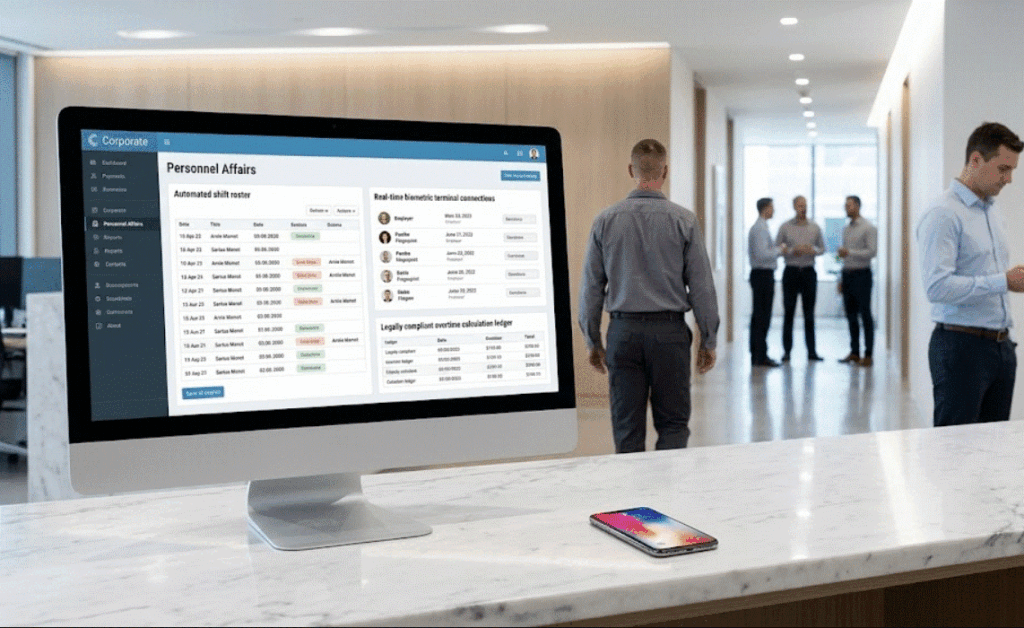
In the fast-paced corporate environments of Riyadh, Dubai, and Cairo, managing a growing workforce is one of the most critical challenges a business faces. As B2B enterprises, manufacturing plants, and large-scale retail chains expand their operations, the complexity of managing human capital scales exponentially. Gone are the days when a simple spreadsheet or a manual punch-card could suffice. Today’s dynamic business models require employees to operate around the clock, necessitating a variety of overlapping schedules, flexible hours, and night operations. When Human Resources (HR) departments attempt to manage these intricate schedules manually, the results are predictably disastrous: payroll leakages, soaring administrative overhead, and intense frustration among staff. The definitive solution to this modern operational bottleneck is the deployment of an advanced Personnel affairs software. By fully automating how businesses track time, manage schedules, and process financial compensations, companies can entirely eliminate human error. In this comprehensive guide, we will explore how leveraging an intelligent HRMS ecosystem powered by Odoo Community can automate complex Work shifts and Overtime calculations with a single click, permanently resolving financial disputes and fostering a culture of absolute transparency. 1. The Heavy Administrative Toll of Manual Work Shifts and Delays Managing human resources in a large-scale B2B enterprise is fundamentally different from running a small office. Industrial factories, hospitals, and retail networks do not adhere to a standard nine-to-five schedule. Instead, they rely on complex Work shifts that include morning, evening, night, rotating, and sometimes split shifts. Trying to align these erratic schedules with manual tracking mechanisms creates a severe administrative nightmare for HR managers. To understand how top-tier organizations are moving past these hurdles, explore the top 5 features in attendance management software that are reshaping corporate HR. 2. Seamless Integration: From Fingerprint to Intelligent Attendance System The first step in eradicating manual errors is capturing the raw data with absolute precision. Modern enterprises achieve this by deploying biometric technologies, most notably the Fingerprint scanner or facial recognition terminals. However, a biometric device is only as powerful as the software it communicates with. A sophisticated Personnel affairs software connects directly to these biometric devices via secure APIs. When an employee scans their Fingerprint at the factory gate or office entrance, the data is not just stored on a local machine; it is transmitted instantly to the centralized cloud database. This creates a highly intelligent Attendance system that does the heavy lifting for you: Manual vs. Automated Attendance and Shift Management Operational Challenge Manual / Disconnected Systems Automated Personnel affairs software Impact on Corporate Efficiency Logging Daily Attendance Vulnerable to buddy punching and human error. 100% accurate biometric Fingerprint or facial recognition. Completely eliminates time theft and ensures paying only for actual hours worked. Tracking Employee Delays Requires HR to manually calculate minutes and grace periods. System automatically calculates Delays and deducts according to company policy. Enforces strict discipline and saves hours of manual HR calculations. Managing Work Shifts Rigid paper schedules that fail to accommodate sudden changes. Dynamic, drag-and-drop digital scheduling with instant employee notifications. Ensures optimal staffing levels and smooth transitions between rotating shifts. Data Synchronization Data must be exported via USB from devices at the end of the month. Real-time, cloud-based synchronization across all company branches. Grants executives live visibility into workforce attendance across multiple cities. 3. Mastering Labor Law and Overtime with Zero Friction One of the most legally sensitive and mathematically complex aspects of HR management is calculating Overtime. In regions with strict regulatory frameworks, such as the Kingdom of Saudi Arabia, adhering to the national Labor law is not merely a best practice; it is a strict legal requirement to avoid crippling governmental fines. The calculation of extra hours is fraught with variables: A robust Personnel affairs software removes the guesswork. It features a built-in “Rules Engine” that can be customized to reflect the exact stipulations of the local Labor law. When an employee clocks out late, the system flags the extra time. If the time aligns with a pre-approved overtime request in the system, it is automatically categorized, mathematically multiplied by the correct legal rate, and added to the employee’s financial ledger. This guarantees that your business remains 100% compliant with government regulations without requiring a calculator. For an in-depth look at regulatory compliance, read our essential guide on how to ensure your HR system complies with Saudi labor laws. 4. The Ultimate Value for HR: Eradicating Financial Disputes The most profound added value of automating shift and overtime calculations lies in the dramatic improvement of workplace morale and the total elimination of financial disputes. In a traditional setup, “payday” is often followed by a flood of complaints. Employees argue that their Overtime wasn’t fully compensated or that they were unfairly penalized for Delays they believe were justified. These disputes consume an enormous amount of HR’s time, forcing professionals to dig through archives to prove or disprove a claim. An automated HRMS environment changes this dynamic entirely through Employee Self-Service (ESS) portals. Through a dedicated mobile app or web portal, employees are granted complete transparency over their own data: By providing employees with this level of transparency, questions are resolved daily rather than snowballing into a massive confrontation at the end of the month. HR managers are transformed from “data entry clerks” and “dispute mediators” into strategic leaders focusing on recruitment, employee development, and corporate culture. 5. The Final Step: Seamless Payroll Calculation The culmination of accurately tracking shifts, delays, and extra hours is the flawless execution of the monthly payroll. When systems are disconnected, HR must manually transfer attendance data into a separate financial program—a process rife with the potential for catastrophic double-entry errors. An integrated Attendance system flows natively into the Payroll calculation engine. When it is time to run payroll, the system automatically aggregates all the data collected over the month: With one click, the system generates perfectly accurate payslips for hundreds of employees simultaneously. Furthermore, the resulting financial data is automatically pushed to the company’s general ledger, ensuring that the finance department has an

Read more
HR management

Efficient HR Management: Control Payroll, Attendance, and Shifts with One Click

In today’s fast-paced corporate environment, managing human capital has evolved from a purely administrative function into a core strategic pillar that drives business growth. Traditional HR departments often find themselves overwhelmed by mountains of paperwork, disjointed spreadsheets, and endless manual calculations. This administrative chaos not only drains valuable time but also increases the risk of costly errors in Payroll processing, shift scheduling, and compliance with local Labor law regulations. To overcome these operational hurdles and unlock the true potential of their workforce, forward-thinking organizations are rapidly adopting digital transformation strategies. At the heart of this shift lies the implementation of robust Personnel affairs software and integrated HRMS system solutions. These advanced platforms consolidate scattered data, automate repetitive tasks, and provide HR professionals with the tools they need to make data-driven decisions. In this comprehensive guide, we will explore the transformative power of modern HR management technologies. We will delve into how centralized systems, particularly those built on the robust framework of the Odoo Community edition—expertly integrated by certified specialists like Daysum—can empower your organization to seamlessly control payroll, manage complex Attendance system requirements, and optimize shift schedules, all with a single click. The Hidden Costs of Fragmented HR Operations Before delving into the digital solutions, it is crucial to understand the severe limitations of traditional, fragmented HR operations. When an organization relies on separate, non-communicating tools—such as biometric devices that do not sync directly with payroll software, or vacation requests managed via email—it creates dangerous operational silos. This fragmentation leads to several critical business challenges: To eliminate these inefficiencies, organizations must transition to a unified HRMS cloud solutions platform. A unified system acts as a single source of truth, ensuring that every HR action, from onboarding to offboarding, is recorded accurately and transparently. The Core of Efficiency: Centralized Payroll Automation The payroll process is arguably the most sensitive and critical function within any HR department. It demands absolute accuracy, timely execution, and strict adherence to tax and labor regulations. An integrated HR management system revolutionizes this process by automating the entire payroll lifecycle. By leveraging the capabilities of a comprehensive ERP solution like the Odoo Community platform, payroll ceases to be a week-long ordeal and becomes a seamless, one-click operation. The system automatically gathers data from various integrated modules: With all variables instantly compiled and cross-verified by the system’s algorithms, the HR manager simply reviews the generated “Payslip Batch” and clicks ‘Confirm’. This level of automation guarantees zero calculation errors and ensures that employees are paid accurately and on time, every time. Comparing Traditional Payroll vs. Automated Odoo Community Payroll Payroll Component Traditional / Fragmented Methods Automated Odoo Community System (via Daysum) Data Collection Manual export/import from biometric devices to Excel. Real-time, automatic sync between time clocks and the payroll module. Overtime Calculation Calculated manually using complex spreadsheets; high error rate. Handled automatically based on pre-set, law-compliant mathematical formulas. Payslip Generation Takes days of intensive administrative work. Generated instantly in batches with a single click at the end of the cycle. Financial Integration Requires manual data entry into the accounting system by the finance team. Automatically posts accurate journal entries to the General Ledger upon confirmation. Mastering Time: Advanced Attendance and Shift Scheduling Managing workforce attendance goes far beyond simply knowing what time an employee walked through the door. In industries with complex operational demands—such as manufacturing, retail, or healthcare—managing multiple shifts, rotating rosters, and variable working hours is a logistical nightmare without the right Personnel affairs software. An advanced Attendance system integrated within an HRMS system provides dynamic solutions for these challenges. It allows HR managers to create flexible shift templates and assign them to individuals, teams, or entire departments. The system easily handles overlapping shifts, night shifts, and flexible working hours, ensuring adequate coverage across all operational hours. Moreover, the integration ensures that exceptions are handled smoothly. If an employee requests a sudden shift swap, the system automatically checks for conflicts, ensures maximum working hour limits are not breached, and updates the roster in real-time once approved. This proactive shift management minimizes overtime costs, prevents employee burnout, and ensures that business operations run without interruption. To explore deeper into these capabilities, companies should consider reviewing the Top 5 Features in Attendance Management Software to understand what makes a system truly effective. Empowering the Workforce: Employee Self-Service (ESS) A modern approach to HR management recognizes that empowering employees with self-service tools is essential for reducing administrative overhead and boosting morale. The Odoo Community platform features a highly intuitive Employee Self-Service (ESS) portal, accessible via web browsers and smartphones. Through this portal, employees take control of their own HR-related tasks without having to constantly interrupt the HR department. They can: By decentralizing these routine requests, the ESS portal eliminates the paper trail, drastically reduces processing times, and significantly enhances the overall employee experience. For organizations looking to understand the full impact of these portals, learning What Are Employee Self-Service (ESS) Systems is a crucial step toward digital maturity. Cultivating Talent: Streamlined Performance Evaluation While automating payroll and attendance handles the transactional side of HR, the strategic side relies heavily on talent management and Performance evaluation. A company cannot grow if its employees are not growing. Traditional annual appraisals are often subjective, biased, and detached from daily operational realities. The HRMS system transforms appraisals into a continuous, data-driven process. HR managers can design customized appraisal templates featuring 360-degree feedback, incorporating self-evaluations, peer reviews, and managerial assessments. Because the system is integrated, managers have access to objective data points during the evaluation process—such as the employee’s attendance record, punctuality, and project completion rates. This holistic visibility ensures that appraisals are fair, transparent, and directly tied to measurable KPIs. Furthermore, the system helps identify skill gaps, allowing HR to proactively suggest training programs or career development paths, thereby nurturing a highly motivated and skilled workforce. TThe Strategic Impact of Integrated HRMS HR Function Operational Challenge Strategic Benefit of Integration (Odoo Community) Leave Management Tracking balances and coordinating paper approvals causes delays. Automated

Read more
Saudi HR manager reviewing employee attendance and productivity reports

How to Improve Employee Punctuality and Productivity with a Modern Time Attendance System

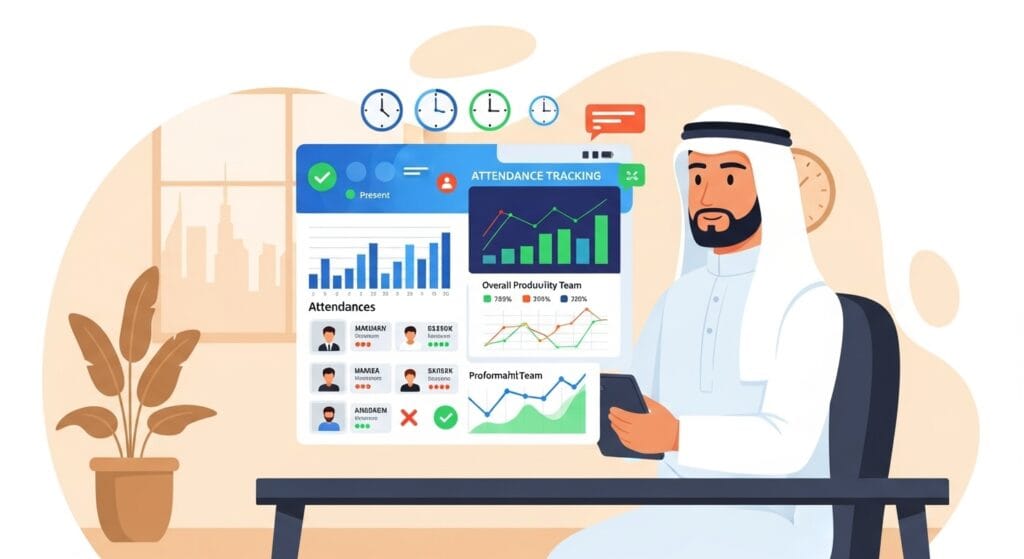
In any fast-paced business, time is the one resource you can never get back. Yet, it’s the one most easily lost. A few employees arriving late, extended breaks, “buddy punching,” and the slow, agonizing process of manual payroll—these small “time thefts” add up to a significant drain on your resources. In the competitive landscape of Saudi Arabia, you can no longer afford this inefficiency. Many managers believe that tracking time is just about “catching” late employees. But this is a dated perspective. A modern Time Attendance System is not a tool of punishment; it’s a strategic asset for building a culture of accountability, ensuring fairness, and—most importantly—unlocking hidden layers of productivity across your entire organization. This guide explores how upgrading from an old-fashioned sign-in sheet or a basic fingerprint reader to an integrated, modern system can transform your business, all while ensuring full compliance with Saudi Labor Law. The Old Way: Why Your Manual System is Costing You Money Let’s be honest: is your current attendance “system” truly a system? For many businesses, it’s a patchwork of inefficient tools: This “old way” is not just inefficient; it’s a direct drain on profitability. It wastes your HR team’s valuable time on low-value data entry, creates payroll errors that damage employee morale, and gives you zero real-time insight into your actual workforce. What is a “Modern Time Attendance System”? A modern Time Attendance System, especially in the context of Saudi Arabia, is a software-centric solution that is integrated, automated, and intelligent. It’s often cloud-based and acts as the central hub for all employee time data. Its key components include: Part 1: How a Modern System Directly Improves Punctuality Punctuality is the foundation of a disciplined and effective workforce. A modern system builds this foundation not through fear, but through transparency and fairness. 1. It Creates 100% Transparency and Accountability When employees know their arrival is logged accurately to the second—without dispute—behavior naturally changes. The ambiguity of a paper log (“I arrived at 9:02, not 9:10”) is gone. This digital record becomes the single source of truth, eliminating arguments and fostering a culture where time is respected. 2. It Eliminates “Buddy Punching” This is the most immediate impact. Advanced biometric scanners (fingerprint or facial recognition) ensure that the person clocking in is the person who is actually there. This single change instantly cleans up your attendance data and ensures that those who are late are recorded as such. 3. It Provides Instant, Automated Alerts A modern system can be configured to automatically send a notification (via email or mobile app) to both the employee and their direct manager when a “late arrival” or “early departure” is flagged. This creates an immediate, consistent feedback loop. The manager doesn’t have to wait until the end of the month; they can address the issue the same day. 4. It Promotes Fairness and Boosts Morale Nothing kills morale faster than high-performing, punctual employees seeing their colleagues consistently arrive late with no consequences. A transparent system ensures that everyone is held to the same, fair standard. It protects your best employees from feeling taken advantage of and signals that professionalism is valued. Part 2: The Link: How Punctuality and Data Unlock True Productivity Fixing lateness is just the beginning. The real power of a modern time attendance system is what it does with the data it collects. 1. It Gives Managers Data-Driven Insights Productivity is about solving the root cause of problems, not just the symptoms. A modern system provides analytics that help managers stop being “police” and start being “coaches.” 2. It Supercharges Your HR and Payroll (The Biggest Productivity Gain) The biggest productivity leak is often in your HR department. A modern, integrated system reclaims days of lost time every single month. Task The “Old Way” (Manual / Basic System) The “Modern Integrated Way” (Daysum’s Solution) Data Collection HR spends 2-3 days manually downloading logs, re-typing data, and chasing managers for timesheets. Automated. Data flows from the clock-in device directly into the HRMS in real-time. (Time Saved: 2-3 days) Overtime Calculation Manually calculated on a spreadsheet. High risk of errors and non-compliance with Saudi Labor Law. Automated. The system instantly calculates all overtime (150% base salary) and leave based on pre-set, compliant rules. (Time Saved: 1-2 days) Payroll Generation Manually keying in all attendance and overtime data into the payroll system. High risk of typos. Integrated. The approved timesheet data is already in the system. HR just clicks “Generate Payslips.” (Time Saved: 1-2 days) By automating this entire process, you free your HR team from 5-7 days of mind-numbing, error-prone admin. They can now focus on high-value, productive tasks: recruiting top talent, developing training programs, and improving company culture. 3. It Optimizes Real-Time Operations For retail, manufacturing, or healthcare, a manager’s dashboard showing who is on-site right now is a powerful productivity tool. If a shift starts and three people haven’t clocked in, the manager knows immediately and can re-allocate resources from another department to cover the gap, ensuring production lines keep moving and customers are served. The Critical Link: Compliance with Saudi Labor Law You cannot manage time and attendance in the Kingdom without a deep understanding of Saudi Labor Law. A generic, off-the-shelf system will fail you. A proper Time Attendance System in Saudi Arabia must be pre-configured to handle: Daysum: Your Fully Integrated Odoo HRMS & Attendance Solution This is where Daysum provides unmatched value. We don’t offer a standalone attendance tool that you have to patch into your other software. We provide a fully integrated HRMS solution built on Odoo, where Time & Attendance is a core, native module. The Daysum Advantage: Frequently Asked Questions (FAQs) Q1: My employees will feel like “Big Brother” is watching them. How do I handle this? This is a valid concern. The key is communication. Frame the new system not as a tool for punishment, but as a tool for fairness and accuracy. Emphasize the benefits to them: Q2: What’s the difference between a biometric

Read more
hrms cloud solutions from daysum

HRMS Cloud Solutions from Daysum: Powering Agile and Integrated HR Transformation

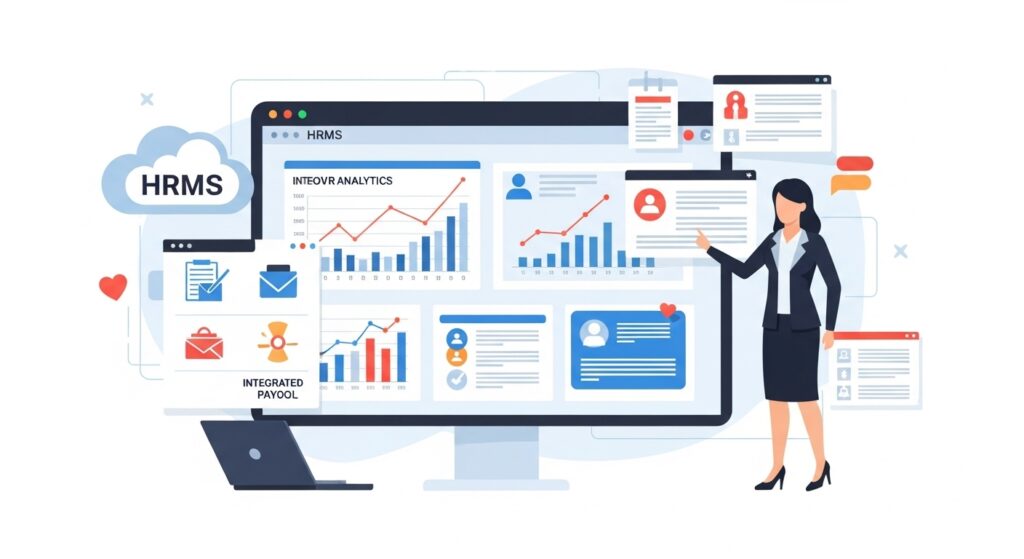
In today’s fast-paced and digitally evolving business environment, human capital is no longer just a function—it’s a strategic driver of organizational success. Traditional HR practices, often confined by manual tasks and siloed systems, are proving to be a significant barrier to growth and innovation. This is where HRMS cloud solutions emerge as a game-changing enabler, offering businesses the ability to modernize HR operations and deliver measurable value. Daysum, a leading provider of digital transformation solutions in Saudi Arabia, offers robust HRMS systems tailored for dynamic, compliance-driven, and performance-oriented organizations. Whether you’re an SME or a large enterprise, Daysum’s cloud-native HR platform helps transform your HR into a strategic powerhouse. What Are HRMS Cloud Solutions and Why Do They Matter? HRMS cloud solutions (Human Resource Management Systems) are software platforms hosted on the cloud that centralize, automate, and optimize a wide range of HR functions. Unlike on-premise software, cloud HRMS provides scalability, real-time accessibility, data integrity, and enhanced security—all without the overhead of managing infrastructure. As the Saudi market accelerates toward Vision 2030 goals, businesses are expected to digitize core functions, including HR. A modern HRMS system ensures compliance with local regulations, supports nationalization (Saudization) programs, and aligns workforce planning with strategic objectives. Core Functionalities of Modern HRMS Systems Daysum’s HRMS systems are designed to meet the end-to-end needs of your human capital lifecycle. Key modules include: The Strategic Value of HRMS Implementation for Saudi Businesses An effective HRMS implementation offers more than just automation—it reshapes the employee experience and empowers data-driven decisions. Key benefits include: By adopting Daysum’s HRMS cloud solutions, Saudi businesses gain agility and operational control over their most valuable asset: their people. Why Choose Daysum for HRMS Implementation? What sets Daysum apart is not just technology—it’s deep local expertise, tailored onboarding, and continuous support. Our HRMS implementation approach is centered around: Whether you’re starting fresh or migrating from an outdated platform, Daysum ensures a smooth and efficient transition to the cloud. How Daysum’s HRMS Systems Enable Workforce Agility and Intelligence Today’s HR leaders demand flexibility, mobility, and actionable insights. Daysum’s HRMS systems are built for exactly that: By leveraging cloud technology, your HR department becomes more agile, strategic, and responsive to change. Step-by-Step HRMS Implementation with Daysum Our proven methodology ensures successful HRMS implementation without disruption: Each stage is handled by certified HR tech consultants who understand both global best practices and local compliance. Overcoming HRMS Implementation Challenges Implementing a new HRMS system can be complex. Daysum helps organizations overcome key challenges, such as: Real Business Impact: Success Stories with Daysum’s HRMS Cloud Solutions Organizations across healthcare, retail, logistics, and public services have successfully deployed Daysum’s HRMS cloud solutions. Examples include: These outcomes demonstrate that a well-executed HRMS implementation pays dividends in both efficiency and business performance. Conclusion: Future-Proof Your HR with HRMS Cloud Solutions In an age where digital transformation is non-negotiable, HRMS cloud solutions are essential for building a future-ready HR function. From recruitment to retirement, Daysum helps you automate, optimize, and align HR with strategic goals—securely and efficiently. Whether you’re scaling fast, facing regulatory complexity, or simply seeking better visibility, Daysum’s HRMS systems give you the control and clarity your business needs. Ready to empower your workforce?Contact us today to schedule a live demo and explore how Daysum’s HRMS can transform your HR operations.

Read more
hrms cloud solutions

From Tedious Tasks to Strategic Success: Revolutionize Your HR with a Cloud HRMS

In the high-velocity economic landscape of 2026, the Kingdom of Saudi Arabia is no longer just participating in the global digital race—it is setting the pace. Under the ambitious umbrella of Vision 2030, the “Future of Work” has arrived, and it isn’t found in dusty filing cabinets or convoluted Excel spreadsheets. It lives in the cloud. For Saudi enterprises, from the bustling retail sectors of Riyadh to the industrial powerhouses in Jubail, the transition to a Cloud Human Resource Management System (HRMS) has shifted from a “nice-to-have” luxury to a fundamental survival requirement. Cloud HRMS is revolutionizing Saudi HR operations by automating the heavy lifting—payroll, attendance, and complex regulatory compliance—while simultaneously empowering employees through sophisticated self-service portals. But what does it actually take to move your entire workforce management into a secure, digital ecosystem? This 1,700-word guide explores every facet of the HRMS revolution, providing the roadmap your organization needs to thrive in a digitized Kingdom. 1. What Exactly is a Cloud HRMS? At its most basic level, a Human Resource Management System (HRMS) is an integrated digital platform that centralizes the entire employee lifecycle. Instead of having one software for payroll, another for recruitment, and a physical folder for employee contracts, a Cloud HRMS pulls every data point into one secure, synchronized system. In 2026, “Cloud” is the operative word. Unlike legacy systems that required expensive on-site servers, a cloud-based system is hosted securely on the web. This means whether your HR Manager is in the office or a remote site, the data remains accessible, accurate, and real-time. For a successful [odoo implementation saudi arabia], the HRMS module acts as the “heart” of the ERP, ensuring that every time a new hire joins or a salary is adjusted, the finance and operational modules reflect that change instantly. 2. Key Features of a Modern Saudi HRMS A generic, global HR software often fails to survive the specific rigors of the Saudi market. A truly effective system must be “Saudi-optimized,” meaning it understands the nuances of local labor laws and cultural practices. Here are the core features that define a high-performing system: A. Automated Payroll (The Compliance Engine) Payroll in Saudi Arabia is uniquely complex. It isn’t just about multiplying hours by a rate. It involves: Saudi Labor Law Logic: Automatic calculation of overtime, sick leave pay, and housing allowances per Articles 90-97. GOSI Integration: Precise calculations of social insurance contributions for both Saudi nationals and expatriates. WPS (Wage Protection System) Alignment: Generating SIF (Salary Information Files) that are perfectly formatted for bank transfers, ensuring your firm never triggers a Ministry of Human Resources audit flag. B. Intelligent Attendance Tracking The days of manual punch cards are long gone. Modern systems utilize: Biometric & Geofencing: Integration with office fingerprint scanners or mobile GPS “clock-in” for field staff. Leave Management: An automated workflow where employees request leave, and the system instantly checks their remaining balance before routing the request to their manager. C. The Employee Self-Service (ESS) Portal This is where the “revolution” happens for your staff. An ESS portal allows employees to: Download digital payslips. Request salary certificates or employment letters (crucial for bank loans in KSA). Update personal documents (Iqama, Passport, Driver’s License) before they expire. D. Strategic Recruitment and Onboarding A Cloud HRMS turns your recruitment from a reactive task into a strategic advantage. It tracks a candidate from the moment they apply on your website to the day they sit at their desk, managing interviews, offer letters, and digital contract signing (GOSI/Qiwa alignment) in one flow. E. Performance and Talent Management In 2026, “Performance Reviews” are no longer a once-a-year headache. Modern [cloud hrms solutions] allow for continuous feedback, goal tracking (KPIs), and 360-degree reviews, ensuring your top talent feels recognized and challenged. 3. The Implementation Journey: A Five-Phase Roadmap Moving to a Cloud HRMS is a journey, not a switch. To ensure a high ROI and zero operational downtime, the implementation must be structured. Phase Objective Outcome 1. Discovery Mapping existing workflows and pain points. A clear blueprint of “Needs vs. Wants.” 2. Configuration Tailoring the software to company-specific policies. A system that “speaks” your company language. 3. Migration Secure transfer of historical employee data. A clean, error-free database of your workforce. 4. Training & UAT Hands-on sessions and “User Acceptance Testing.” Confident staff and a validated system. 5. Go-Live The official launch of the production system. A fully digitized HR department. For many Saudi firms, especially those in the gold and jewelry sector, this implementation must be paired with specialized [retail erp saudi arabia] modules to manage the intersection of sales staff performance and complex commissions based on precious metal values. 4. Cloud vs. On-Premise: The 2026 Verdict While some organizations still cling to physical servers, the evidence for the cloud is overwhelming. For companies needing to maintain [e invoicing software saudi arabia] standards, the cloud offers the agility needed to update tax logic instantly as regulations evolve. Comparison Table: Why Cloud Wins Feature Cloud HRMS On-Premise HRMS Accessibility 24/7 access from any device (Mobile/Web). Access typically restricted to the office network. Maintenance Handled by the provider (Zero IT burden). Requires internal IT staff, cooling, and hardware. Security Bank-level encryption; automated backups. Subject to physical theft or local server failure. Updates Automatic (ZATCA/GOSI updates pushed live). Manual updates; often requires paid consultants. Cost Model Subscription-based (Opex). High upfront hardware/license costs (Capex). 5. Regulatory Compliance: ZATCA, GOSI, and Nitaqat In Saudi Arabia, an HRMS is more than an organizational tool; it is a shield against legal liability. The Ministry of Human Resources and Social Development (MHRSD) has digitized almost every aspect of labor compliance. ZATCA Integration: While HR manages people, the financial output of HR (payroll) must align with [e invoicing zatca] requirements for accurate expense reporting and tax auditing. Iqama & Visa Tracking: A Saudi-optimized system provides proactive alerts 90, 60, and 30 days before an expatriate’s documents expire, preventing the “frozen account” scenario that can halt operations. Nitaqat (Saudization): Real-time monitoring of your Saudization

Read more
مستقبل تطبيقات الحضور: ما الذي يمكن أن نتوقعه في السنوات القادمة

The Future of Attendance Apps: What Can We Expect in the Coming Years?

The modern workplace is undergoing a radical, technology-driven metamorphosis, and nowhere is this more evident than in how organizations manage their most valuable asset: their people. Gone are the days of manual punch cards, cumbersome spreadsheets, and fingerprint scanners that constantly break down. We have entered the era of intelligent, automated, and hyper-connected workforce management. As we look toward the horizon, business leaders, HR professionals, and IT decision-makers are all asking the same critical question: What exactly does the future of attendance apps hold, and how will it reshape our daily operations? In the Kingdom of Saudi Arabia, this evolution is moving at breakneck speed. Fueled by the ambitious goals of Vision 2030, the Saudi attendance market is projected to hit a staggering $250 million by 2028, growing at a Compound Annual Growth Rate (CAGR) of 14%. This rapid expansion is driven by the seamless integration of Artificial Intelligence (AI), advanced biometrics, and cloud computing. Mobile and cloud applications provided by industry innovators like Daysum and truMe are setting new benchmarks, achieving up to 99% accuracy in tracking time for hybrid, remote, and on-site workforces. In this comprehensive guide, we will explore the defining landscape of next-generation attendance applications, key emerging trends, the transformative role of the cloud, and the challenges organizations must overcome to thrive in this new ecosystem. Defining the Future Landscape of Workforce Management To understand where attendance apps are heading, we must first look at how the definition of “attendance” has fundamentally changed. The next generation of applications is evolving far beyond basic check-ins and check-outs. Today, attendance is intricately linked with overall employee well-being, productivity tracking, and strict legal compliance. From Simple Time Clocks to Holistic AI Platforms Future attendance applications are being designed as holistic AI-powered platforms. They are moving away from purely transactional interactions to becoming tools that actively monitor workforce productivity and even mental health. Predictive models forecasted by industry players like Dwamee and ZenHR suggest that future apps will analyze working hours to detect signs of burnout, prompting HR to intervene before employee fatigue impacts operational efficiency. Meeting Hybrid and Remote Work Needs The traditional 9-to-5 office environment is no longer the sole standard. With a significant portion of the workforce operating in hybrid or fully remote capacities, attendance apps must adapt. This means leveraging mobile-first technologies that allow employees to securely log their hours from anywhere in the world. Unprecedented Compliance and Auto-Synchronization In the Saudi context, regulatory compliance is a major driver of this technological shift. Vision 2030 emphasizes transparency, digital transformation, and the protection of workers’ rights. Consequently, future attendance apps must feature automatic synchronization with government portals such as Qiwa and the Wage Protection System (WPS). By automating these processes, companies can eliminate the human errors associated with manual data entry, ensuring 100% compliance with Ministry of Human Resources and Social Development (MHRSD) regulations and replacing outdated punch cards for good. Key Emerging Trends in Attendance Technology As we navigate the next few years, several distinct technological trends will dictate the capabilities of attendance management systems. Organizations that adopt these trends early will secure a significant competitive advantage. Table: Key Emerging Trends in the Saudi Market Trend Expected Impact & Capabilities Regional Leaders & Innovators AI/ML Analytics Up to 90% accuracy in predicting employee absence, allowing for proactive shift scheduling. ZenHR, Truein Advanced Biometrics Implementation of anti-spoofing facial and voice recognition, eliminating “buddy punching.” BioEnable, RecFaces Cloud + IoT Integration Real-time tracking of field workers using geolocation beacons and connected devices. IOTee GPS, DotsHR 1. Artificial Intelligence and Machine Learning (AI/ML) Artificial Intelligence is undoubtedly the most disruptive force in HR technology today. Machine Learning algorithms analyze vast datasets of historical attendance records to identify patterns that human managers might miss. For example, AI can predict with up to 90% accuracy when an employee is likely to be absent or late, taking into account variables such as past behavior, local traffic conditions, weather forecasts, and even the time of year. This predictive capability allows managers to adjust schedules dynamically, ensuring that operations run smoothly without unexpected staffing shortages. 2. Advanced, Spoof-Proof Biometrics While biometric technology like fingerprint scanning has been around for a while, the future lies in contactless, highly secure alternatives. Advanced facial recognition and voice biometric systems are becoming the norm. These technologies utilize 3D depth-sensing and “liveness detection” to ensure that the person clocking in is physically present, thwarting attempts to spoof the system using photographs or recorded videos. This guarantees absolute accuracy and enhances workplace security, making it impossible for employees to log hours for their absent colleagues. 3. The Internet of Things (IoT) and Geofencing For organizations with large field teams, sales representatives, or construction workers, tracking attendance outside the office is a persistent challenge. The convergence of cloud technology and IoT provides the solution. By setting up virtual geographical boundaries (geofences) around a job site, employees can only clock in when they physically enter the approved zone. IoT beacons can also track movement within large facilities, ensuring that staff are exactly where they need to be during their shifts. The Transformative Role of Cloud Technology None of the aforementioned innovations would be possible without the backbone of cloud computing. The shift from localized, on-premise servers to agile cloud infrastructure is redefining what attendance apps can achieve. Unmatched Scalability and Cost Efficiency Market forecasts suggest that the cloud-based HR tech sector will scale to a massive $2 billion by 2033. This growth is driven by the unparalleled financial benefits of cloud adoption. Transitioning to a cloud attendance system can cut IT infrastructure and maintenance costs by up to 70% compared to legacy on-premise deployments. There is no need to purchase expensive servers, pay for ongoing localized maintenance, or worry about manual software updates. The cloud enables anytime, anywhere access, ensuring that whether an employee is at the headquarters in Riyadh or working remotely from Dammam, their attendance is recorded seamlessly in real-time. Seamless Integration with HR and Payroll Data silos are

Read more
ما هو تأثير الجيل الجديد من الأنظمة السحابية على إدارة الحضور

How Does the Next Generation of Cloud Systems Impact Attendance Management?

In today’s fast-paced business environment, effective attendance management has become essential for organizations seeking to optimize their operations. As workplaces increasingly shift toward digital solutions, cloud-based attendance systems are emerging as a transformative force in how companies manage employee attendance. The next generation of these systems not only enhances the efficiency and accuracy of attendance practices but also introduces cutting-edge technologies that streamline operations and improve employee engagement. In the Kingdom of Saudi Arabia, this shift is accelerating under the umbrella of Vision 2030. The Saudi cloud attendance system market is currently experiencing a robust 12.6% annual growth rate. This surge is driven by a nationwide push for digital transparency and the mandatory integration of platforms like Qiwa and the Wage Protection System (WPS). Organizations that embrace these innovations are finding that next-gen systems provide a strategic advantage that goes far beyond simple clock-ins. Embrace digital transformation today with seamless e invoicing for your operations. 1. Understanding Next-Generation Attendance Systems Definition of Next-Generation Attendance Systems Next-generation attendance systems leverage advanced cloud computing technologies to provide businesses with innovative solutions for tracking employee attendance. Unlike traditional systems that often rely on physical punch clocks or paper-based records, these modern solutions are designed to function seamlessly in various work environments, whether onsite, remote, or hybrid. They are built on a “Cloud First” philosophy, ensuring that data is accessible, secure, and integrated with broader enterprise ecosystems. Comparison to Traditional Attendance Management Systems Traditional attendance management systems can be cumbersome and error-prone. Legacy hardware, such as ZKTeco punch clocks or offline biometric devices, often requires extensive on-site maintenance and lacks real-time remote access. This disconnection creates significant data silos, where HR managers must manually sync data at the end of every month—a process that is not only time-consuming but highly susceptible to “buddy punching” and clerical errors. In contrast, a modern cloud attendance system offers automated features that provide real-time updates. For example, employees can clock in and out via mobile apps with GPS verification or cloud-connected facial recognition terminals. In Saudi Arabia, where the “Cloud First” policy is reshaping IT infrastructure, transitioning to a subscription-based model can cut upfront costs by up to 70% compared to CapEx-heavy legacy deployments. Table: Traditional vs. Next-Generation Attendance Systems Feature Traditional Systems (Legacy) Next-Generation (Cloud) Infrastructure On-site servers & physical wiring Cloud-hosted; zero local footprint Financial Model Heavy CapEx (Upfront purchase) OpEx (Subscription-based) Accessibility Restricted to office premises Anywhere via mobile/web apps Data Updates Manual sync or batch processing Real-time synchronization Maintenance Local IT team required Automated updates by provider Compliance Hard to integrate with Qiwa/WPS Native integration with Saudi labor laws 2. Key Features of Cloud-Based Attendance Systems The true impact of next-gen systems lies in their feature sets, which are specifically designed to handle the complexities of a modern, distributed workforce. Flexibility and Accessibility With the rise of remote and hybrid work models, flexibility is paramount. Employees can clock in from any location with internet access, supported by geofencing technology that ensures they are at the correct job site. This is a game-changer for industries like construction or logistics in Saudi Arabia, where staff are often spread across vast geographic distances. Managers can access these records in real-time, allowing them to approve time-off requests or adjust schedules on the fly. Real-Time Data Collection and Analysis Next-generation systems provide instant insights. HR managers can generate reports on absenteeism, tardiness, and overall workforce productivity at the touch of a button. In the healthcare sector, for example, cloud adoption has led to a 15% gain in overall productivity simply by identifying and resolving scheduling bottlenecks in real-time. This level of granular data allows for a proactive rather than reactive management style. Integration Capabilities A unified platform is the cornerstone of effective management. These systems seamlessly integrate with existing hrms cloud solutions and payroll engines. This integration ensures that attendance records are accurately reflected in monthly pay cycles, automating complex calculations for overtime, leave balances, and late-in penalties. For businesses in the precious metals sector, using the best gold accounting software alongside a cloud attendance tool ensures that labor costs are perfectly mapped against inventory and sales performance. 3. Quantifiable Business Impact of Cloud Solutions The transition to cloud-based systems is not merely a technical upgrade; it is a fundamental shift in operational efficiency. Enhanced Accuracy Accuracy in attendance records is the bedrock of payroll integrity. Mismanaged records lead to discrepancies that damage employee morale and create compliance risks. Cloud systems enhance accuracy through biometric verification and real-time updates, reducing payroll errors from a typical 8% to as low as 0.1% in the first month of implementation. Increased Efficiency and Cost-Effectiveness Automation frees HR professionals from the “administrative trap.” By automating tasks such as time calculation and leave management, companies can save approximately 40 administrative hours per week for every 100 employees. Furthermore, the scalability of cloud solutions means that as your business grows—perhaps by expanding your gold management system into new branches—your attendance infrastructure scales with you without the need for additional hardware investment. ROI in the Saudi Market Context For Saudi enterprises, the return on investment (ROI) is tied directly to the speed of business. With the mandatory integration of ZATCA and Qiwa, having a system that natively supports these platforms is essential. Real-time dashboards allow C-suite executives to monitor labor costs against revenue targets, ensuring that the organization stays lean and competitive as it moves toward the 2030 targets. 4. The Competitor Landscape in Saudi Arabia The Saudi market is unique, and choosing the right platform requires an understanding of localized features like Arabic UI support, GOSI synchronization, and Saudi Labor Law compliance. Platform Estimated Monthly Cost (SAR/employee) Standout Cloud Feature Daysum HRMS 20 – 50 Full Qiwa integration + advanced geofencing ZenHR 25 – 60 AI-driven automated shift scheduling Truein 15 – 40 Specialized cloud-based facial recognition Ojoor Custom Integration with 200+ biometric devices DotsHR Subscription Real-time multi-location monitoring While many global players offer attendance tools, Daysum stands out by providing a suite that

Read more
كيف يسهم التحليل البياني في تحسين إدارة الحضور

How Data Analytics Contributes to Improved Attendance Management

  In today’s fast-paced business environment, effective attendance management is crucial for organizations striving for optimal productivity and efficiency. Attendance not only reflects employee engagement but also directly impacts an organization’s bottom line. With the rise of data analytics, companies now have the tools to transform attendance management from a manual process into a strategic advantage. This article explores how data analytics contributes to improved attendance management, focusing on key concepts such as data analytics in attendance, improving attendance with data, and data-driven attendance techniques. Additionally, we’ll introduce “Daysum,” a leading provider of HRMS solutions, which offers tools to harness the power of data analytics for effective attendance management. Start your zatca e-invoicing journey with a system built to meet Saudi compliance. 1. Understanding Data Analytics in Attendance 1.1 What is Data Analytics in Attendance? Data analytics in attendance refers to the systematic computational analysis of data related to employee attendance. This encompasses the collection, processing, and interpretation of attendance data to derive valuable insights. By utilizing data analytics, organizations can track employee attendance patterns, identify trends, and make informed decisions to enhance overall attendance management. The importance of data collection cannot be overstated. Organizations often rely on traditional methods of attendance tracking, such as manual logs or punch cards, which can lead to inaccuracies and inefficiencies. By employing data analytics, companies can generate accurate reports and insights, enabling them to address attendance issues proactively. 1.2 Key Tools and Technologies To effectively leverage data analytics in attendance management, organizations need the right tools and technologies. Human Resource Management Systems (HRMS) like “Daysum” provide comprehensive solutions that integrate attendance tracking with analytics capabilities. These platforms collect data from various sources, such as biometric systems, time clocks, and employee self-service portals. Additionally, data visualization tools like Tableau or Power BI can help organizations create intuitive dashboards that display real-time attendance data. These visualizations make it easier for HR professionals and management to identify patterns, track attendance metrics, and communicate insights with stakeholders. 2. Improving Attendance with Data 2.1 Measuring Attendance Performance One of the primary benefits of data analytics is its ability to measure attendance performance effectively. Organizations can analyze metrics such as absenteeism rates, tardiness, and overall attendance compliance. By establishing key performance indicators (KPIs) related to attendance, companies can assess their performance and identify areas for improvement. For example, by analyzing attendance data over several months, a company may discover that certain departments have higher absenteeism rates. This insight allows HR to investigate potential underlying issues, such as workplace culture or employee engagement, and address them accordingly. 2.2 Addressing Attendance Challenges Attendance management is fraught with challenges, including unanticipated absenteeism, employee disengagement, and compliance with labor laws. Data analytics provides organizations with the tools to tackle these challenges head-on. For instance, by analyzing historical attendance data, companies can identify specific trends, such as seasonal spikes in absenteeism, and develop strategies to mitigate their impact. Moreover, data analytics can help organizations understand the reasons behind employee absences. By implementing surveys or exit interviews and analyzing the resulting data, HR can gain insights into employee satisfaction and the factors that influence attendance. This information is vital for developing targeted interventions aimed at improving attendance. 3. Data-Driven Attendance Techniques 3.1 Utilizing Predictive Analytics Predictive analytics is a powerful tool that can be used to enhance attendance management. By applying statistical algorithms and machine learning techniques to historical attendance data, organizations can forecast future attendance trends. For instance, predictive models can identify employees who are at risk of high absenteeism based on past behavior, allowing HR to intervene before attendance issues escalate. Implementing predictive analytics not only helps in addressing potential problems but also aids in strategic planning. For example, if predictive models indicate a higher likelihood of absenteeism during specific months, organizations can prepare by adjusting staffing levels or implementing wellness programs to promote employee health. 3.2 Implementing Real-Time Data Monitoring Real-time data monitoring is another crucial aspect of data-driven attendance management. Organizations can leverage technology to track attendance as it happens, providing instant visibility into who is present and who is absent. This capability is particularly beneficial for companies with shift-based work or those with remote employees. By utilizing mobile applications or cloud-based HRMS solutions, managers can receive immediate alerts when employees are late or absent. This proactive approach allows for quicker decision-making and can help mitigate the impact of absenteeism on productivity. 4. Benefits of Data Analytics in Attendance Management 4.1 Enhancing Operational Efficiency One of the most significant advantages of data analytics in attendance management is the enhancement of operational efficiency. By automating data collection and analysis, organizations can reduce the time and resources spent on manual attendance tracking. This efficiency allows HR professionals to focus on strategic initiatives rather than administrative tasks. Moreover, data analytics enables companies to optimize their scheduling processes. By understanding attendance patterns, organizations can better align staffing levels with operational needs, ensuring that they have the right number of employees available at all times. 4.2 Informed Decision-Making Data analytics facilitates informed decision-making by providing actionable insights derived from attendance data. Instead of relying on intuition or anecdotal evidence, HR professionals can base their decisions on concrete data. This approach not only increases the likelihood of successful outcomes but also fosters a culture of transparency and accountability within the organization. For instance, if attendance data reveals that a particular department consistently experiences high absenteeism, HR can investigate potential causes and implement targeted solutions. This data-driven approach ensures that decisions are grounded in reality, leading to more effective attendance management strategies. Conclusion In conclusion, data analytics plays a vital role in improving attendance management within organizations. By leveraging data analytics in attendance, companies can gain valuable insights, measure performance, and address challenges effectively. Techniques such as predictive analytics and real-time monitoring further enhance the ability to manage attendance proactively. As businesses continue to embrace technology and data-driven approaches, the importance of robust attendance management solutions cannot be overstated. Companies looking to optimize their attendance management practices

Read more
التوجهات الحديثة في إدارة الحضور والانصراف

Modern Trends in Attendance Management

  Modern Trends in Attendance Management The landscape of attendance management is undergoing a significant transformation, driven by technological advancements and evolving workplace dynamics. As we step further into the decade, organizations are embracing innovative solutions to streamline their attendance processes, enhance employee satisfaction, and boost productivity. In the Kingdom of Saudi Arabia, this shift is not just a trend but a strategic mandate under Saudi Vision 2030. Saudi attendance systems are achieving unprecedented milestones, with 99% accuracy rates via advanced facial recognition technologies. These systems, provided by leaders like ZKTeco, Camtend, and Daysum, are integrating deeply with national platforms like Qiwa and the Wage Protection System (WPS). By doing so, they are reducing payroll errors by up to 80% amid a massive national digital push. Simplify your workflow and stay compliant with zatca e-invoicing from Daysum. Why Modernize Your Attendance Management System? Traditional attendance management systems often struggle with manual data entry, time-consuming processes, and a lack of real-time insights. In the Saudi context, manual tracking causes up to 30% in payroll discrepancies. These limitations can lead to errors, inefficiencies, and significant compliance risks, especially with the introduction of the “Hoduri” platform and strict labor ministry regulations. By upgrading to a modern cloud attendance system, you can: Increase Efficiency and Accuracy: Automated systems reduce human error and streamline the entire logging process. Improve Employee Satisfaction: User-friendly tools and flexible timekeeping options enhance the overall employee experience, making “clocking in” a frictionless part of the day. Better Decision-Making: Real-time data and analytics provide valuable insights into workforce trends, helping managers allocate resources more effectively. Enhanced Security and Compliance: Robust security measures protect sensitive employee data and ensure compliance with GOSI reporting and local labor regulations. Audit Trail Transparency: Digital systems provide an immutable record of presence, which is vital for resolving disputes and passing regulatory audits. AI’s Strategic Importance in the Saudi Workforce Artificial Intelligence (AI) is the engine behind this transformation. AI eliminates “buddy punching”—the practice of one employee clocking in for another—and eradicates manual entry errors. In Saudi Arabia, where large-scale projects and remote operations are common, AI ensures that every minute worked is accounted for accurately. Furthermore, AI-driven hrms cloud solutions deliver real-time workforce analytics. For an enterprise, this means being able to track attendance across various sites, from a skyscraper construction in Riyadh to a retail boutique in Jeddah, all from a single dashboard. This level of oversight is critical for maintaining Qiwa compliance and optimizing labor costs. Leading Technology Trends in Attendance and Time-Tracking Several cutting-edge technologies are revolutionizing how presence is recorded. In the Saudi market, these trends are categorized by their ability to provide high accuracy and mobile flexibility. 1. Biometric Authentication Biometric authentication systems, such as facial recognition and fingerprint scanners, offer the highest level of security. Modern facial recognition achieves 99% accuracy and includes anti-spoofing technology to prevent fraud. This is the gold standard for Saudi factories and large firms, with ZKTeco holding a nearly 65% biometric market share. 2. Mobile GPS Apps and Geofencing For field service workers and remote teams, mobile apps provide a convenient way to clock in and out. These apps often include “selfie check-ins” and geofencing technology. Geofencing verifies that an employee is physically present at a specific location, such as a job site, before allowing them to mark their attendance. 3. Wearable Technology Smartwatches and fitness trackers are emerging as powerful tools. These devices can automatically record work hours and monitor activity levels, providing real-time insights into employee productivity. This is particularly useful for field teams that need hands-free operation. 4. Integration with Cloud HRMS The trend is moving toward a unified ecosystem. Seamless integration with other hrms cloud solutions like payroll, performance management, and time systems improves data accuracy and creates a “single source of truth” for the company. Table: Core Attendance Technology Comparison in Saudi Arabia Technology Key Features Primary Benefit Common Saudi Use Case Biometrics Face/Fingerprint/Iris 99% accuracy; fraud-proof Factories, corporate offices Mobile Apps GPS tracking; Geofencing Remote & field flexibility Construction, sales teams IoT Sensors Automated entry gates Frictionless experience Smart buildings, large malls Wearables Real-time vitals/location Hands-free tracking Field technicians Top Saudi Market Competitors: Choosing the Right Solution The Saudi market is saturated with providers, but only a few offer the localized support and compliance depth required for Vision 2030 standards. Competitor Analysis Table Solution Key Strengths Compliance Depth Business Size Daysum HRMS Cloud native; GPS/Payroll sync; Arabic UI Qiwa, ZATCA, WPS SME to Enterprise ZenHR Shift scheduling; Geo-tracking GOSI, KSA Labor Law Medium-sized Camtend Facial recognition specialist Hoduri integration Large Retail ZKTeco/Elburoj Hardware-heavy security General biometric Industrial/Factories Wafeq/Palm HR Accounting & HR bundle Full WPS automation Small to Medium For companies undergoing an odoo implementation saudi arabia, it is crucial to find an attendance system that can bridge the gap between physical hardware and the ERP software. Daysum stands out by providing a cloud-first approach that prioritizes Saudi-specific payroll and ZATCA compliance. Improving Accuracy with AI: A Quantitative Look Machine learning algorithms can analyze vast amounts of data to identify patterns and trends in employee attendance. This enables organizations to: Reduce Payroll Discrepancies: By detecting anomalies, AI-powered systems can reduce payroll errors by up to 15%. Detect Fraud: Advanced algorithms identify irregularities like duplicate entries or suspicious location logs, preventing time theft. Predict Absenteeism: AI can forecast absence patterns with 90% accuracy, allowing managers to adjust workforce planning before a shortage occurs. Automate Corrections: Systems can automatically suggest corrections for missed punches based on an employee’s historical behavior and schedule. ROI in the Saudi Context: Beyond the Dashboard The Saudi attendance market was valued at $1.2B in 2024 and is projected to grow to $3.5B by 2033. This growth is driven by the clear Return on Investment (ROI) these systems provide: Regulatory Alignment: Avoid heavy fines by ensuring perfect compliance with the Wage Protection System (WPS) and Qiwa mandates. Productivity Boost: Cutting administrative time by half allows HR teams to focus on talent acquisition rather than auditing timesheets.

Read more
The Role of AI in Enhancing the Accuracy of Attendance Systems

The Role of AI in Enhancing the Accuracy of Attendance Systems

Attendance systems have evolved into a critical nerve center for modern workforce management. In the era of digital transformation, AI in attendance management has emerged as a definitive game-changer, moving beyond the simple “clock-in, clock-out” mechanics toward a sophisticated ecosystem of data integrity and behavioral insight. Traditionally, businesses relied on manual punch cards, handwritten timesheets, or basic biometric scanners—methods notoriously prone to inefficiencies, human error, and “buddy punching.” Today, the integration of Artificial Intelligence ensures that attendance tracking is not only precise but also a strategic asset for organizational security and productivity. In the Kingdom of Saudi Arabia, this shift is accelerating. The cloud attendance system market is currently witnessing a robust annual growth rate of 12.6%, fueled by the mandates of Saudi Vision 2030. As enterprises strive for higher operational standards, the demand for precision has moved the benchmark for facial recognition accuracy to a staggering 99%. By leveraging these advanced technologies, organizations can finally eliminate the friction of manual oversight while achieving total regulatory alignment. Achieve full compliance and automation with advanced e invoicing Saudi Arabia tools. The Strategic Importance of AI in Attendance Management Artificial Intelligence is fundamentally reshaping how organizations perceive time and attendance. It is no longer just about compliance; it is about the “intelligence” behind the presence. AI-driven systems address systemic challenges that have plagued HR departments for decades. Eliminating Fraud and “Buddy Punching” One of the most persistent drains on payroll integrity is proxy attendance, where one employee clocks in for another. AI-powered biometric systems, specifically those utilizing facial recognition with anti-spoofing technology, make this physically impossible. By analyzing unique physiological traits that cannot be replicated or forged, AI ensures that the person being paid is the person actually on-site. Reducing Administrative Friction Manual data entry is the enemy of the modern HR department. Every manual log carries a 1% to 5% risk of error, which compounds during payroll processing. AI automates the capture and validation of data, reducing administrative workloads by up to 70%. This allows HR professionals to shift their focus from auditing spreadsheets to strategic workforce development. Ensuring Qiwa and Regulatory Compliance In Saudi Arabia, maintaining accurate records is vital for Qiwa and Nitaqat compliance. AI-based systems provide a transparent, immutable audit trail. When a cloud attendance system is integrated with local labor laws, it automatically flags discrepancies, ensuring that the organization remains on the right side of government regulations while protecting employee rights. Core AI Technologies Powering Modern Systems The accuracy of an attendance system is only as good as the technology beneath it. Modern AI frameworks utilize a combination of computer vision, location-based services, and machine learning to create a fail-safe tracking environment. Core AI Technologies Table Technology Key Capabilities Strategic Benefit Facial Recognition Anti-spoofing, 99% accuracy, touchless verification. Eliminates fraud and promotes hygiene. GPS & Geofencing Location-based attendance for field staff. Secures remote and project-site operations. IoT Sensors Automated entry logging via smart gates. Frictionless, “invisible” attendance tracking. Predictive Analytics Absence forecasting and trend analysis. Enables proactive workforce planning. Facial Recognition: The Gold Standard By identifying unique facial landmarks, AI-driven facial recognition provides a touchless and highly secure method of verification. Advanced systems can now recognize faces even with masks or in low-light conditions, maintaining a 99% accuracy rate that basic biometric systems cannot match. Geofencing for the Remote Workforce For companies with field operations—such as construction, maintenance, or logistics—cloud attendance system providers like Daysum utilize Geofencing. This creates a virtual perimeter around a job site. Employees can only clock in when their GPS coordinates match the site location, preventing off-site attendance fraud and ensuring that labor costs are accurately attributed to specific projects. Improving Attendance Accuracy with AI: Quantifiable Gains The primary objective of improving attendance accuracy is to create a direct link between physical presence and financial compensation. Machine learning models are uniquely equipped to handle this by detecting anomalies that the human eye might miss. Anomaly Detection: AI learns the “normal” behavior of a workforce. If an employee who typically arrives at 8:00 AM suddenly clocks in at 4:00 AM, the system flags this for review. This prevents duplicate entries and erroneous logs. Reduced Payroll Discrepancies: By automating corrections and providing a full audit trail, AI-powered systems reduce payroll discrepancies by an average of 15%. This transparency fosters a culture of trust between the employer and the workforce. Real-Time Data Streams: Unlike traditional systems that sync at the end of the day, AI-driven cloud hrms solutions provide real-time visibility. Managers can see exactly who is on-site at any given second, which is critical for safety in manufacturing and industrial sectors. The Competitor Landscape: Choosing the Right Saudi Partner The Saudi market for attendance tech is highly competitive, ranging from hardware-focused giants to agile cloud-based innovators. Saudi Market Landscape Table Provider Market Position Key Differentiator Pricing Model ZKTeco Biometrics Leader (65% share) Massive hardware infrastructure. Device-based ($1000+) Daysum Cloud HRMS Solutions Seamless Payroll & Geofencing sync. SaaS Subscription IOTee Field Operations Specialist Mobile GPS + Face focus. Custom Enterprise Bacuratec Multi-site Deployments Specialized RFID & Hand Geometry. Tailored Packages While ZKTeco dominates the hardware space, the shift toward a cloud attendance system has made Daysum a preferred choice for enterprises requiring deep integration. When an organization undergoes an odoo implementation saudi arabia, having an attendance system that communicates natively with the ERP’s payroll and accounting modules is essential for minimizing data silos. ROI in the Saudi Context: Beyond the Price Tag Investing in AI-powered attendance solutions in the Saudi market—currently valued at approximately $1.2B—offers a multi-dimensional return on investment. Time Savings and Operational Efficiency HR departments in Saudi Arabia are increasingly burdened by administrative compliance. Automating attendance tracking saves hundreds of man-hours per month. In sectors like manufacturing, where shift management is complex, AI can automatically calculate overtime, night-shift premiums, and holiday pay, ensuring that the cloud hrms solutions are always in sync with the current budget. Cost Efficiency Preventing “buddy punching” alone can save a company 2% to 5% of its total payroll

Read more
top
Business Challenges

Digital Transformation

Security

Automation

Gaining Efficiency