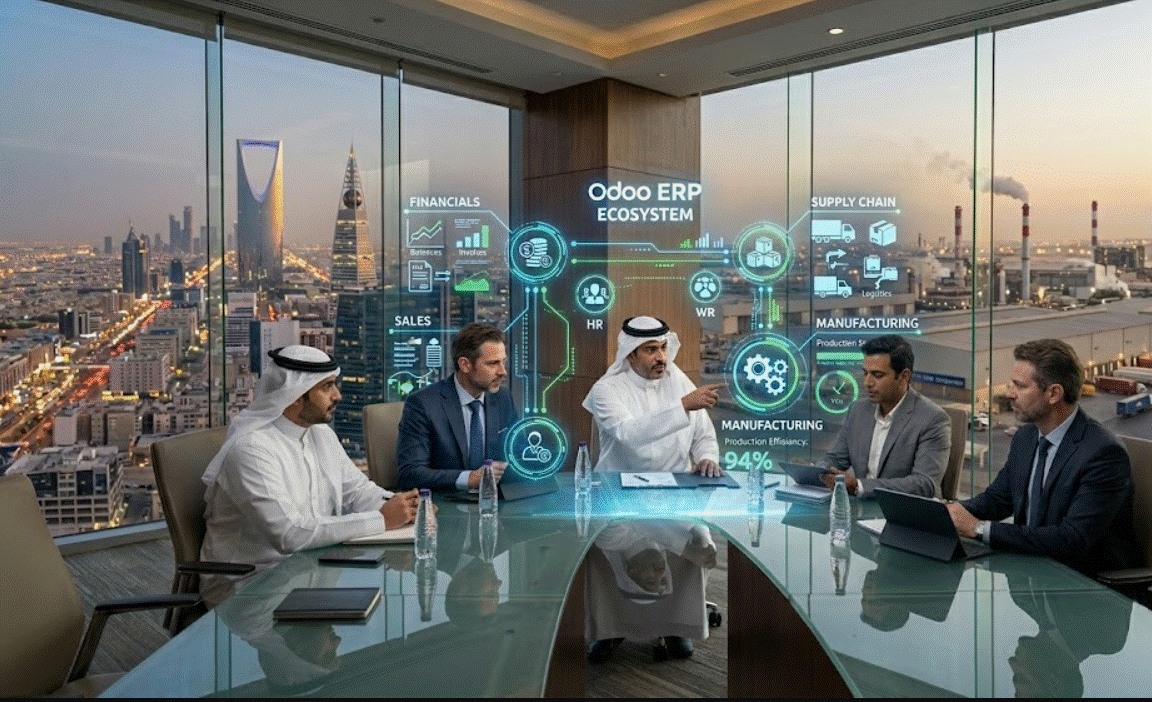
The Kingdom of Saudi Arabia is currently undergoing an unprecedented era of economic diversification and industrial expansion, driven by the ambitious objectives of Vision 2030. In this rapidly evolving landscape, business-to-business (B2B) enterprises, large-scale manufacturing facilities, and extensive supply chain networks are facing a critical turning point. The traditional methods of managing operations through fragmented software or manual spreadsheets are no longer sustainable. To maintain a competitive edge, scale operations efficiently, and comply with stringent governmental regulations, organizations require a robust digital infrastructure.
At the forefront of this digital revolution is the Odoo system, a comprehensive, modular, and highly adaptable platform that is reshaping how Saudi enterprises operate. By moving away from rigid, legacy corporate software and embracing a dynamic ecosystem, businesses can achieve unprecedented operational harmony. As organizations search for the Best ERP software to secure their future, the open-source nature, scalability, and deep localization capabilities of Odoo position it as the ultimate catalyst for sustainable industrial and commercial growth across the Kingdom.
The Evolution of Resource Planning for Modern Enterprises
In the complex world of B2B manufacturing and wholesale distribution, effective Resource planning is the backbone of profitability. Historically, implementing an Enterprise Resource Planning (ERP) platform was a daunting, multi-year project that consumed massive budgets and forced companies to alter their unique workflows to fit the software’s rigid limitations.
The Odoo system entirely disrupts this outdated paradigm. It introduces a modular architecture that allows businesses to adopt a highly customized technological ecosystem. Instead of purchasing a monolithic software block filled with features you may never use, the system enables decision-makers to start with core modules—such as inventory and accounting—and seamlessly integrate additional functionalities as the business scales.
For a growing factory in industrial cities like Jubail or Riyadh, this means that the software adapts to the manufacturing floor’s realities, rather than forcing the factory workers to adapt to the software. This agility in Resource planning ensures that capital is invested efficiently, ROI is achieved faster, and the technological infrastructure grows organically alongside the company’s expansion.
Department Integration: Eradicating Information Silos
One of the most paralyzing challenges for large-scale operations in Saudi Arabia is the existence of “information silos.” When the warehouse uses one software for inventory, the finance team relies on isolated accounting software, and the commercial team uses a separate tool for Sales management, chaos is inevitable. This fragmentation leads to duplicated data entry, delayed order fulfillment, inaccurate financial reporting, and a severe lack of visibility for top management.
The Odoo system brilliantly solves this by enforcing absolute Department integration. Every module within the ecosystem communicates natively with the others, creating a single source of truth across the entire organization.
- Seamless Workflows: When a B2B client confirms a massive order through the Sales management module, the system automatically checks inventory levels. If raw materials are insufficient, it immediately triggers a purchase request to suppliers or a manufacturing order to the production floor.
- Automated Financial Entries: Every physical movement of goods—whether receiving raw materials or shipping finished products—automatically generates the corresponding journal entries in the general ledger.
- Real-Time Visibility: Executives no longer need to wait until the end of the month to understand the company’s financial health. Live dashboards provide up-to-the-second analytics on production bottlenecks, sales performance, and cash flow.
To understand how local businesses are leveraging this connectivity, explore expert Odoo ERP services in Saudi Arabia designed to eliminate operational silos.
Fragmented Legacy Systems vs. Odoo System Integration
| Operational Challenge | Fragmented Legacy Systems | Integrated Odoo System Ecosystem | Strategic Impact on B2B Factories |
| Data Synchronization | Manual data entry across multiple platforms, high risk of human error. | Automated, real-time sync across all departments instantly. | Eliminates data discrepancies and drastically reduces administrative overhead. |
| Manufacturing to Sales | Disconnect between production timelines and promised delivery dates. | Manufacturing orders are directly linked to live sales contracts. | Enhances customer satisfaction by guaranteeing accurate delivery schedules. |
| Financial Reporting | Requires weeks of reconciliation to close monthly financial books. | Continuous accounting; ledgers are updated with every operational transaction. | Empowers CFOs with real-time financial visibility and accurate profitability analysis. |
| Scalability & Growth | Adding new factory branches requires complex third-party integrations. | New branches and multi-company setups are configured within minutes natively. | Supports aggressive geographic and operational expansion without technical friction. |
Odoo Community: The B2B Engine for Customized Accounting Flexibility
When analyzing the specific needs of factories and large B2B distributors in Saudi Arabia, generic accounting software simply falls short. Manufacturing accounting is notoriously complex. It requires meticulous tracking of the Cost of Goods Sold (COGS), detailed multi-level Bill of Materials (BOM) management, allocation of indirect overhead costs (electricity, labor, machine depreciation), and strict compliance with local tax laws.
This is where the strategic deployment of the Odoo Community edition, managed by a professional integrator like Daysum, becomes an absolute game-changer. Unlike proprietary, closed-source ERPs that lock businesses into rigid financial structures and charge exorbitant, recurring licensing fees per user, Odoo Community provides an open, incredibly flexible environment.
Why Odoo Community Excels in B2B Accounting:
- Absolute Customization Freedom: Factories can deeply customize their Chart of Accounts, configure complex cost centers, and tailor analytical accounting rules to track the profitability of specific production lines, shifts, or even individual B2B client contracts. There are no vendor lock-ins preventing you from modifying the core financial logic to match your precise standard operating procedures.
- Advanced Manufacturing Costing: The system natively supports complex manufacturing workflows. It tracks the exact cost of raw materials consumed, incorporates labor routing costs, and highlights manufacturing variances (planned vs. actual costs) in real-time. This ensures that B2B pricing strategies are always based on accurate, up-to-date production costs, protecting your profit margins.
- ZATCA Compliance and Localization: Through expert localization applied to the Odoo Community framework, factories ensure 100% compliance with Saudi Arabia’s Zakat, Tax and Customs Authority (ZATCA) regulations. The system effortlessly handles Phase 2 e-invoicing (Integration Phase), automatically applying the correct VAT rates, generating cryptographic stamps, and communicating with government portals via API without any manual intervention.
By utilizing this open-source flexibility, enterprises drastically reduce their Total Cost of Ownership (TCO) while securing a financial system that perfectly mirrors their physical operations. For organizations evaluating their options, understanding why choose Odoo open source ERP for your growing business is a crucial step toward achieving financial autonomy.
The Power of Cloud Computing and Scalable Business Apps
In the modern industrial landscape, mobility, data security, and systemic resilience are non-negotiable. Operating on a robust Cloud computing infrastructure, the Odoo system liberates companies from the heavy burdens of maintaining local, on-premise servers.
Cloud deployment means that a factory manager in Dammam, a sales director in Riyadh, and a CFO traveling internationally can all access the exact same live data simultaneously through a secure web browser. This geographical independence ensures that business operations continue uninterrupted, regardless of physical location. Furthermore, advanced cloud hosting guarantees enterprise-grade cybersecurity, automated daily backups, and disaster recovery protocols, protecting your highly sensitive B2B trade secrets, client lists, and financial records from data loss or cyber threats.
Complementing this cloud infrastructure is the vast library of integrated Business apps. The system functions like a customized digital app store for your enterprise. If your factory decides to launch a new fleet of delivery trucks, you can simply activate the “Fleet Management” app. If you need to streamline your hiring process for a new production facility, the “Recruitment” and “HRMS” apps are just a click away. All these Business apps instantly share the same central database, ensuring that expanding your software capabilities never results in a fragmented IT environment.
Strategic Excellence Through Professional Odoo Implementation
Acquiring the Best ERP software is only the first half of the success equation; the true transformative value is unlocked through expert Odoo implementation. An ERP is not a plug-and-play consumer application; it is a complex enterprise nervous system that requires meticulous planning, data migration, and workflow mapping.
Attempting an implementation without a certified, deeply experienced integrator often leads to system underutilization, frustrated employees, and costly project delays. A specialized integrator like Daysum ensures that the Odoo implementation process aligns perfectly with your strategic business goals. This involves conducting a thorough gap analysis, migrating decades of legacy B2B data securely, training your workforce, and applying the precise localizations required for the Saudi market.
A well-executed implementation transforms the system from a simple data repository into an active, intelligent assistant that enforces company policies, automates repetitive approvals, and guides users through best-practice workflows. To ensure your project avoids common pitfalls and achieves a rapid ROI, it is highly recommended to follow a structured approach, as detailed in our smooth Odoo ERP implementation guide. A generic Odoo rollout misses the gold industry’s daily pricing and karat logic entirely, which is why an odoo gold implementation needs a partner who has built those modules before. Talk to Daysum about a gold-ready Odoo deployment.
The ROI and Strategic Impact of Expert Odoo Implementation
| Implementation Phase / Strategy | Impact on the Factory & B2B Operations | Long-Term Return on Investment (ROI) |
| Comprehensive Workflow Mapping | Ensures the software adapts to your unique manufacturing and sales processes, rather than disrupting them. | High employee adoption rates, minimal operational downtime during the transition phase. |
| Deep Financial Localization (ZATCA) | Configures the system to meet all Saudi tax laws, e-invoicing mandates, and IFRS accounting standards natively. | Zero compliance penalties, effortless quarterly tax audits, and protected company reputation. |
| Automated Supply Chain Rules | Sets up minimum stock rules, automated reordering, and Just-In-Time (JIT) manufacturing triggers. | Massive reduction in warehouse holding costs and absolute elimination of stock-outs. |
| Ongoing Integrator Support | Provides continuous technical backing, system updates, and custom module development as the company expands. | Future-proofs the business; the ERP scales infinitely without the need for costly system replacements. |
Conclusion
As Saudi Arabia continues its rapid economic advancement, relying on outdated, disconnected software is a tremendous risk for any growing enterprise. The Odoo system stands unparalleled as the definitive solution for B2B companies, factories, and wholesale distributors seeking to dominate their respective markets. By leveraging the unmatched customization capabilities of Odoo Community, embracing the security of Cloud computing, and ensuring absolute Department integration, businesses can dismantle operational bottlenecks and achieve pristine financial clarity. Coupled with professional Odoo implementation, this platform transcends being merely the Best ERP software; it becomes the vital, strategic engine driving your company toward limitless growth, regulatory compliance, and enduring market leadership in the Kingdom. Implementing the right billing strategy is much easier when you read about Estimated Budget That Will Elevate Your Business.
For more insights and tailored approaches regarding system adoption, explore our extensive resources on Odoo implementation strategies.
Frequently Asked Questions (FAQs)
The system is uniquely suited for B2B manufacturing because of its natively integrated modules. It seamlessly connects the Manufacturing Resource Planning (MRP) module with inventory, sales, and accounting. This ensures that massive B2B orders trigger accurate raw material procurement, track precise labor and machine costs, and generate compliant invoices automatically, all while providing real-time profitability analytics to the management.
Unlike proprietary software that restricts access to its core code and charges heavy user-license fees, Odoo Community provides an open-source framework. This allows expert integrators to deeply customize the accounting modules, chart of accounts, and cost centers to match the exact financial workflows and complex overhead allocations required by large factories, ensuring a perfect fit without vendor lock-in.
Yes, absolutely. Through specialized localizations performed during the implementation phase, the system is configured to fully comply with all ZATCA Phase 2 (Integration Phase) mandates. It automatically calculates the correct VAT, generates the required cryptographic stamps, produces valid QR codes, and communicates seamlessly with the ZATCA portal via API for instant invoice clearance and reporting.
A professional Odoo implementation is strategically phased to prevent operational disruption. By working with an experienced integrator, the transition is managed smoothly. Core operations are mapped and tested in a secure staging environment, legacy data is carefully migrated, and staff are thoroughly trained before the system goes live, ensuring absolute business continuity throughout the digital transformation process.