The corporate landscape in the Kingdom of Saudi Arabia is undergoing a historic transformation. Driven by the ambitious blueprints of Vision 2030, businesses are expanding, diversifying, and digitizing at an unprecedented rate. However, with this rapid growth comes an intense regulatory microscope. The Ministry of Human Resources and Social Development (MHRSD) has revolutionized its oversight mechanisms, transforming the tracking of employee attendance from a mundane administrative chore into a critical pillar of corporate legal compliance.
Today, managing human capital is no longer about simply ensuring employees show up on time. It is about navigating a complex web of labor rights, automated government portals like “Mudad” and “Qiwa,” and stringent data privacy laws. Relying on outdated manual processes or fragmented software exposes companies to devastating financial penalties and severe operational disruptions. In this comprehensive guide, we will dissect the primary legal challenges surrounding attendance management in the Saudi market, explore real-world repercussions, and outline how deploying a robust time attendance system saudi arabia can safeguard your organization’s future.
1. The Hidden Minefield: Key Legal Challenges in Attendance
When a company fails to accurately track the time and presence of its workforce, the consequences ripple far beyond a miscalculated paycheck. The Saudi labor market is heavily regulated to protect worker rights, and the MHRSD does not tolerate negligence. Here are the most pressing legal challenges HR departments face today:
Faulty Leave Handling and Accrual Errors
Managing employee leaves is mathematically and legally intricate. The challenge lies in tracking various leave types—annual, sick, maternity, paternity, and bereavement—without overlapping or miscalculating balances. A common legal trap occurs when companies manually calculate sick leaves. If an HR administrator accidentally deducts a legally protected sick day from an employee’s annual leave balance, it constitutes a direct violation of the worker’s rights. Such discrepancies inevitably lead to formal grievances filed through the “Naji” portal, resulting in mandatory back-pay and legal scrutiny.
Record Discrepancies and the Wage Protection System (WPS)
The Wage Protection System is designed to ensure all private-sector employees receive their wages fully and on time. If your internal attendance records do not perfectly match the salary deductions reflected in the WPS file submitted to the MHRSD, red flags are immediately raised. Discrepancies between what an employee supposedly worked (according to a biometric scanner) and what they were paid (due to manual HR adjustments) can trigger sudden government audits.
Data Privacy Breaches (PDPL Compliance)
With the enforcement of the Saudi Personal Data Protection Law (PDPL), collecting attendance data has become a sensitive issue. Many modern attendance systems rely on biometric data—fingerprints, facial recognition, or iris scans. Under the PDPL, this is classified as sensitive personal data. If a company collects this data without explicit, documented consent, or fails to store it securely, they face massive legal liabilities. A breach of biometric data can result in fines far exceeding standard labor violations.
Overtime Violations and Unfair Pay Disputes
The legal cap on regular working hours is heavily monitored. Forcing or allowing employees to work beyond 48 hours a week without proper compensation is a leading cause of labor disputes in the Kingdom. Manual timesheets are notoriously unreliable for tracking the exact minutes of overtime. When employees feel they are being denied their rightful overtime premium (which must be paid at 150% of the basic hourly wage), the resulting lawsuits are costly and damage the company’s reputation as an employer of choice.
The Ultimate Risks: Massive Fines and GOSI Suspensions
The MHRSD operates on a zero-tolerance policy for systemic labor violations. The fines are punitive, often starting at SAR 10,000 for a single violation concerning one employee. If the error applies to a workforce of 100 people, the financial impact is catastrophic. Furthermore, chronic non-compliance leads to the suspension of the company’s MHRSD file and General Organization for Social Insurance (GOSI) account. This effectively paralyzes the business, preventing the renewal of commercial registrations, the issuance of work visas, and the ability to bid on government contracts.
2. Navigating the Saudi Labor Law: A Compliance Overview
To overcome these legal hurdles, HR professionals and business owners must possess a deep, structural understanding of the Saudi Labor Law. Building your internal policies around these non-negotiable statutes is the first step toward total compliance.
Working Hours and the Overtime Mandate
According to Article 98 of the Saudi Labor Law, an employee may not work for more than 8 hours a day if the employer uses a daily system, or more than 48 hours a week. During the holy month of Ramadan, these hours are legally reduced for Muslim employees to a maximum of 6 hours a day or 36 hours a week.
Any time worked beyond these strict thresholds is classified as overtime. Article 107 mandates that the employer must pay the worker for overtime hours at the rate of their regular hourly wage plus an additional 50%. This calculation becomes incredibly complex when factoring in different shift allowances, weekend work, and public holidays, making automation not just a luxury, but a legal necessity.
Strict Leave Entitlements
The law is equally uncompromising regarding time off.
- Annual Leave: Employees are entitled to a minimum of 21 days of paid annual leave. Once an employee completes five consecutive years of service with the same employer, this entitlement legally increases to 30 days.
- Sick Leave: Article 117 provides a highly specific safety net. During a single year (calculated from the date of the first sick leave), an employee is entitled to 30 days of sick leave with full pay, 60 days with three-quarters pay, and 30 days without pay. Tracking this cascading pay scale manually across hundreds of employees is nearly impossible without encountering errors.
- Maternity Leave: Female employees are entitled to ten weeks of fully paid maternity leave, which can be distributed before and after delivery at her discretion.
The Mandate for Accurate and Immutable Records
The overarching theme of MHRSD audits is the demand for irrefutable proof. The law requires employers to maintain detailed files for every worker, containing their contract, wage records, attendance logs, and penalty histories. In the event of a dispute, the burden of proof falls entirely on the employer. If your attendance records are kept on modifiable Excel spreadsheets or easily forged paper sign-in sheets, the labor courts will almost certainly rule in favor of the employee.
3. Real-World Repercussions: Case Studies and Harsh Lessons
Theoretical knowledge of the law is important, but observing how these laws are applied in Saudi labor courts provides the ultimate motivation for digital transformation.
Case Study: The Cost of Fragmented Communication
In 2024, a mid-sized manufacturing firm based in Dammam faced a severe legal crisis. Several factory workers filed a collective lawsuit claiming the company was systematically denying their legally mandated sick leaves and subsequently deducting the missed days from their monthly salaries.
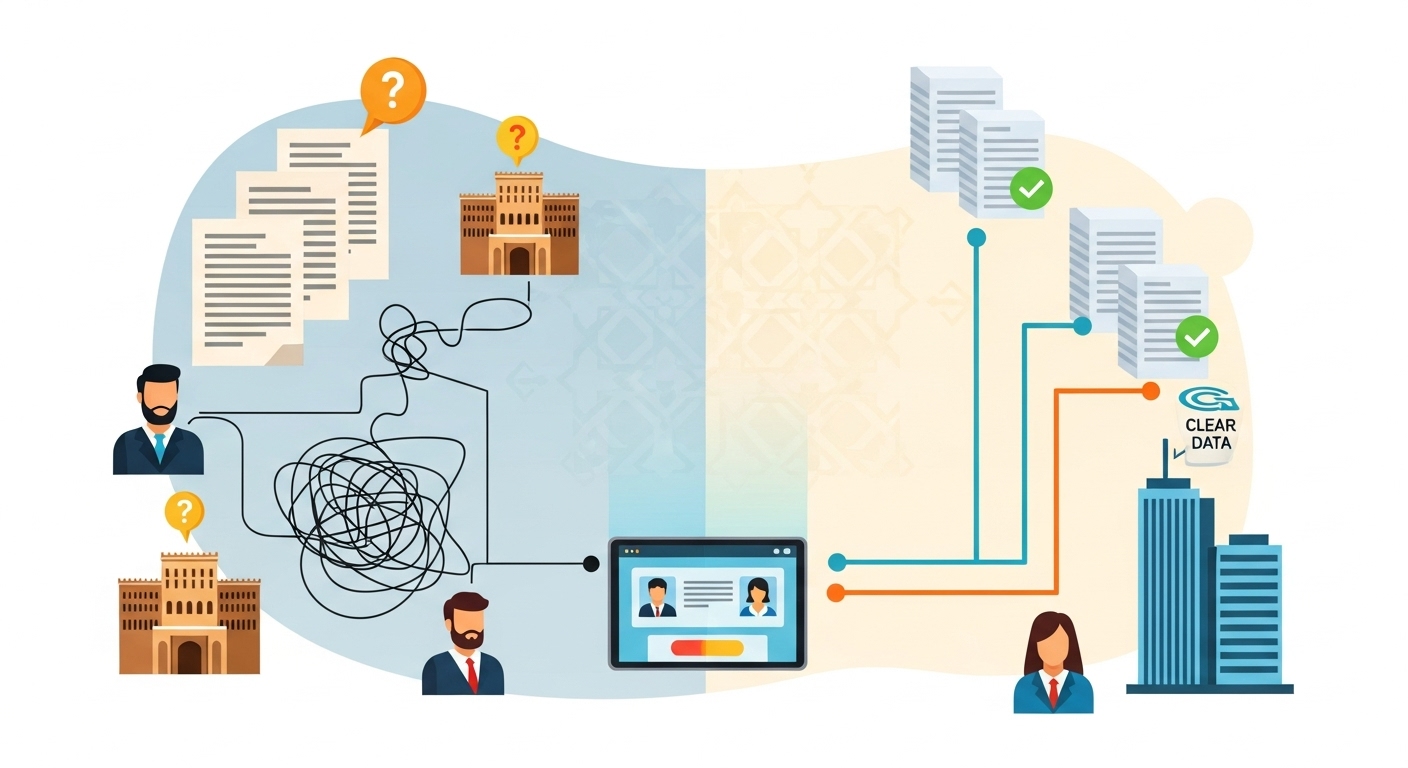
During the MHRSD investigation, it was revealed that the company had no centralized attendance tracking. Factory floor managers were accepting medical certificates via WhatsApp and failing to communicate these absences to the centralized HR team in Riyadh. Consequently, the HR department, relying purely on the biometric turnstile data showing “absent,” processed salary deductions.
The Result: The labor court ruled aggressively against the manufacturer. The company was forced to back-pay all deducted wages, pay punitive damages to the workers, and was hit with a SAR 150,000 fine by the MHRSD for failing to maintain accurate wage records. Furthermore, their GOSI portal was suspended for three weeks, delaying the renewal of essential operational licenses.
Key Takeaways for Corporate Survival
This scenario highlights several critical lessons for businesses operating in the Kingdom:
- Clear Communication is Not Enough; Centralization is Required: Word-of-mouth or casual messaging apps are not legally binding methods of tracking attendance. Data must flow directly from the employee to a centralized, unalterable database.
- Strict Verification Protocols: Medical leaves and emergency absences must be verified through official channels (such as the Sehaty app) and instantly logged against the employee’s specific legal balance.
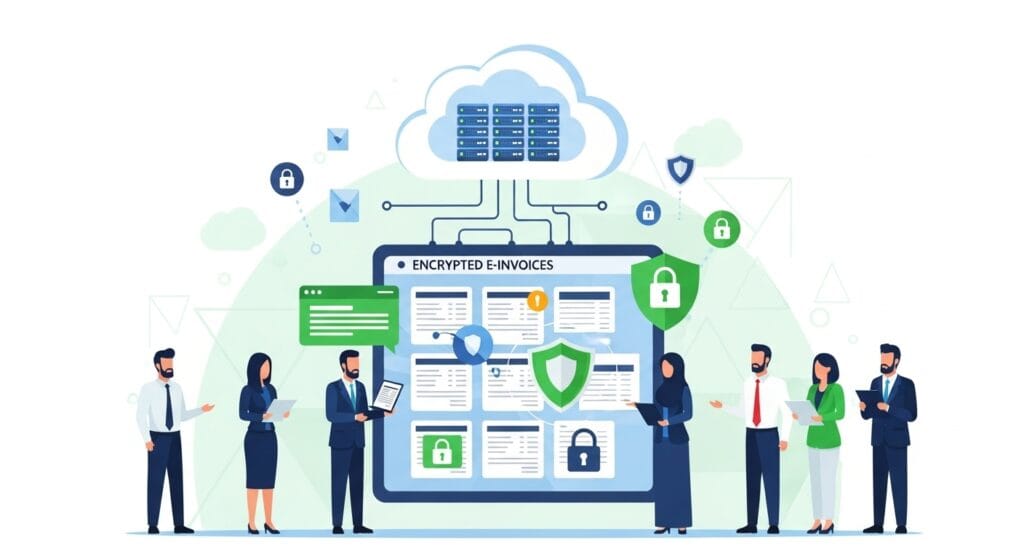
- Technological Accuracy is the Only Defense: In a labor dispute, a timestamped, digitally encrypted log from a reliable cloud based attendance system serves as irrefutable evidence, protecting the company from false claims.
4. The HR Tech Vanguard: Leading Competitors in Attendance Systems
Recognizing the immense pressure on Saudi businesses, the HR technology sector has exploded with localized solutions tailored to MHRSD regulations. Choosing the right software requires analyzing how well these systems integrate with government portals and handle the nuances of Saudi law.
|
System Name |
Core Features & Strengths |
Critical Integrations |
|
Jisr |
Built specifically for the Saudi market. Excels in managing remote workforce check-ins via mobile apps. Features a highly complex, auto-updating overtime and EOSB (End of Service Benefit) calculator. |
Deep, seamless integrations with GOSI, the Muqeem portal, and the Qiwa platform. |
|
ZenHR |
Offers unparalleled flexibility in data capture (GPS geofencing, dynamic QR codes, biometric fingerprints). Exceptional at managing complex, rotating shift patterns common in healthcare and manufacturing. |
Direct integrations with ZKTeco hardware devices and automated GOSI reporting pipelines. |
|
GeoAttend |
The premier choice for field-heavy industries (construction, logistics). Uses strict geo-fencing and live photo captures (Selfie check-ins) to eliminate time theft. Generates highly visual monthly compliance reports. |
Easily connects with broader mobile HR suites and internal payroll processors. |
|
Bayzat |
Focuses heavily on the financial side of attendance. Converts biometric data into real-time payroll dashboards. Excels in automating the creation of compliant Wage Protection System (WPS) files. |
Direct API links with major Saudi banks and the Mudad compliance platform. |
While standalone attendance apps provide significant value, enterprise-level organizations are increasingly turning toward unified platforms. Integrating time-tracking natively into your corporate architecture via comprehensive hrms cloud solutions ensures that every minute worked is instantly reconciled with your general ledger, eliminating data silos between HR and Finance.
5. Proven Legal Solutions: Strategies to Fortify Your Business
Technology alone cannot solve fundamental management flaws. To achieve airtight legal protection, companies must deploy a holistic strategy that combines clear internal governance with advanced technological tools.
Step 1: Implement and Distribute Signed Attendance Policies
Ambiguity is the enemy of compliance. Your company must draft an exhaustive employee handbook that explicitly details the attendance policy. This document must define the grace period for lateness, the exact procedure for requesting emergency leave, the company’s stance on unauthorized overtime, and the disciplinary matrix for attendance violations.
Crucially, this cannot be a document that simply lives on an intranet. Every employee must sign an acknowledgment form (digitally or physically) stating they have read, understood, and agreed to these terms. This signed document is your primary shield in any labor dispute.
Step 2: Conduct Regular HR Training on Evolving Laws
The regulatory environment in Saudi Arabia is dynamic. The MHRSD frequently issues new decrees, updates to the Nitaqat (Saudization) program, and modifications to WPS reporting standards. Your HR personnel cannot operate on outdated knowledge. Companies must invest in quarterly legal training sessions for their HR teams, ensuring they are intimately familiar with the latest labor law amendments and understand how to apply them to daily operations.
Step 3: Deploy an Advanced HRMS for Automation and Alerts
The sheer volume of data generated by an active workforce is too massive for human processing. By deploying an advanced HR Management System, you shift the burden of legal compliance from human memory to algorithmic precision.
An optimized system acts as an active guardian rather than a passive record-keeper. It should automatically alert managers when an employee is approaching their legal overtime limit for the month. It should block annual leave requests if the employee lacks the required balance. By enforcing these rules at the software level, the system physically prevents the company from accidentally breaking the law. For businesses seeking a holistic approach, implementing an odoo erp saudi arabia framework allows attendance data to trigger automated workflows across accounting, project management, and payroll simultaneously.
6. The Tangible ROI: Market-Proven Benefits of Compliance Tech
Investing in a state-of-the-art attendance and HR system represents a paradigm shift in how a business operates. The transition from manual anxiety to digital confidence yields highly measurable returns on investment.
- 99% Error Reduction in Payroll: By automating the gross-to-net calculations based on precise, unalterable attendance logs, mathematical errors are virtually eliminated. Employees are paid exactly what they have earned, down to the minute.
- Absolute Fine Avoidance: When your attendance policies are enforced by software, and your WPS files are generated accurately via automated pipelines, the risk of incurring those devastating SAR 10,000+ MHRSD fines drops to zero. The software acts as an insurance policy that pays for itself by preventing a single government penalty.
- Elevated Employee Satisfaction and Trust: Transparency breeds loyalty. When employees have access to a self-service mobile portal where they can view their exact worked hours, track their overtime, and see their leave balances in real-time, disputes evaporate. Workers feel respected and secure, leading to higher retention rates and increased productivity.
- Unmatched Scalability for Vision 2030: As your business scales to meet the opportunities of the Saudi economic boom, your administrative backend must be able to handle the weight. A robust system effortlessly manages the compliance complexities of opening new branches, hiring hundreds of new staff, and navigating evolving Saudization quotas, ensuring your growth remains unhindered by bureaucratic bottlenecks.
At Daysum, we understand that mastering human resource compliance is the foundation of sustainable corporate growth in the Kingdom. By replacing outdated practices with intelligent, automated solutions, businesses can transform attendance management from a daunting legal liability into a streamlined, strategic advantage.
Frequently Asked Questions (FAQs)
Under the Saudi PDPL, biometric data like fingerprints are classified as sensitive personal data. Employers must obtain explicit, documented consent from employees before collecting this data. Furthermore, the company must ensure the HRMS provider stores this data securely, strictly limits internal access, and does not use the biometric data for any purpose other than attendance verification.
Far far away, behind the word mountains, far from the countries Vokalia and Consonantia, there live the blind texts. Separated they live in Bookmarksgrove right at the coast
Legally, overtime must be formally assigned and approved by management. However, if your system allows an employee to continuously clock out late, and you do not officially document a warning or correction, labor courts may interpret your silence as implicit approval of the extra hours. This is why having an HRMS that automatically flags unauthorized overtime is legally crucial.
Integrating attendance with a broader ERP system eliminates the dangerous "data gap" between HR and Finance. When attendance data flows directly into the financial ledger, the payroll processing is 100% accurate. This ensures that the WPS file submitted to the government matches your bank transfers perfectly, completely insulating your business from wage-protection fines and sudden audits.