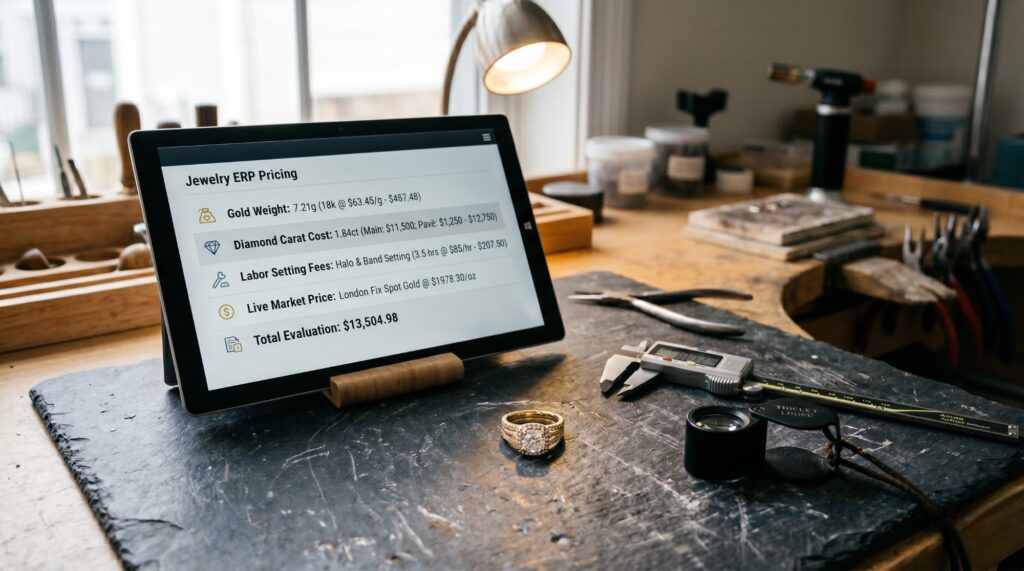
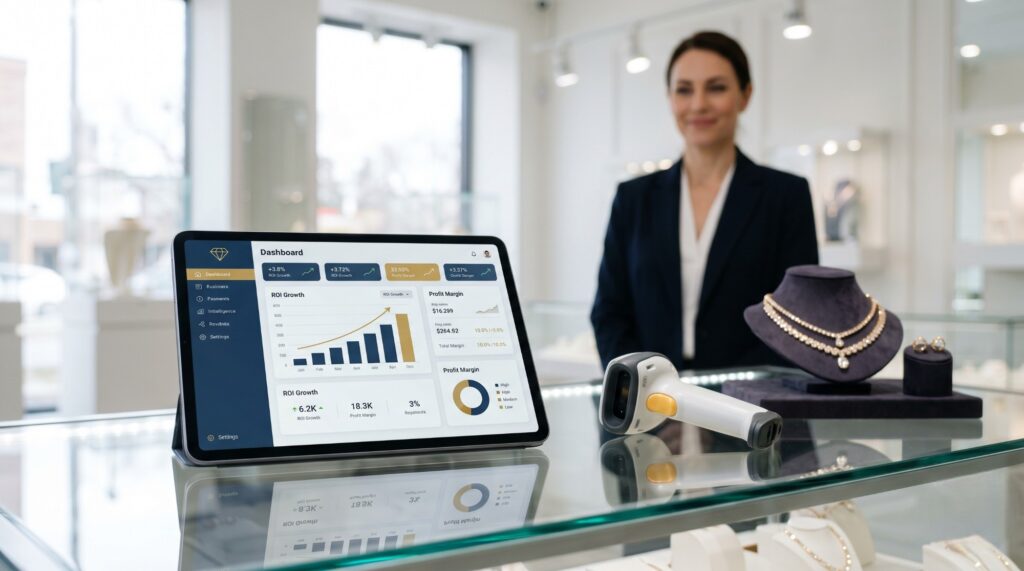
Calculating the Real ROI of Jewelry ERP Software
Upgrading your retail technology is a significant financial commitment. For many jewelry store owners, purchasing a new management system feels like a sunk cost—an unavoidable expense required simply to keep the doors open. However, this mindset fundamentally misunderstands the purpose of modern retail technology. A properly implemented system is not a cost center; it is a high-yield investment. Understanding your Jewelry Software ROI (Return on Investment) transforms how you view your business operations, revealing exactly how digital infrastructure pays for itself by plugging financial leaks, optimizing inventory, and driving unprecedented revenue growth. Whether you operate a high-end diamond boutique or a high-volume silver business, the financial mechanics remain the same. The Best diamond POS does more than ring up sales; it protects your margins on high-ticket items through precise costing. A robust Silver shop ERP accelerates cash flow by ensuring fast-moving inventory is constantly replenished. By analyzing the direct impact of technology on cost reduction, inventory turnover, and overall operating profit, you can accurately calculate the monetary value of efficiency. This guide breaks down the true financial returns of implementing an advanced jewelry management system. 1. Saving Audit Costs and Reducing Administrative Waste The most immediate and measurable return on your software investment comes from radical Cost reduction in your administrative and accounting departments. In the jewelry industry, auditing is a notoriously complex and expensive process. Tracking fluctuating gold prices, calculating multi-tiered staff commissions, and reconciling wholesale invoices requires hundreds of hours of manual labor if relying on outdated spreadsheets. Eliminating Manual Data Entry Every hour an employee spends manually entering data from a physical sales ledger into a generic accounting program is an hour of wasted payroll. Furthermore, manual data entry is highly susceptible to human error. A misplaced decimal point on a diamond purchase order can skew your entire monthly financial report, forcing your certified public accountant (CPA) to spend expensive billable hours hunting down the discrepancy. Modern ERP software eliminates this administrative bloat. Because the point-of-sale, inventory, and accounting modules are fully unified, a single transaction instantly updates the entire system. By utilizing automated financial ledgers, your daily sales, tax calculations, and cost of goods sold (COGS) are reconciled instantly without human intervention. Streamlining the Auditing Process When tax season arrives or when stakeholders request a financial health check, generating accurate reports takes seconds rather than weeks. Your accountant no longer needs to audit a mountain of paper receipts to verify your Operating profit. The system provides a transparent, immutable digital paper trail for every gram of silver and every carat of diamond in your vault. This extreme accuracy drastically reduces the billable hours charged by external auditors, providing an immediate, hard-dollar boost to your Jewelry Software ROI. 2. Calculating the System Payback Period The payback period is the exact amount of time it takes for the software to generate enough savings and additional revenue to cover its initial purchase and implementation costs. For a high-performing jewelry ERP, this period is surprisingly short—often measured in months, not years. Protecting Margins with the Best Diamond POS The payback period accelerates rapidly when you leverage industry-specific tools. For example, utilizing the Best diamond POS ensures that complex pricing formulas are strictly enforced. Diamond pricing is incredibly nuanced, factoring in the 4Cs, specific certifications, and fluctuating market premiums. If a sales associate manually miscalculates a discount or misreads a price tag on a 2-carat stone, the store instantly loses thousands of dollars in pure profit. An advanced POS system removes this risk entirely. It locks in minimum profit margins and requires managerial override for deep discounts. By preventing just a handful of these expensive manual pricing errors, the software effectively pays for itself. Automating B2B and Wholesale Operations For jewelers who manage both retail storefronts and B2B wholesale distribution, the payback period is even shorter. Managing purchase orders, vendor terms, and bulk landed-cost calculations manually limits how many clients a wholesale team can manage. An ERP automates vendor communications, tracks international exchange rates, and dynamically adjusts wholesale pricing based on live metal markets. This increased operational capacity allows your existing team to handle a larger volume of B2B transactions without requiring you to hire additional administrative staff. 3. Preventing Sales Loss and Optimizing Inventory Turnover A jewelry store’s capital is entirely tied up in its physical stock. If that stock is poorly managed, cash flow stagnates. One of the most powerful drivers of Jewelry Software ROI is the system’s ability to optimize your inventory, ensuring you have exactly what your customers want, exactly when they want it. Eradicating Stockouts in Silver Operations Silver jewelry operates on a high-volume, high-frequency sales model. The primary threat to a silver retailer is the “stockout”—running out of a popular item while customer demand is high. If a client wants a specific silver chain and your display case is empty, that sale is lost forever to a competitor. A dedicated Silver shop ERP actively monitors your inventory levels against historical sales data. It sets automated reorder points for your fastest-moving items, alerting your purchasing department to restock weeks before the item actually runs out. By preventing these lost sales, the system directly increases your top-line revenue and significantly boosts your Inventory turnover rate. Identifying and Liquidating Dead Stock Equally dangerous to a jeweler’s profitability is Dead stock—items that sit in the vault for months or years without selling. These items tie up valuable working capital and incur ongoing insurance costs. Without sophisticated software, dead stock often goes unnoticed, hiding in the back of the safe. By deploying specialized gold and jewelry solutions, management gains real-time visibility into stock aging. The dashboard immediately flags items that have not moved in over 180 days. Armed with this data, you can take strategic action: bundle the slow-moving items with popular pieces, apply targeted discounts, or return them to the vendor for a meltdown credit. Liquidating dead stock frees up trapped capital, allowing you to reinvest in fresh, high-demand inventory that drives actual profit. 4. Driving Sustainable Profit