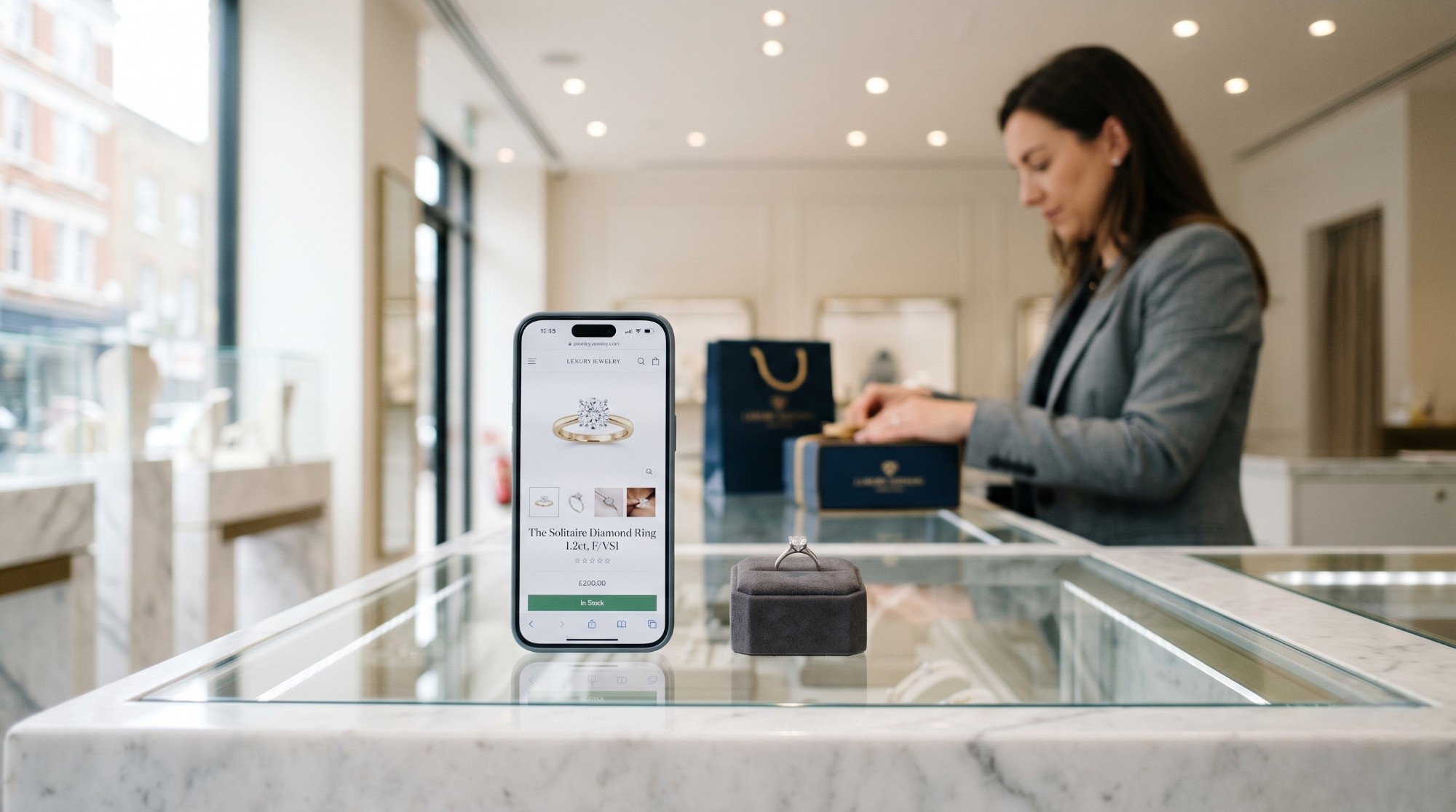
The jewelry industry has historically relied on the physical retail experience. The brilliance of a diamond under display lights, the weight of a gold necklace, and the personalized service of an expert jeweler are tangible elements that build trust and drive sales. However, the modern consumer demands more than just a beautiful storefront; they expect the convenience of browsing, purchasing, and interacting with your brand online. To thrive in this highly competitive market, jewelers must bridge the gap between their brick-and-mortar locations and their digital storefronts.
The solution lies in adopting an Omnichannel Jewelry ERP—a comprehensive management system that unifies your physical and digital operations. By seamlessly connecting your physical jewelry store to your e-commerce platform, you can effectively double your retail revenue, eliminate inventory discrepancies, and provide a world-class customer journey. From high-ticket diamond transactions to high-volume silver sales, an omnichannel strategy ensures that your business is always open, accessible, and perfectly synchronized.
1. The Growing Importance of Online Sales in Jewelry
The transition from traditional retail to digital commerce is no longer a futuristic concept; it is the current reality. While the physical store remains the heart of the jewelry business, online sales have become its primary growth engine.
Shifting Consumer Behavior and Digital Sales
Today’s consumers begin their purchasing journey on their smartphones. Whether they are researching engagement ring styles, comparing silver bracelet prices, or looking for a trusted local jeweler, their first point of contact is digital. By establishing a robust online presence, you capture this top-of-funnel traffic. Digital sales in the jewelry sector have surged, demonstrating that customers are entirely comfortable making significant financial investments via online platforms, provided the brand presents itself professionally and securely.
The Rise of Diamond E-commerce
Historically, industry experts believed that high-value items like diamonds would never sell well online because customers needed to inspect the stones in person. The explosion of Diamond ecommerce has shattered this myth. With the advent of high-definition 360-degree videos, digital GIA certificates, and secure, insured shipping, customers are confidently purchasing premium diamonds without ever setting foot in a store. If your physical inventory is not visible to the online market, you are artificially limiting your revenue potential and missing out on an entirely new demographic of buyers.
2. Real-Time Stock Sync: The Heart of Omnichannel
The most significant challenge jewelers face when expanding online is inventory management. Jewelry inventory is uniquely complex; you are tracking individual pieces, varying carat weights, specific ring sizes, and fluctuating metal prices. Managing two separate inventories—one for the store and one for the website—is a recipe for disaster.
Avoiding the “Out of Stock” Nightmare
Imagine a scenario where a customer walks into your boutique and purchases a unique, one-of-a-kind sapphire ring. Ten minutes later, an online shopper adds that same ring to their cart and completes the checkout process. Without real-time synchronization, you now have to cancel the online order, process a refund, and apologize to a highly disappointed customer, potentially ruining your brand’s reputation.
An Omnichannel Jewelry ERP prevents this by maintaining a single, centralized database. The moment an item is sold in-store, it is instantly removed from your e-commerce platform. Implementing specialized jewelry management software ensures that your physical stock and digital catalog are always a perfect mirror reflection of each other.
Silver Stock Sync and High-Volume Management
While diamond inventory requires precise tracking of unique items, silver jewelry presents a different challenge: high volume and rapid turnover. Silver stock sync is critical because these accessible items often move fast, both online and in-store. An automated system tracks bulk inventory, alerting you when specific silver chains or popular earring designs fall below optimal stock levels. This allows your purchasing department to reorder proactively, ensuring you never miss a sale due to an empty display case or an “Out of Stock” badge on your website.
Automated Shopify Sync and Zid Integration
Modern jewelry ERPs are designed to plug directly into the world’s leading e-commerce platforms. Whether you use global giants or regional favorites, the connection must be flawless. A direct Shopify sync allows you to push new inventory, update high-resolution images, and adjust pricing instantly across your global storefront.
For businesses operating in the Middle East, connecting with local platforms like Zid or Salla is equally vital. By utilizing seamless ERP integrations, you can manage your local and international digital sales from the same dashboard you use to run your physical point-of-sale, dramatically reducing administrative workload and the risk of human error. Selling jewelry across a showroom, an online store, and social checkout only works reliably when all three pull inventory and pricing from one ERP. Talk to us about connecting your existing online channels to a single stock source.
3. Handling Returns and Exchanges Across Channels
A true omnichannel approach is not just about selling; it is about providing flexible, customer-centric post-purchase support. The way you handle returns and exchanges can either cement a customer’s loyalty or drive them to your competitors.
Bridging the Gap: Buy Online, Return In-Store (BORIS)
Consumers love the convenience of online shopping, but they often prefer the security of handling returns in person. The “Buy Online, Return In-Store” (BORIS) model is a massive competitive advantage. If a customer buys a necklace online but decides it isn’t the right length, allowing them to walk into your physical store to exchange it creates a seamless transition between your digital and physical presence.
An Omnichannel Jewelry ERP handles the complex backend logistics of this transaction smoothly. When the item is returned in-store, the system instantly updates the global inventory, making the piece available for sale again, while adjusting the financial ledgers to account for the online refund or the in-store exchange.
Online Payments, Refunds, and Compliance
Managing Online payments requires absolute security and flawless accounting. When a customer pays via a digital gateway, the transaction must be instantly recorded in your central financial system. In regions with strict tax regulations, such as Saudi Arabia, these digital transactions must also comply with local laws.
Integrating your e-commerce platform with your financial software ensures that every online sale automatically generates ZATCA-compliant electronic invoicing. This means that whether a customer buys a diamond online or a silver ring in-store, the tax data is uniform, accurate, and ready for governmental reporting, eliminating the headache of manual reconciliation at the end of the month. Integrating your operations into a single platform is why many explore Role Of E Invoicing In Enhancing Financial Transparency And Credibility.
4. Crafting a Unified Shopping Experience
The ultimate goal of connecting your physical store to your e-commerce platform is to provide a frictionless Shopping experience. Consumers do not view your website and your physical store as two separate businesses; they view them as one brand. Your operations must reflect this.
Unifying Customer Profiles and Loyalty
An omnichannel system consolidates customer data into a single, comprehensive profile. If a customer buys an engagement ring in your physical store, your online platform should “know” this. When that same customer logs into your website months later, the system can automatically suggest matching wedding bands or anniversary gifts based on their past in-store purchase history.
This level of personalization builds incredible brand loyalty. By offering unified reward programs—where points earned in-store can be redeemed online, and vice versa—you incentivize customers to interact with your brand across all available channels.
Blending the Physical and Digital Worlds
Omnichannel retail allows you to leverage the strengths of both worlds. You can offer “Click and Collect” (Buy Online, Pick Up In-Store), which drives foot traffic to your physical location, where sales associates can cross-sell additional items. Alternatively, if a physical store does not have a customer’s specific ring size in stock, an associate can use the in-store ERP terminal to process an “Endless Aisle” transaction, ordering the ring from the central warehouse and shipping it directly to the customer’s home.
Conclusion: Connecting Your Physical Jewelry Store to E-Commerce
The future of jewelry retail does not force a choice between a physical storefront and an e-commerce website; it demands the flawless integration of both. By implementing an Omnichannel Jewelry ERP, you empower your business to manage complex diamond and silver inventories, synchronize stock in real-time across platforms like Shopify and Zid, and deliver an unparalleled Shopping experience. Embracing this digital transformation ensures your jewelry brand remains relevant, profitable, and ready to meet the demands of the modern consumer.
FAQ
A: Yes. Specialized jewelry ERPs are designed to track specific item attributes, including the 4Cs (Cut, Color, Clarity, Carat), GIA certificate numbers, and serial numbers, ensuring precise tracking whether the stone is sold in-store or through Diamond ecommerce.
A: No. A modern cloud-based ERP updates inventory via direct API connections in the background. The Shopify sync or Zid integration happens in milliseconds, ensuring your in-store operations remain fast and uninterrupted.
A: For high-volume items, Silver stock sync automates reordering and tracks fast-moving trends across both physical and digital sales channels, preventing stockouts and maximizing daily revenue.
A: With an integrated ERP, it is incredibly simple. The system instantly recognizes the online order number, processes the return, updates the inventory pool, and manages the financial adjustment in one streamlined workflow.