In today’s fast-paced corporate environment, managing human capital has evolved from a purely administrative function into a core strategic pillar that drives business growth. Traditional HR departments often find themselves overwhelmed by mountains of paperwork, disjointed spreadsheets, and endless manual calculations. This administrative chaos not only drains valuable time but also increases the risk of costly errors in Payroll processing, shift scheduling, and compliance with local Labor law regulations.
To overcome these operational hurdles and unlock the true potential of their workforce, forward-thinking organizations are rapidly adopting digital transformation strategies. At the heart of this shift lies the implementation of robust Personnel affairs software and integrated HRMS system solutions. These advanced platforms consolidate scattered data, automate repetitive tasks, and provide HR professionals with the tools they need to make data-driven decisions.
In this comprehensive guide, we will explore the transformative power of modern HR management technologies. We will delve into how centralized systems, particularly those built on the robust framework of the Odoo Community edition—expertly integrated by certified specialists like Daysum—can empower your organization to seamlessly control payroll, manage complex Attendance system requirements, and optimize shift schedules, all with a single click.
The Hidden Costs of Fragmented HR Operations
Before delving into the digital solutions, it is crucial to understand the severe limitations of traditional, fragmented HR operations. When an organization relies on separate, non-communicating tools—such as biometric devices that do not sync directly with payroll software, or vacation requests managed via email—it creates dangerous operational silos.
This fragmentation leads to several critical business challenges:
- Data Inconsistencies and Payroll Errors: Manually transferring attendance data from time clocks to payroll spreadsheets is a recipe for disaster. A simple typo can result in underpaying or overpaying employees, leading to deep dissatisfaction, loss of trust, and potential legal disputes.
- Compliance Risks: Local labor regulations regarding overtime calculation, end-of-service benefits, and mandatory rest periods are strict and constantly evolving. Manual tracking makes it nearly impossible to ensure 100% compliance, exposing the company to hefty fines.
- Strategic Blind Spots: When HR managers spend 80% of their time resolving administrative bottlenecks and tracking down paper approvals for Vacations, they have zero bandwidth left for strategic initiatives like Performance evaluation, talent retention, and corporate culture development.
To eliminate these inefficiencies, organizations must transition to a unified HRMS cloud solutions platform. A unified system acts as a single source of truth, ensuring that every HR action, from onboarding to offboarding, is recorded accurately and transparently.
The Core of Efficiency: Centralized Payroll Automation
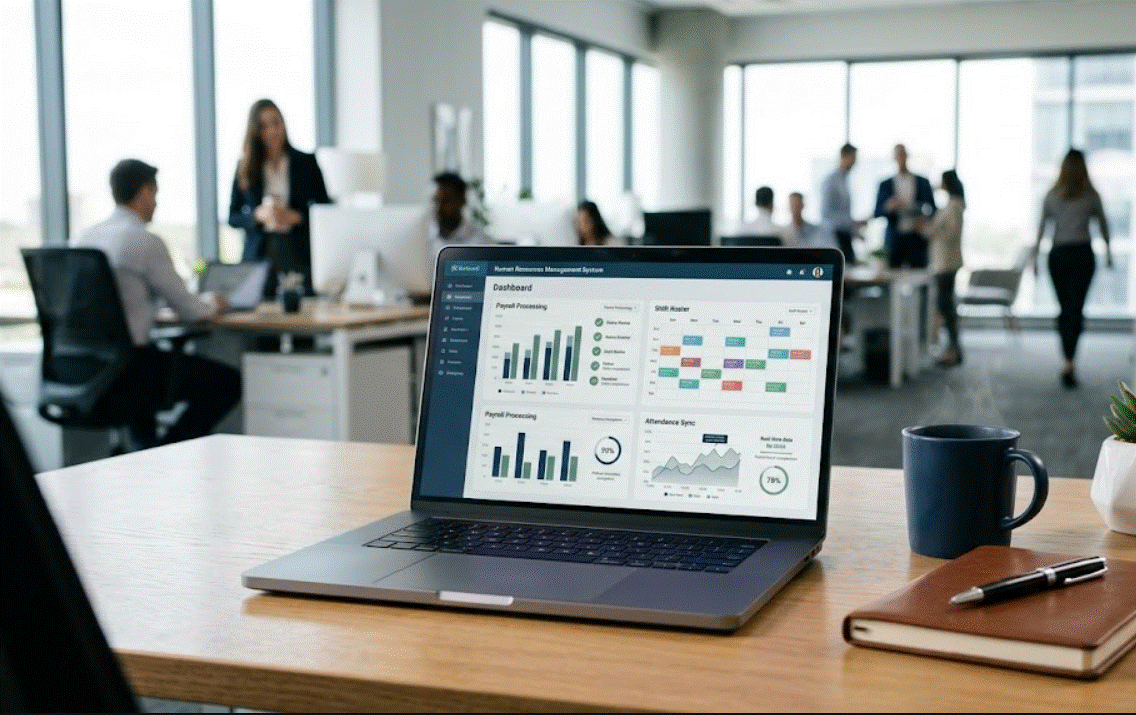
The payroll process is arguably the most sensitive and critical function within any HR department. It demands absolute accuracy, timely execution, and strict adherence to tax and labor regulations. An integrated HR management system revolutionizes this process by automating the entire payroll lifecycle.
By leveraging the capabilities of a comprehensive ERP solution like the Odoo Community platform, payroll ceases to be a week-long ordeal and becomes a seamless, one-click operation. The system automatically gathers data from various integrated modules:
- Base Salary & Contracts: It reads the employee’s contract details, including base salary, allowances, and customized benefits.
- Attendance & Deductions: It instantly syncs with the Attendance system to calculate exact working hours, automatically applying deductions for late arrivals or unexcused absences.
- Overtime & Bonuses: It computes overtime compensation based on predefined Labor law formulas and adds any performance bonuses approved by management.
- Taxes & Social Insurance: It automatically calculates and deducts the exact percentages required for social insurance and income tax, generating compliant reports for government authorities.
With all variables instantly compiled and cross-verified by the system’s algorithms, the HR manager simply reviews the generated “Payslip Batch” and clicks ‘Confirm’. This level of automation guarantees zero calculation errors and ensures that employees are paid accurately and on time, every time.
Comparing Traditional Payroll vs. Automated Odoo Community Payroll
| Payroll Component | Traditional / Fragmented Methods | Automated Odoo Community System (via Daysum) |
| Data Collection | Manual export/import from biometric devices to Excel. | Real-time, automatic sync between time clocks and the payroll module. |
| Overtime Calculation | Calculated manually using complex spreadsheets; high error rate. | Handled automatically based on pre-set, law-compliant mathematical formulas. |
| Payslip Generation | Takes days of intensive administrative work. | Generated instantly in batches with a single click at the end of the cycle. |
| Financial Integration | Requires manual data entry into the accounting system by the finance team. | Automatically posts accurate journal entries to the General Ledger upon confirmation. |
Mastering Time: Advanced Attendance and Shift Scheduling
Managing workforce attendance goes far beyond simply knowing what time an employee walked through the door. In industries with complex operational demands—such as manufacturing, retail, or healthcare—managing multiple shifts, rotating rosters, and variable working hours is a logistical nightmare without the right Personnel affairs software.
An advanced Attendance system integrated within an HRMS system provides dynamic solutions for these challenges. It allows HR managers to create flexible shift templates and assign them to individuals, teams, or entire departments. The system easily handles overlapping shifts, night shifts, and flexible working hours, ensuring adequate coverage across all operational hours.
Moreover, the integration ensures that exceptions are handled smoothly. If an employee requests a sudden shift swap, the system automatically checks for conflicts, ensures maximum working hour limits are not breached, and updates the roster in real-time once approved. This proactive shift management minimizes overtime costs, prevents employee burnout, and ensures that business operations run without interruption. To explore deeper into these capabilities, companies should consider reviewing the Top 5 Features in Attendance Management Software to understand what makes a system truly effective. Managing your workforce efficiently starts with adopting modern solutions like How Data Analytics Contributes To Improved Attendance Management.
Empowering the Workforce: Employee Self-Service (ESS)
A modern approach to HR management recognizes that empowering employees with self-service tools is essential for reducing administrative overhead and boosting morale. The Odoo Community platform features a highly intuitive Employee Self-Service (ESS) portal, accessible via web browsers and smartphones.
Through this portal, employees take control of their own HR-related tasks without having to constantly interrupt the HR department. They can:
- Manage Vacations: View their real-time leave balances and submit time-off requests. The system automatically routes the request to their direct supervisor for approval.
- Access Payslips: View and download detailed, secure digital payslips at their convenience.
- Submit Expense Reports: Upload photos of receipts and submit expense claims directly from their mobile phones for quick reimbursement.
- Request Loans: Apply for company loans or salary advances, which, once approved, are automatically scheduled for deduction in the upcoming payroll cycles.
By decentralizing these routine requests, the ESS portal eliminates the paper trail, drastically reduces processing times, and significantly enhances the overall employee experience. For organizations looking to understand the full impact of these portals, learning What Are Employee Self-Service (ESS) Systems is a crucial step toward digital maturity.
Cultivating Talent: Streamlined Performance Evaluation
While automating payroll and attendance handles the transactional side of HR, the strategic side relies heavily on talent management and Performance evaluation. A company cannot grow if its employees are not growing. Traditional annual appraisals are often subjective, biased, and detached from daily operational realities.
The HRMS system transforms appraisals into a continuous, data-driven process. HR managers can design customized appraisal templates featuring 360-degree feedback, incorporating self-evaluations, peer reviews, and managerial assessments.
Because the system is integrated, managers have access to objective data points during the evaluation process—such as the employee’s attendance record, punctuality, and project completion rates. This holistic visibility ensures that appraisals are fair, transparent, and directly tied to measurable KPIs. Furthermore, the system helps identify skill gaps, allowing HR to proactively suggest training programs or career development paths, thereby nurturing a highly motivated and skilled workforce.
TThe Strategic Impact of Integrated HRMS
| HR Function | Operational Challenge | Strategic Benefit of Integration (Odoo Community) |
| Leave Management | Tracking balances and coordinating paper approvals causes delays. | Automated workflows ensure rapid approvals and precise balance updates. |
| Compliance Management | High risk of violating local labor laws regarding hours and benefits. | Built-in rules and automated calculations ensure 100% legal compliance. |
| Employee Engagement | Staff feel disconnected and frustrated by slow HR responses. | Self-service portals provide autonomy, transparency, and immediate access to information. |
| Data & Analytics | Gathering data for HR reports takes weeks of manual collation. | Real-time, interactive dashboards provide instant insights into turnover, costs, and performance. |
The Daysum Advantage: Integrating Odoo Community for Maximum ROI
Choosing the right software is only half the battle; integrating it flawlessly into your company’s unique operational DNA is what guarantees success. This is where Daysum, as an expert technical integrator, delivers unparalleled value.
Daysum specializes in deploying and heavily customizing the highly flexible Odoo Community edition to perfectly match the rigorous demands of the Saudi and regional markets. Rather than forcing your business to adapt to rigid software constraints, Daysum tailors the Personnel affairs software to reflect your specific shift patterns, complex payroll structures, and unique approval hierarchies.
By leveraging Daysum’s deep technical expertise and seamless API integration capabilities, your organization can connect existing biometric devices, external accounting tools, and legacy databases into one unified Odoo ecosystem. This holistic integration ensures that every module—from HR and Payroll to Accounting and Sales—communicates in perfect harmony. For a deeper understanding of how these comprehensive integrations drive business success, reviewing a Complete Guide to Smooth Odoo ERP Implementation will provide the necessary roadmap for your digital transformation journey.
Conclusion: Transforming HR from Cost Center to Strategic Partner
In conclusion, the era of managing human resources through disconnected spreadsheets, manual data entry, and paper-based approvals is officially over. To remain competitive, compliant, and capable of attracting top talent, organizations must embrace the power of digital automation.
Implementing a comprehensive HR management platform powered by the Odoo Community edition and expertly integrated by Daysum allows you to control payroll, attendance, and complex shifts with unprecedented ease and accuracy. By eliminating administrative friction, you not only protect your company from costly errors and legal liabilities but also free up your HR professionals to focus on what truly matters: developing your people and driving your business forward. The transformation from an administrative cost center to a strategic, value-adding partner begins with that single, powerful click.
Frequently Asked Questions (FAQs)
Yes, absolutely. The system is designed with high flexibility to accommodate complex operational needs. HR managers can create multiple, overlapping shift templates, including night shifts and rotating rosters. The system automatically aligns these schedules with the biometric attendance data, ensuring that overtime, shift differentials, and late penalties are calculated accurately without any manual intervention.
The HRMS integrated by Daysum is heavily localized to respect regional labor laws. The system's payroll and attendance engines are pre-configured with the exact mathematical formulas required by law for calculating regular overtime, holiday pay, and end-of-service benefits. Additionally, it enforces legal limits on maximum working hours and automatically accrues annual leave balances according to the employee's tenure and contract type, ensuring strict, automated compliance.
The system is equipped with smart anomaly detection. If a punch-out is missing, the system will flag the attendance record as "Incomplete" or "Action Required." It can automatically send a notification to the employee via the self-service portal and to their direct manager. The manager or HR admin can then review the case and manually input the correct exit time, ensuring that the payroll calculation at the end of the month remains perfectly accurate.
Yes, the ESS portal is fully responsive and optimized for mobile browsers, allowing employees to submit requests, view payslips, and check balances directly from their smartphones, anywhere and at any time. Security is a top priority; the system uses robust encryption protocols and strict role-based access control (RBAC), meaning employees can only access their own personal data, and managers can only view information relevant to their direct subordinates.