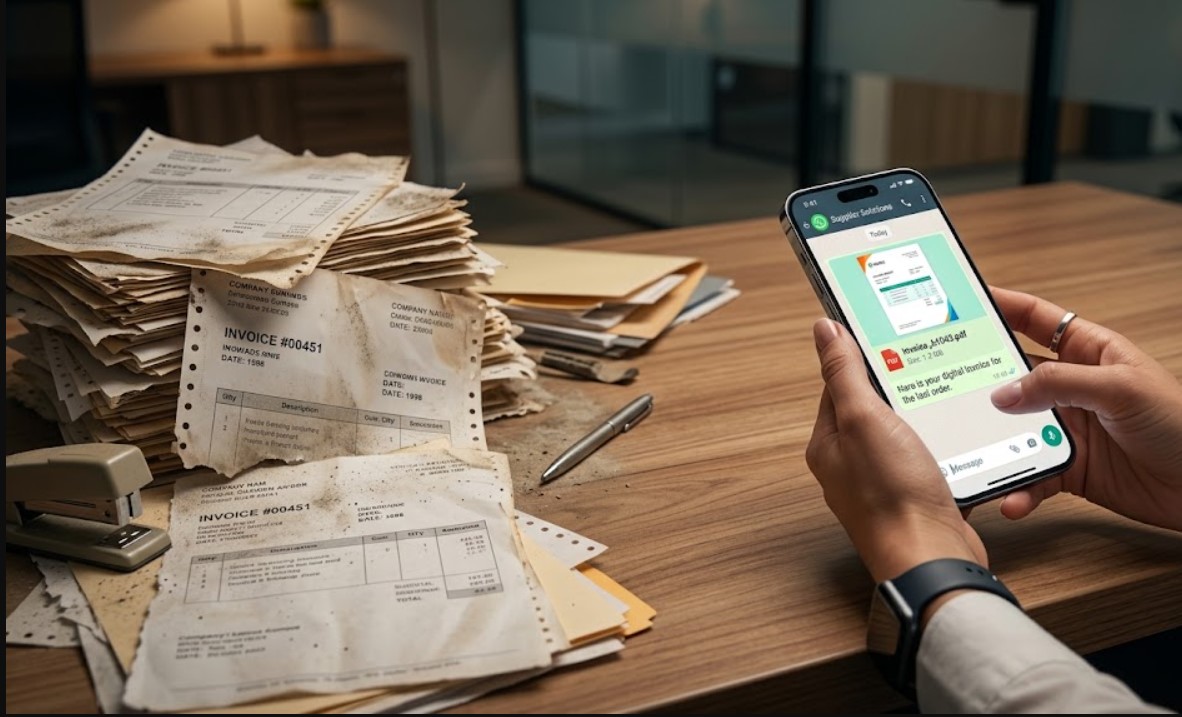
In the rapidly evolving landscape of corporate commerce within the Kingdom of Saudi Arabia, the methods by which businesses communicate, trade, and exchange documentation are undergoing a radical shift. The traditional image of a bustling accounting department—filled with stacks of paper, noisy printers, and couriers rushing to deliver physical documents to clients—is quickly becoming obsolete. In its place, a streamlined, highly efficient digital ecosystem is emerging. At the very forefront of this transformation is the adoption of WhatsApp Invoicing, a technological leap that is fundamentally altering how B2B (Business-to-Business) stores and corporate entities manage their financial communications.
For decades, the standard procedure for billing a corporate client involved printing multiple copies of an invoice, signing them, stamping them with the company seal, and physically mailing them. Even the transition to standard email brought its own set of challenges, with invoices frequently getting lost in spam folders or ignored in overflowing corporate inboxes. Today, the modern solution lies in leveraging the world’s most widely used messaging application. By integrating enterprise resource planning (ERP) systems directly with instant messaging platforms, businesses are pioneering an era of Paperless billing KSA.
This transition is not merely a superficial tech trend; it is a profound operational strategy. By sending B2B digital invoices directly to a client’s smartphone as clean, professional PDF documents, companies are reaping massive operational benefits. In this comprehensive guide, we will explore the five core reasons why adopting this integration is no longer optional, but an absolute necessity for businesses looking to dominate the modern market. We will delve deeply into how this practice eliminates waste, accelerates operations, and fortifies client relationships.
Reason 1: Drastic Printing Costs Reduction (Saving Paper)
The most immediate and tangible benefit of transitioning to a digital messaging delivery system is the absolute eradication of physical paper trails. In a standard B2B wholesale or manufacturing environment, a single transaction does not just generate one piece of paper. It generates a cascade of physical documents: the original invoice for the client, a duplicate for the finance department, a triplicate for the warehouse, and often additional delivery notes.
When a company scales and processes hundreds or thousands of transactions monthly, the financial burden of this paper-based system becomes staggering. The costs are not limited merely to purchasing boxes of A4 paper. The hidden expenses include the exorbitant costs of printer ink and toner cartridges, the routine maintenance and repair of heavy-duty office printers, and the physical space required to store these documents. Archiving years of physical invoices requires buying filing cabinets and sometimes even renting dedicated storage rooms, which consumes valuable corporate real estate.
By adopting WhatsApp Invoicing, a business completely bypasses this archaic physical infrastructure. The ERP system generates a flawless, high-resolution PDF document internally. With a single click, this document is securely transmitted to the client’s verified mobile number. There is no printing, no physical stamping, and no physical archiving required on the sender’s end. The digital file is stored safely in the cloud and rests comfortably in the client’s chat history. This fundamental shift plays a massive role in reducing operational costs for businesses, allowing financial directors to reallocate the printing and storage budget toward strategic growth initiatives.
Financial and Operational Comparison: Paper vs. WhatsApp Invoicing
| Operational Metric | Traditional Paper-Based Invoicing | Digital WhatsApp Invoicing |
| Material Costs | High continuous expenses (Paper, Ink, Toner, Envelopes). | Zero physical material costs. |
| Storage Requirements | Requires filing cabinets, binders, and physical archive rooms. | Cloud-based internal storage and digital chat logs. |
| Document Longevity | Vulnerable to physical damage, fading ink, fire, or misplacement. | Permanent digital PDF file, immune to physical degradation. |
| Retrieval Speed | Takes minutes or hours searching through physical archive folders. | Found in seconds using chat search functions or ERP logs. |
Reason 2: Unmatched Time Savings and Efficiency
In the corporate world, time is the most expensive commodity. The traditional invoicing cycle is notoriously slow and labor-intensive. Consider the lifecycle of a physical B2B invoice: the accountant prepares it, prints it, waits for an authorized manager to sign it, places it in an envelope, and coordinates with a courier or postal service for delivery. The courier then navigates city traffic to reach the client’s headquarters, hands it to a receptionist, who eventually routes it to the client’s accounts payable department. This process can take anywhere from 24 to 72 hours.
Even relying on traditional email has its time-draining flaws. Emails require drafting formal subject lines and body text, and there is often no immediate confirmation that the client has actually opened or viewed the attached document.
This is where the concept of instant document delivery completely revolutionizes the workflow. When an invoice is sent via WhatsApp, the delivery time is reduced from days to milliseconds. The moment the accountant generates the invoice in the ERP, it is pushed directly to the pocket of the client’s purchasing manager or finance director. Furthermore, the application’s read-receipt feature (the universally recognized double blue ticks) provides immediate, undeniable confirmation that the document has been received and viewed.
This speed eliminates the common delay tactic of clients claiming, “We never received the invoice in the mail.” By ensuring instant delivery and confirmed receipt, the accounting department saves countless hours that were previously wasted on follow-up calls and tracking lost documents, thereby accelerating the entire billing and reconciliation cycle.
Reason 3: Elevating Customer Service Communication
A successful B2B relationship is built on accessibility, clarity, and rapid support. Today’s corporate buyers, purchasing managers, and business owners in Saudi Arabia overwhelmingly prefer instant messaging over formal emails or phone calls for daily business operations. Meeting your clients where they already spend their time is a masterclass in operational empathy.
When a client receives a physical invoice or a formal email, asking a simple question about a specific line item requires drafting a formal reply or navigating an automated phone menu to reach the billing department. It creates unnecessary friction. However, when you utilize WhatsApp Invoicing, you are opening a direct, conversational, and highly responsive channel for Customer service communication.
If the client needs clarification on a discount applied, or wants to confirm the delivery schedule for the billed items, they simply reply directly to the message containing the invoice. Your customer service or finance representative can address the query instantly within the same chat thread. This immediate, conversational support removes administrative barriers, resolves billing queries in real-time, and significantly strengthens client trust. Utilizing modern communication channels for financial document delivery is a proven methodology for improving customer experience, turning a routine administrative task into an opportunity to build stronger corporate relationships.
Reason 4: Automated Client Contact Management and Database Building
One of the most profound, yet frequently overlooked, strategic benefits of this digital transition is its impact on corporate data organization. In many B2B companies, client phone numbers and direct contact details are scattered. They might reside in a salesperson’s personal mobile phone, on a handwritten business card, or in an outdated spreadsheet. If a key sales representative leaves the company, that vital direct contact information often leaves with them, creating a massive disconnect between the business and its clients.
Implementing a system that sends invoices via messaging forces a company to execute rigorous Client contact management. To successfully deliver the document, the ERP system must have the correct, verified, and active mobile number of the key decision-maker (such as the procurement manager or finance director) saved centrally in the corporate database.
This process acts as an automated data-cleansing mechanism. Every time an invoice is successfully delivered, the company verifies that its contact database is accurate and up-to-date. Over time, the business builds an incredibly valuable, centralized, and corporate-owned directory of verified decision-makers. This centralized contact repository ensures that the business retains ownership of its client relationships, independent of any individual employee. Furthermore, this pristine database becomes a powerful asset for future corporate communication, ensuring that important business updates, policy changes, or official notices reach the exact right person instantly.
The Strategic Business Impact of the 5 Core Pillars
| Strategic Pillar | Core Business Challenge Addressed | Value Delivered via WhatsApp Integration |
| Paper Reduction | Exorbitant continuous costs of printing and physical archiving. | Converts recurring material expenses into bottom-line profit. |
| Time Efficiency | Delayed delivery processes and disputes over lost documents. | Millisecond delivery with indisputable read-receipt confirmations. |
| Customer Service | High friction in resolving minor billing inquiries or disputes. | Enables instant, conversational resolution directly in the chat thread. |
| Contact Saving | Scattered client data lost when key employees resign. | Forces the creation of a centralized, verified, and company-owned database. |
| Environment | The massive ecological footprint of paper waste and courier logistics. | Drastically lowers carbon footprint, aligning with green corporate initiatives. |
Reason 5: Driving Environmental Sustainability and Corporate Responsibility
In 2026, corporate success is measured by more than just profit margins; it is equally measured by a company’s commitment to social and environmental responsibility. Aligning business operations with global sustainability goals and the ambitious green initiatives of Saudi Vision 2030 is paramount for modern enterprises.
The traditional billing process is highly detrimental to the environment. It involves the mass destruction of trees for paper production, the use of toxic chemicals in printer toners, and the continuous carbon emissions generated by fleets of courier vehicles navigating cities to deliver envelopes. For a large B2B distributor or manufacturer, this ecological footprint is substantial.
Transitioning to a digital delivery system is a powerful step toward true Environmental sustainability. By eliminating paper from the billing cycle, companies actively participate in forest conservation and reduce industrial waste. Furthermore, by removing the need for physical courier deliveries, businesses immediately cut down on vehicular carbon emissions and urban traffic congestion. Adopting green, paperless technologies is not just an ethical choice; it enhances corporate brand reputation. Modern B2B clients and government partners increasingly prefer to do business with environmentally conscious organizations that demonstrate a proactive commitment to protecting the planet.
Integrating the Technology: The Role of Modern ERP Systems
To harness these five powerful benefits, a business cannot rely on an employee manually downloading PDFs and sending them from a personal mobile phone. True enterprise efficiency requires deep technical integration.
Modern, sophisticated business management platforms—such as the customizable Odoo ERP solutions integrated by Daysum—are designed to automate this entire workflow seamlessly. Within these advanced systems, the invoicing module is connected directly to official messaging APIs. When an accountant finalizes a transaction, the system inherently knows the authorized contact person, generates the official PDF document, and dispatches it through the company’s verified corporate messaging channel.
This level of seamless automation is the defining characteristic of successful digital transformation in the B2B sector. It unifies accounting, communications, and customer relationship management into a single, flawless operation, completely eliminating manual intervention and human error.
Conclusion: The Inevitable Future of B2B Operations
The era of paper invoices, delayed deliveries, and disorganized contact lists has officially passed. For B2B stores, wholesale distributors, and corporate entities operating in a highly competitive market, efficiency and client satisfaction are the ultimate differentiators.
By embracing WhatsApp Invoicing, businesses achieve a sweeping operational victory. They dramatically cut operational costs by saving paper, recover thousands of hours of lost productivity by saving time, elevate their customer service through conversational accessibility, secure their corporate assets by meticulously saving and centralizing contact numbers, and proudly fulfill their corporate social responsibilities by protecting the environment. This digital leap is a clear, strategic imperative that modernizes internal operations while projecting an image of a fast, reliable, and forward-thinking corporate partner. For modern jewelers looking to increase profitability, we highly recommend reading about How AI Can Improve Business Decisions In The Gold Industry.
Frequently Asked Questions (FAQs)
Yes, it is entirely legally compliant. The method of delivery (whether by email, physical courier, or messaging app) does not dictate the legality of the invoice. What matters is that the PDF document itself adheres to all governmental and tax regulations. As long as your ERP system generates a compliant digital invoice, delivering that PDF file via messaging to the client is a fully accepted and highly efficient business practice. For a deeper understanding of the regulatory requirements, you can review the guidelines on e-invoicing in Saudi Arabia.
No special software is required whatsoever. This is one of the primary advantages of this system. The invoice is transmitted as a standard, universally readable PDF document directly to the client's existing WhatsApp application. Because the application is already installed on virtually every smartphone and desktop in the corporate world, there is zero learning curve and no setup required on the client's end.
It vastly improves the follow-up workflow. When an invoice is sent digitally, the accounting department receives immediate confirmation when the document is delivered and read. If an invoice remains unpaid as the due date approaches, the accountant does not need to draft a formal email chain. They can simply send a polite, instant follow-up message in the same chat thread containing the original PDF, ensuring the client has immediate access to the document they need to process the clearance.
Absolutely. Advanced ERP systems allow you to maintain structured corporate profiles for your B2B clients. You can designate specific numbers for different roles within the client's organization. For example, the system can be configured so that when a transaction is finalized, the PDF invoice is simultaneously dispatched to the client's Procurement Manager for their records, and directly to their Accounts Payable Director for processing, ensuring all relevant stakeholders are informed instantly.