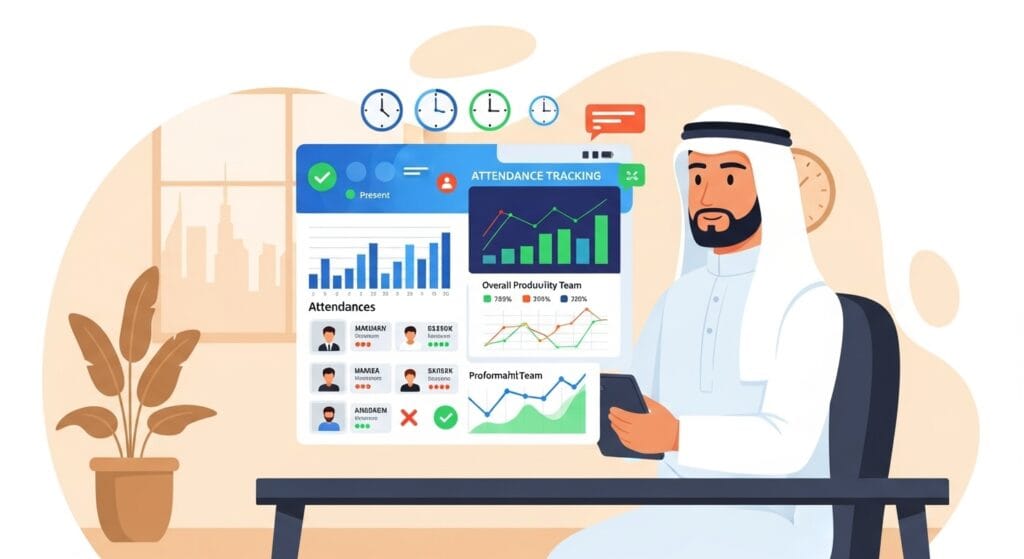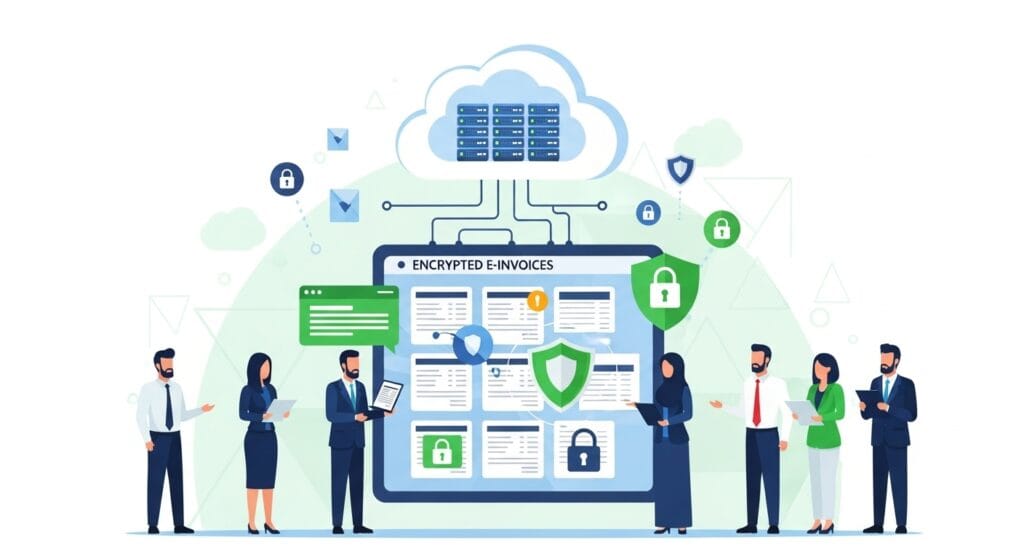
Managing human capital across the Kingdom of Saudi Arabia presents a distinct set of operational challenges. Organizations must navigate a highly regulated framework governed by the Ministry of Human Resources and Social Development (MHRSD), manage diverse workforces spread across multiple cities, and maintain strict adherence to localized initiatives like Saudization and the Wage Protection System (WPS). When a company relies on fragmented software—using one platform to record daily clock-ins and an entirely separate spreadsheet to process monthly salaries—the administrative burden becomes overwhelming.
The disconnect between tracking employee hours and disbursing their financial compensation creates a dangerous gap in operations. This gap is where typographical errors occur, unauthorized overtime goes unnoticed, and compliance violations silently accumulate. To build a resilient organizational structure, decision-makers are completely restructuring their administrative workflows. By recognizing the importance of attendance integration with payroll systems, companies can eliminate data silos, protect their financial margins, and ensure that every riyal paid accurately reflects the exact time worked by their staff.
The Operational Advantages of Merging Time and Pay
Operating disconnected departments is a massive drain on corporate resources. When the human resources team has to physically export data from biometric hardware and manually import it into the accounting software at the end of every month, the business suffers from unnecessary delays. Fusing these two critical functions into a single, unified pipeline unlocks several transformative benefits.
Eradicating the Burden of Manual Data Entry
Human error is an unavoidable byproduct of manual data handling. When HR personnel spend their final week of the month transcribing thousands of shift logs, deciphering messy paper leave requests, and verifying doctor’s notes, mistakes are an absolute certainty. A misplaced decimal point or a misread handwritten note can easily result in a dedicated employee receiving a shorted paycheck, or the company overpaying for unapproved hours.
An integrated ecosystem completely removes human fingers from the data transfer process. The exact second an employee authenticates their identity at the front door, that digital timestamp flows securely into the central database. When you understand how electronic time tracking contributes to improved payroll calculations, you realize that this automation guarantees pristine data accuracy, ensuring that the financial figures processed at month-end are mathematically flawless.
Accelerating Financial Workflows and Efficiency
Time is the most expensive commodity in any business. Forcing highly trained HR managers to act as data entry clerks is a severe misuse of their skills. By automating the flow of information between the time clock and the financial ledger, tasks that previously took days of tedious cross-referencing are reduced to a few simple clicks.
The software automatically tallies regular working hours, subtracts unpaid absences, applies the correct shift differentials, and prepares the final disbursement files. This dramatic increase in efficiency allows the HR department to refocus its energy on strategic initiatives, such as talent acquisition, employee retention programs, and improving the overall corporate culture.
How Do Unified Systems Drive Strategic Growth?
Raw data means very little without context. When your attendance logs are isolated from your financial data, your executive board cannot see the full operational picture.
By integrating these systems, managers gain access to deep, actionable labor insights. Through visual dashboards, they can correlate a sudden spike in absenteeism with a drop in departmental revenue. They can track precisely how much overtime was paid out during a specific project and determine if that project actually remained profitable. These detailed productivity metrics empower the executive team to restructure shifts, optimize their labor budgets, and make highly informed decisions that directly boost the company’s bottom line.
Navigating Strict Labor Frameworks and Compliance
The regulatory environment in Saudi Arabia is meticulously structured to protect the rights of both the employer and the employee. Navigating the rules surrounding maximum working hours, mandatory rest periods, and exact overtime multipliers is incredibly complex.
An automated platform acts as a digital legal safeguard. It is pre-programmed to understand these specific parameters. If an employee exceeds their standard 48-hour workweek, the system knows exactly how to calculate overtime and leave according to Saudi labor laws, automatically applying the mandatory 1.5x multiplier to the excess hours. This precise adherence to local regulations protects the organization from heavy government fines and frustrating labor disputes.
Core Functionalities That Define Premium Platforms
Selecting the right software requires looking past basic marketing claims and examining the actual technical architecture. To handle the complexities of the Saudi market, an integrated solution must possess a specific suite of advanced capabilities.
When evaluating potential vendors to upgrade your corporate infrastructure, you must ensure their platform delivers flawlessly on these five essential features:
-
Precision Time Tracking:
The system must support diverse data capture methods. This includes biometric fingerprint and facial recognition scanners for corporate offices and manufacturing plants, as well as GPS-enabled mobile applications with geofencing capabilities for field sales teams and remote workers. The tracking module must accurately capture every minute worked, separating standard hours from late arrivals and early departures.
-
Dynamic Payroll Processing:
A high-end solution does much more than just multiply hours by an hourly rate. It must possess a dynamic calculation engine capable of managing complex tax deductions, tracking advance salary loans, applying automated GOSI (General Organization for Social Insurance) contributions, and distributing performance bonuses simultaneously.
-
Centralized Leave Management:
Tracking employee time off on separate spreadsheets creates massive payroll discrepancies. The integrated software must feature a self-service portal where employees can request their annual leave digitally. Once a manager approves the request, the system must automatically deduct the days from the employee’s balance and update the monthly attendance roster so that payroll is not negatively impacted.
-
Advanced Reporting and Analytics:
The platform should act as a business intelligence tool. It must offer customizable reports that allow financial directors to analyze labor costs by specific departments, monitor overtime expenditure trends across different quarters, and audit historical attendance patterns for performance reviews.
-
Flawless HRIS Integration:
For enterprises utilizing broader Enterprise Resource Planning platforms, the time and pay modules must communicate perfectly with the central Human Resources Information System (HRIS). This ensures that when a new hire is added to the database or an employee receives a salary promotion, that data flows instantly into the payroll engine without requiring duplicate data entry.
Leading Platforms Transforming the Saudi Market
The software landscape in the Middle East has expanded rapidly, offering an array of tools designed to streamline corporate administration. However, not all platforms are equipped to handle the specific localization requirements of the Saudi market.
Below is a direct comparison of the top systems available, highlighting their core strengths and their ability to maintain strict regulatory compliance within the Kingdom.
|
Software Tool |
Primary Operational Strengths |
Level of Saudi Regulatory Compliance |
|
Daysum HRMS |
Complete time and payroll automation, advanced ERP reporting, GPS geofencing, seamless multi-branch management. |
Full adherence to Saudi labor laws, WPS formats, and automated GOSI calculations. |
|
ZenHR |
Strong mobile tracking with GPS and biometric hardware support, highly localized interface for the MENA region. |
Deep integration with GOSI, MHRSD portals, and automated Saudization tracking. |
|
Bayzat |
Excellent mobile app experience, easy check-in/out functionality, streamlined insurance and payroll syncing. |
Native support for Wage Protection System (WPS) files and Qiwa integration. |
|
Jisr |
Cloud-based agility, automated shift and complex overtime calculations, strong employee self-service tools. |
Tailored adjustments for Ramadan working hours and local public holiday policies. |
|
Daftra |
Robust geo-restrictions for remote workers, direct linkage between attendance logs and the accounting ledger. |
Reliable GOSI integration and customized localized tax structures. |
1. Daysum HRMS: The Integrated Powerhouse
When corporations reach a size where fragmented software begins to severely bottleneck their growth, deploying specialized HRMS cloud solutions from Daysum offers a comprehensive remedy. Daysum stands out because it is not merely a standalone attendance tracker; it is a fully cohesive Enterprise Resource Planning (ERP) environment.
Its greatest strength lies in its absolute synchronization. When a site manager approves a timesheet via the mobile app, that data immediately updates the project cost ledger, adjusts the employee’s overtime balance, and prepares the final payroll slip simultaneously. Daysum’s architecture is natively built to handle the rigorous demands of the Saudi market, ensuring that every financial calculation, from end-of-service benefits to complex shift differentials, aligns perfectly with the latest labor mandates.
2. ZenHR: Localized for the MENA Region
ZenHR has built a strong reputation by focusing intensely on the specific cultural and legal nuances of the Middle East. For HR departments struggling with the constant updates from government portals, ZenHR provides significant relief.
The platform excels at automating localized tasks. It tracks the expiration dates of employee Iqamas (residency permits), monitors the company’s Saudization (Nitaqat) percentages in real-time, and generates automated GOSI deduction reports. Its attendance module integrates smoothly with various biometric devices, ensuring that the physical hardware communicates securely with the cloud-based payroll engine.
3. Bayzat: Championing the Mobile Experience
For modern companies with a younger demographic or highly mobile sales forces, Bayzat offers an exceptionally polished user experience. Their philosophy centers on empowering the employee through their smartphone.
Bayzat allows staff members to clock in and out using highly accurate GPS tracking, submit medical expense claims by simply snapping a photo of the receipt, and view their detailed payslips directly on their devices. From a managerial perspective, the platform simplifies the end-of-month financial rush by automatically generating the exact file formats required by Saudi banks to comply with the Wage Protection System (WPS).
4. Jisr: Mastering Complex Scheduling
Certain industries, such as healthcare, hospitality, and heavy manufacturing, operate on incredibly complex rotating shift patterns that cross over midnight and vary wildly from week to week. Jisr has engineered its platform to handle these scheduling nightmares effortlessly.
The software allows administrators to build dynamic, overlapping shifts. It excels at calculating the minute nuances of these schedules, automatically identifying when a standard shift turns into double-time overtime. Furthermore, Jisr demonstrates its local expertise by seamlessly applying the legally mandated reduced working hours for Muslim employees during the holy month of Ramadan, ensuring that companies remain compliant without requiring manual schedule adjustments.
5. Daftra: Bridging HR and General Accounting
Daftra approaches attendance and payroll from a distinctly financial perspective. It is an excellent option for businesses that want their human resources data tied directly to their broader general ledger.
With Daftra, the moment an employee’s salary is disbursed, the platform automatically generates the corresponding journal entries in the accounting module. It tracks remote workers through strict geo-restrictions, ensuring time theft is minimized, while simultaneously managing the financial implications of those hours. The system is also highly capable of handling the specific tax and social insurance integrations required for businesses operating within the Kingdom.
Aligning Technology with the Saudi Regulatory Environment
Investing in new software is not just about improving internal efficiency; it is a critical strategy for legal self-defense. The Saudi government has digitized its oversight mechanisms, meaning that companies can no longer hide sloppy bookkeeping behind piles of paper.
The Ministry of Human Resources and Social Development requires complete transparency. Utilizing these integrated platforms allows businesses to navigate these requirements effortlessly. Generating a WPS file manually is a tedious process prone to formatting errors that can result in the bank rejecting the entire company payroll. Advanced systems generate this specific, encrypted file with a single click, ensuring that employee salaries hit their bank accounts on time, every time.
Furthermore, having a digital, unalterable audit trail of every clock-in, every approved vacation day, and every calculated overtime hour is invaluable. If a former employee raises a dispute regarding unpaid wages, relying on a guide for Saudi companies on compliance with labor laws using HR systems and utilizing an integrated platform provides the company with undeniable digital proof of compliance, instantly resolving the conflict and protecting the brand’s reputation.
Transitioning away from manual data entry and fragmented spreadsheets is the only sustainable path forward for ambitious enterprises. By uniting your time-tracking hardware directly with a sophisticated payroll engine, you eliminate administrative friction, secure your financial data, and build an agile, modern organization that is fully prepared to expand aggressively within the competitive Saudi market.
Frequently Asked Questions
Geofencing utilizes the GPS coordinates of the employee’s smartphone. The HR administrator draws a virtual boundary on a digital map around the specific client site or regional office. The mobile application will physically block the employee from clicking the "Clock In" button unless the phone's GPS confirms they are standing strictly within that designated perimeter, completely eliminating location fraud.
Yes, premium HRMS platforms include automated calculators for End of Service (EOS) awards. The system continuously tracks the employee’s exact tenure, their current base salary, and the specific reason for their departure (resignation vs. termination). It then applies the correct formula mandated by Saudi labor law to generate an accurate final settlement without requiring manual spreadsheet calculations.
Modern biometric terminals and cloud platforms are designed with robust offline capabilities. If the internet drops, the physical device will continue to scan fingerprints and store the timestamped logs locally on its internal hard drive. The moment the network connection is re-established, the device automatically pushes all the stored offline data to the cloud server, ensuring zero data loss.
Absolutely. Integrated payroll systems are pre-configured with the latest General Organization for Social Insurance (GOSI) rates for both Saudi nationals and expatriate workers. The software automatically calculates the required percentage based on the employee's basic salary and housing allowance, deducts the employee's portion, calculates the employer's contribution, and prepares the final report for submission.
The migration process is highly streamlined by the software providers. You do not need to manually type in years of history. You simply export your current employee details, leave balances, and salary structures into a standardized Excel template provided by the vendor. This file is then uploaded into the new system in bulk, populating the database instantly and securely.