

Uncategorized

Top 5 Must-Have Features in Attendance and Time Tracking Software

Top 5 Must-Have Features in Attendance and Time Tracking Software for Saudi Arabia in 2024

Managing human resources across the Kingdom of Saudi Arabia requires a deep understanding of local labor regulations, diverse workforce dynamics, and the operational demands of growing businesses. As organizations expand their footprint—opening new branches in Riyadh, managing industrial sites in Jubail, or coordinating logistics fleets across the country—relying on manual timesheets or basic punch clocks becomes a massive operational liability. Companies lose thousands of riyals monthly due to inaccurate time logging, unauthorized overtime, and administrative errors. Furthermore, the Ministry of Human Resources and Social Development (MHRSD) strictly enforces the Wage Protection System (WPS), meaning that any discrepancy between recorded hours and final salary disbursements can trigger severe compliance penalties. To eliminate these risks and build a resilient workforce, decision-makers must transition to robust, automated platforms. When evaluating the market for an upgrade, human resources directors must look beyond basic clock-in functionality. Understanding the top 5 features in attendance management software is the first step toward building a transparent, legally compliant, and highly efficient organizational structure. How Do You Guarantee Complete Accuracy and Transparency? The foundational purpose of any time-tracking infrastructure is to provide an indisputable record of when and where an employee worked. Without absolute accuracy, the entire payroll process is compromised. Modern software achieves this level of precision by eliminating manual data entry and human interpretation. The Power of Real-Time Tracking In traditional setups, managers only realize an employee is absent when they fail to show up for a meeting, or they discover a pattern of tardiness at the end of the month when reviewing paper logs. Real-time tracking flips this dynamic entirely. As soon as a staff member authenticates their identity—whether through a biometric scanner at the office entrance or a mobile application—that timestamp is instantly uploaded to the central server. Department heads can open their digital dashboard and see exactly who is currently on the floor, who is running late, and who has yet to clock in. This immediate visibility allows supervisors to make quick adjustments, such as reassigning tasks to cover for an absent team member, ensuring that daily productivity remains unaffected. Geofencing for the Field Workforce Not all employees sit behind a desk. Sales representatives, maintenance technicians, and delivery drivers spend their entire shifts moving between client locations. Tracking their hours accurately used to rely on trust and post-shift reporting, which left significant room for time theft. Advanced platforms utilize GPS technology to create virtual perimeters, known as geofences, around specific work sites. Location Verification: An employee can only successfully register their shift if their smartphone’s GPS confirms they are physically standing inside the designated geofence. Route Tracking: Managers can verify that field workers are actually at the client’s office rather than logging hours from a coffee shop across town. Streamlined Managerial Approvals Transparency is a two-way street. While the system automatically captures the raw data, supervisors still need the ability to review exceptions. If an employee forgets to clock out due to an emergency, the system flags the incomplete shift. The software routes these flagged entries directly to the direct manager for approval or correction. This digital workflow creates a transparent audit trail. Every manual adjustment to a timecard is recorded with a digital signature, detailing who made the change and why, completely eliminating unauthorized tampering with work hours. Why Is Seamless Payroll and HR Integration Non-Negotiable? A time-tracking tool that operates in isolation creates more work than it saves. If your HR team has to manually export data from the attendance terminal and re-enter it into your accounting software, you are simply digitizing the bottleneck rather than solving it. Eradicating the Data Entry Burden The most critical feature for enterprise efficiency is the automated transfer of data. The importance of attendance integration with payroll systems becomes glaringly obvious during the final week of the month. A fully integrated platform, such as the comprehensive modules offered by Daysum, acts as a unified bridge. The moment a pay period closes, the software automatically aggregates all regular hours, tallies every minute of overtime, subtracts unpaid absences, and pushes the final, perfectly calculated numbers directly into the payroll processing engine. This eliminates the risk of human typographical errors and reduces a task that used to take days into a process that takes mere minutes. Centralizing the Employee Database Managing disparate systems—one software for tracking hours, a separate spreadsheet for vacation balances, and another folder for employee contracts—creates massive data silos. Top-tier software consolidates all this information into a single, centralized database. When an employee requests a week of annual leave through the system, their manager can instantly see their remaining leave balance. Once approved, the software automatically updates the daily attendance roster to reflect the vacation, ensuring that the payroll module does not dock their pay for those days. Ensuring Strict Compliance with Saudi Labor Laws The Saudi labor market is heavily regulated to protect both the employer and the employee. Calculating exact compensation involves multiple variables, including public holidays, weekend multipliers, and maximum permissible working hours. Having a software engine that is pre-programmed to calculate overtime and leave according to Saudi labor laws is an absolute necessity. Regulatory Element Manual Calculation Risk Automated Software Solution Overtime Rates Applying the wrong multiplier (e.g., 1.5x vs regular rate) Automatically applies the exact MHRSD mandated rate based on the day and hour. Rest Periods Failing to account for mandatory breaks, leading to disputes Automatically deducts scheduled lunch and prayer breaks from total worked hours. Leave Entitlements Miscalculating accrued vacation days Tracks balances dynamically based on the employee’s contract type and tenure. What Makes Mobile Accessibility Crucial for Modern Teams? The concept of work is no longer confined to a single physical building. With the rise of hybrid work models, regional expansion, and highly mobile task forces, a stationary punch clock bolted to a wall is entirely insufficient. Organizations need tools that move with their people. Transforming Smartphones into Management Tools Providing employees with a dedicated mobile application fundamentally changes how they interact with the HR department. By downloading
Read more
A Complete Guide to Biometric Attendance Systems for Saudi Companies

A Complete Guide to Biometric Attendance Systems for Saudi Companies: Enhancing Efficiency and Security

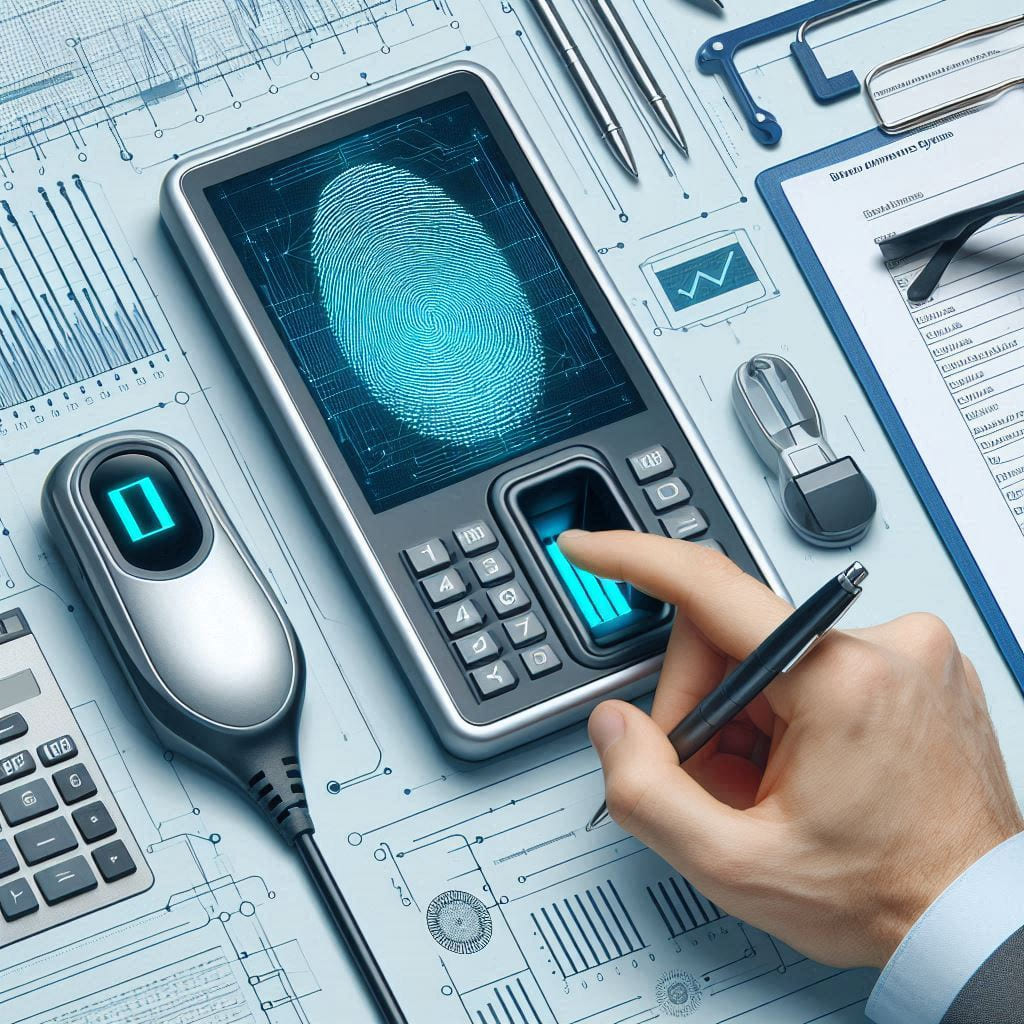
The fundamental concept of workplace identity verification has undergone a radical transformation over the past decade. Traditional methods of recording when an employee begins and ends their shift—such as paper timesheets, magnetic swipe cards, or simple personal identification numbers (PINs)—have proven to be highly vulnerable to manipulation and administrative errors. To establish a secure, foolproof, and highly efficient operational environment, modern enterprises are abandoning these legacy tools in favor of advanced physical verification methods. Relying on the unique physiological characteristics of individual staff members, these advanced hardware terminals guarantee that the person clocking in is exactly who they claim to be. This technological shift is not merely about upgrading office hardware; it is a strategic move to protect payroll budgets, streamline human resources operations, and enforce strict access control across corporate facilities. Core Technologies Powering Biometric Terminals To fully grasp how these devices protect organizational assets, it is essential to understand the underlying mechanisms that capture, encrypt, and verify human traits. These systems operate by scanning a specific physical attribute, converting that image into a complex mathematical algorithm, and securely storing it as a digital template. When an employee attempts to log their time, the device scans them again and compares the live data against the stored template in a fraction of a second. For organizations looking to build a secure infrastructure, exploring a comprehensive guide to biometric attendance systems in Saudi companies is an excellent starting point to understand which specific technology aligns with their operational environment. Fingerprint Recognition This remains the most widely adopted and recognizable form of physical identity verification globally. Fingerprint scanners analyze the highly unique patterns of ridges, valleys, and minutiae points on the surface of an individual’s finger. Optical Scanners: Capture a high-contrast digital photograph of the fingerprint using an internal light source. Capacitive Scanners: Utilize tiny electrical currents to map the physical depth of the fingerprint ridges, making it nearly impossible to fool the system with a printed image or a silicone mold.This method is highly favored in standard office environments due to its reliability, ease of use, and relatively low implementation cost per unit. Facial Recognition Mapping Following recent global shifts toward touchless technology, facial recognition has surged in popularity. These terminals use advanced cameras and software algorithms to map the geometry of an employee’s face. The software measures specific nodal points, such as the exact distance between the eyes, the depth of the eye sockets, the width of the nose, and the shape of the jawline. Modern devices incorporate infrared sensors, allowing them to accurately identify staff members even in poorly lit environments or night shifts.Because it requires zero physical contact, this method is exceptionally hygienic and highly recommended for healthcare facilities, food processing plants, and heavy manufacturing sites where employees might have dirty or gloved hands. Iris Scanning Considered one of the most secure biometric modalities available, iris recognition analyzes the complex, intricate patterns found in the colored ring of the eye. The human iris contains hundreds of unique characteristics that remain completely stable throughout a person’s lifetime. The scanning process involves illuminating the eye with gentle near-infrared light to capture the detailed structures, which are then matched against the database. Due to the high cost of the specialized cameras required, iris scanning is typically reserved for highly sensitive environments such as research laboratories, government facilities, or secure data centers. Hand Geometry Measurement While slightly older than facial or iris scanning, hand geometry remains a robust solution for specific industrial applications. These devices measure the physical dimensions of the hand, including the length, width, thickness, and surface area of the fingers and palm. Although not as uniquely distinctive as a fingerprint, hand geometry is highly durable. It performs exceptionally well in harsh industrial environments—such as construction sites or mining operations—where workers’ fingerprints might be temporarily worn down, scarred, or covered in grease. Why Are Legacy Systems Failing Modern Businesses? The transition toward physiological verification is driven by the severe limitations and hidden costs associated with traditional timekeeping methods. Relying on outdated practices consistently drains corporate resources and creates administrative bottlenecks. The End of Manual Calculation Errors Human error is an unavoidable byproduct of manual data entry. When HR personnel are tasked with transcribing handwritten timesheets or deciphering disorganized punch cards at the end of every month, mistakes are inevitable. A missed decimal point or a misread number can result in significant payroll discrepancies. By entirely automating the data capture process at the source, biometric terminals eradicate these typographical errors. The exact minute an employee arrives is permanently logged into the database, ensuring that the data flowing into the finance department is flawlessly accurate. Avoiding these common mistakes in attendance and payroll management prevents employee disputes and protects the company from accidental overpayments. Eradicating Time Theft and Buddy Punching One of the most persistent financial leaks in businesses using swipe cards or passwords is “buddy punching”—the practice where one employee clocks in on behalf of a coworker who is late or absent. While a few minutes here and there might seem insignificant, across a workforce of hundreds of employees over a fiscal year, buddy punching translates into massive financial losses. Because a physical trait cannot be shared, borrowed, or stolen, biometric systems completely neutralize this threat. The physical presence of the employee is an absolute requirement to trigger a successful time log, ensuring that companies only pay for the exact labor hours actually rendered. Accelerating Shift Transitions In environments with hundreds of workers arriving simultaneously—such as factories, large retail complexes, or construction sites—shift bottlenecks are a major issue. Swiping cards or typing long PINs slows down the entry process, causing long queues and cutting into productive working time. Modern biometric terminals process a scan and verify the identity in less than a second. This rapid throughput ensures that large volumes of staff can pass through entry gates quickly and efficiently, starting their designated shifts without unnecessary delays. Calculating the Long-Term Financial Return While the initial acquisition and installation of biometric

Read more
top
Business Challenges

Digital Transformation

Security

Automation

Gaining Efficiency