
HRMS

Digital Transformation How Daysum’s ERP Solutions Enhance Your Business

Digital Transformation: How Daysum’s ERP Solutions Enhance Your Business

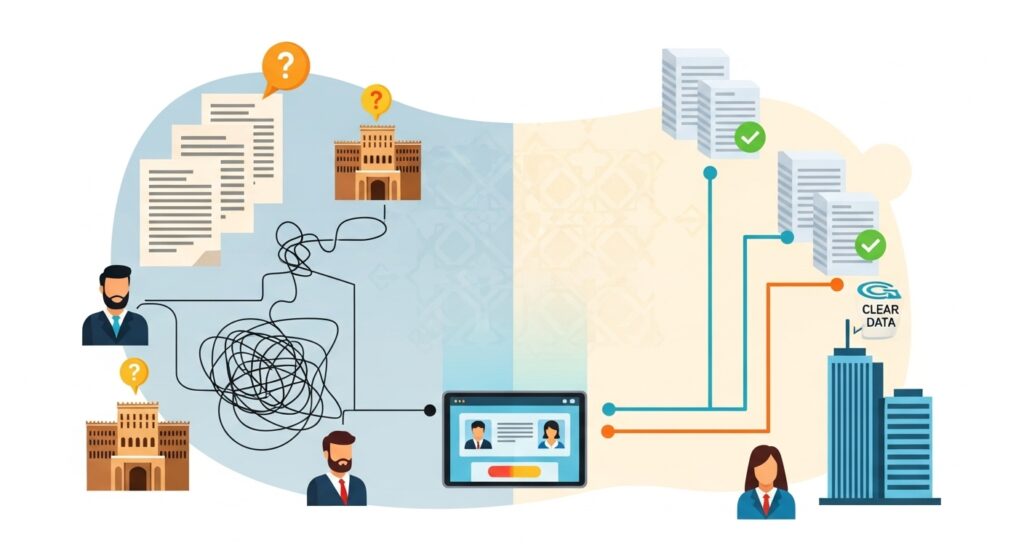
In an era defined by rapid technological shifts, digital transformation stands as the ultimate catalyst for corporate longevity. It is no longer a futuristic concept but a present-day mandate for survival, particularly within highly competitive regional markets. At the core of this monumental shift are sophisticated ERP systems, which act as the operational brain of an enterprise, synchronizing complex workflows across all departments. Daysum leads this technological frontier, delivering highly integrated, localized ERP frameworks that empower Saudi organizations to maximize operational output and maneuver swiftly through economic changes. For niche retail and manufacturing sectors, precision is everything. If you are operating within the precious metals market, securing a highly accurate gold inventory system is essential. Daysum provides absolute visibility over your stock, live pricing synchronization, and rigorous compliance tracking. Section 1: Demystifying the Digital Shift What exactly does it mean to undergo a technological overhaul? True digital transformation is the strategic adoption of intelligent software to fundamentally re-engineer how a business creates value, serves its clients, and manages its internal resources. It is the transition from reactive, manual processes to proactive, automated, and data-driven ecosystems. This evolution is critical for ambitious enterprises because it delivers: Decisive Innovation: Leveraging real-time analytics to spot market gaps before competitors do. Process Optimization: Eliminating redundant tasks that drain financial and human capital. Unrivaled Efficiency: Creating frictionless environments where data moves instantly from the warehouse to the boardroom. Companies that hesitate to upgrade their technological infrastructure will inevitably face operational bottlenecks and diminished market share. Section 2: How ERP Frameworks Eliminate Operational Silos Historically, a major hurdle for scaling businesses has been “siloed” departments—sales, human resources, and finance operating on entirely different, disconnected software platforms. An Enterprise Resource Planning (ERP) platform destroys these barriers. It centralizes all corporate data into a single, unified command center. Partnering with Daysum provides enterprises with a suite of unparalleled advantages: Harmonizing Cross-Departmental Workflows By linking HR attendance, financial ledgers, and supply chain logistics into one cohesive system, Daysum ensures that a product sold in the storefront instantly updates warehouse inventory and triggers a financial record. This level of integration removes guesswork and empowers managers with a holistic view of the company’s health. Drastically Reducing Overhead Manual workflows are the enemy of profitability. They invite human error and consume valuable time. Daysum’s intelligent automation handles the heavy lifting of data entry and report generation. This reduction in administrative friction directly lowers operational costs and boosts bottom-line revenue. Empowering Strategic Foresight Access to real-time, untampered data transforms how leadership plans for the future. With immediate visibility into departmental performance, executives can forecast trends accurately and allocate resources where they will generate the highest return on investment. Section 3: Specialized Capabilities for the Saudi Market General software often fails to meet the precise regulatory and operational demands of specific regional industries. Daysum differentiates itself by providing highly specialized tools built for the realities of the modern market. Financial Agility and Tax Compliance: Transitioning to a streamlined, error-free financial department requires modern tools. By integrating intelligent e invoicing software, companies can automate their billing cycles, accelerate payment collections, and ensure flawless compliance with stringent regional tax mandates. Precision in the Jewelry Sector: The gold market is notoriously volatile and requires exacting mathematical precision. Daysum integrates customized tracking mechanisms and a built-in gold karat conversion calculator. This specific utility allows traders to instantly translate physical weight and purity into accurate market valuations, safeguarding profit margins. Section 4: The Tangible Impact of Modernization To understand the profound shift this technology brings, we must look at the structural improvements across daily operations. Business Function Legacy Systems (Pre-Transformation) The Daysum Advantage Data Synchronization Fragmented; requires manual exporting and reporting. Unified dashboard; live updates across all modules. Inventory Control Prone to human error, stockouts, and delayed audits. Automated replenishment alerts and live tracking. Client Relations Slow response times due to scattered customer histories. Instant access to client profiles, enabling hyper-personalized service. Regulatory Compliance High risk of manual reporting errors and penalties. Automated, audit-ready compliance tracking embedded in daily workflows. Section 5: Why Daysum is Your Optimal Technology Partner Navigating an enterprise-wide software migration requires more than just a vendor; it requires a dedicated technological partner. Daysum offers an expansive, highly customizable suite of enterprise tools specifically engineered to guide businesses into a modern, integrated future. Our systems are built upon the pillars of uncompromising data security, lightning-fast cloud architecture, and intuitive user interfaces. Furthermore, Daysum provides ongoing, localized technical support to ensure your operations never skip a beat. Section 6: Launching Your Upgrade Initiative The transition to a digital-first operation is a structured, strategic process. Here is how the Daysum advisory team ensures a flawless deployment: Deep-Dive Operational Audit: We begin by mapping your exact current processes, identifying inefficiencies, and understanding your specific commercial goals. Bespoke Software Configuration: We do not sell generic packages. We assemble the specific ERP modules—from HR to advanced logistics—that directly address your operational gaps. Managed Deployment and Integration: Our engineering team ensures a seamless data migration from your legacy systems to the new platform, followed by comprehensive staff training to guarantee rapid user adoption. Conclusion Embracing advanced ERP architecture is the definitive step toward securing long-term commercial success. Through intelligent integration and automated workflows, Daysum empowers companies to shatter growth ceilings and redefine their operational capabilities. Do not let outdated technology hold your vision back. Contact the Daysum team today to schedule an in-depth consultation and begin engineering the future of your enterprise.   Frequently Asked Questions (FAQs) 1. Is an ERP system suitable for mid-sized enterprises, or only large corporations? Daysum’s architecture is highly scalable. It is designed to grow with your business, meaning mid-sized companies can adopt core modules today and expand the system’s capabilities as their operational footprint increases. 2. How secure is our corporate data within the Daysum ecosystem? Data sovereignty and security are our highest priorities. Our platforms utilize advanced cryptographic protocols, continuous system monitoring, and automated redundancies to defend your vital business information from any unauthorized

Read more
A Guide for Saudi Companies on Compliance with Labor Laws Using HR Systems

A Guide for Saudi Companies on Compliance with Labor Laws Using HR Systems

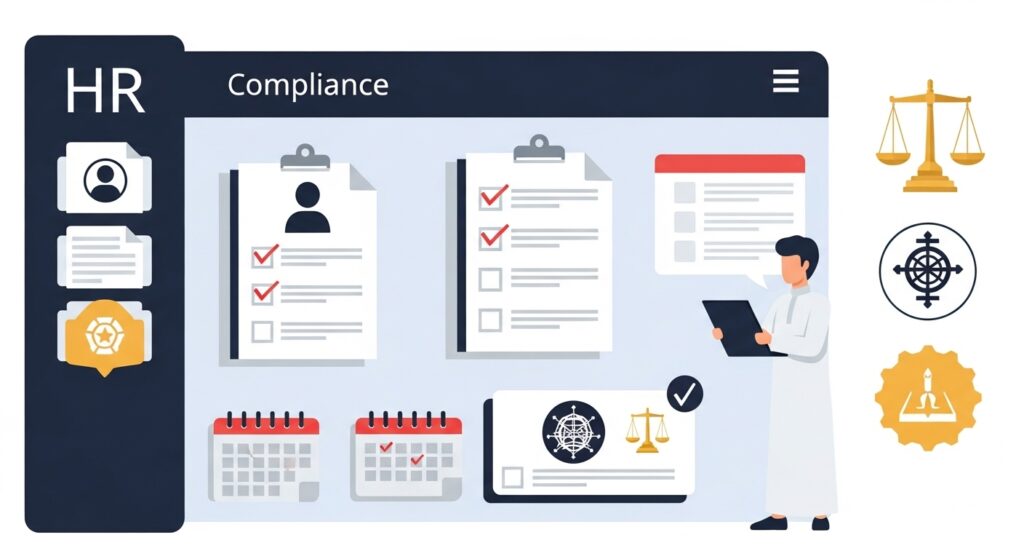
Navigating the corporate landscape in the Kingdom of Saudi Arabia requires far more than just a solid business model; it demands absolute regulatory precision. As the Kingdom accelerates toward the ambitious milestones of Vision 2030, the Ministry of Human Resources and Social Development (MHRSD) has fundamentally transformed the way businesses operate. Digital transformation is no longer a luxury—it is a mandatory framework designed to protect employee rights, enforce nationalization quotas, and ensure economic transparency. For companies operating in Riyadh, Jeddah, Dammam, and beyond, remaining compliant with the Saudi Labor Law is a high-stakes endeavor. Relying on outdated manual processes, scattered spreadsheets, and fragmented communication channels exposes organizations to severe operational and financial risks. The modern solution lies in deploying sophisticated Human Resources Management Systems (HRMS) that integrate directly with government portals. This comprehensive guide explores the core requirements of Saudi labor laws, dissects the hidden costs of manual management, evaluates the top HRMS providers in the market, and outlines a strategic roadmap for leveraging platforms like Daysum to achieve flawless, automated compliance. 1. Core Saudi Labor Law Requirements Every Business Must Master To understand the value of an automated HR system, one must first grasp the depth and complexity of the regulations it is designed to manage. The Saudi Labor Law is a comprehensive legal framework that dictates every phase of the employment lifecycle, from the initial contract signing to the final end-of-service settlement. Fundamental Employee Rights: Wages and Working Hours The foundation of the Saudi Labor Law rests on fair compensation and structured working conditions. The standard working hours are strictly capped at 8 hours per day or 48 hours per week. During the holy month of Ramadan, these hours are legally reduced for Muslim employees to a maximum of 6 hours a day or 36 hours a week. Any time worked beyond these parameters must be classified as overtime. Employers are legally obligated to compensate overtime at 150% of the employee’s basic hourly wage. Failing to track these hours accurately or denying employees their rightful overtime pay is a direct violation of the law, frequently resulting in labor disputes and heavy fines. Leaves, Vacations, and the End-of-Service Gratuity (EOSG) The law provides a highly specific safety net for employees regarding time off. Annual Leave: Workers are entitled to a minimum of 21 days of paid annual leave, which legally increases to 30 days after the employee completes five consecutive years of service with the same employer. Sick and Maternity Leave: The law outlines a cascading pay scale for sick leave (full pay for the first 30 days, 75% for the next 60 days, and unpaid for the subsequent 30 days within a single year). Female employees are granted ten weeks of fully paid maternity leave. End-of-Service Gratuity (EOSG): Perhaps the most mathematically complex requirement is the EOSG. This mandatory severance package is calculated based on the employee’s final salary, their total years of service, and the specific reason for contract termination (resignation versus employer-initiated termination). Calculating this manually is a massive liability. Documented Contracts and the Nitaqat (Saudization) Quotas In the digital age, verbal agreements hold zero legal weight. All employment contracts must be formally documented and authenticated through the government’s Qiwa platform. Furthermore, companies must rigorously adhere to the Nitaqat program, a localization initiative that categorizes businesses into color-coded tiers (Platinum, Green, Yellow, Red) based on their ratio of Saudi national employees to expatriates. Maintaining a compliant Nitaqat tier is essential for business continuity, as falling into the Red tier immediately freezes the company’s ability to renew work permits or apply for new visas. The Severe Risks of Non-Compliance The MHRSD operates with a zero-tolerance policy for systemic labor violations. Non-compliance is met with immediate, punitive action. Fines often start at SAR 10,000 for a single violation (such as failing to upload a wage protection file correctly) and multiply per affected employee. Beyond financial penalties, chronic violations lead to the suspension of the company’s GOSI (General Organization for Social Insurance) account and MHRSD portal access, effectively halting all business operations and causing irreversible reputational damage. 2. The Hidden Costs: Manual Compliance Challenges Despite the strict regulatory environment, some organizations still attempt to manage their human capital using legacy software and manual data entry. This approach is fraught with operational bottlenecks and legal landmines. Compliance Challenge Root Cause in Manual Systems Main Business Impact Tracking Labor Law Updates Relying on HR staff to manually research and apply MHRSD decrees. Unintentional, systemic violations leading to unexpected government fines. Documentation Management Storing physical contracts, passport copies, and medical leaves in filing cabinets. Time-intensive retrieval, high risk of lost data, and severe human errors during audits. Payroll and Saudization Calculating deductions, overtime, and Nitaqat ratios via Excel spreadsheets. Failed Wage Protection System (WPS) files, GOSI audit failures, and localization penalties. Operational Disruption Disconnected departments (HR, Finance, Operations) working in silos. Catastrophic business interruptions, delayed project deliveries, and suspended government services. The Domino Effect of Human Error When an HR administrator manually inputs attendance data into a payroll spreadsheet, the margin for error is astronomical. A single mistyped digit can result in an incorrect GOSI deduction. When that flawed data is submitted to the Mudad platform for WPS verification, the file is rejected. This rejection triggers an automatic flag within the MHRSD system, exposing the company to an immediate compliance audit. This is why transitioning to a reliable cloud attendance system is the first critical step in eliminating the domino effect of manual mistakes. 3. How HRMS Enables Complete and Automated Compliance Human Resources Management Systems are no longer optional administrative tools; they are essential legal safeguards. A modern HRMS acts as a digital bridge between a company’s internal operations and the Saudi government’s regulatory portals, ensuring that compliance is proactive rather than reactive. Automatic Law Updates and Digital Contract Management Top-tier HR platforms are continuously updated by their developers to reflect the latest MHRSD regulations. If the government changes the EOSG calculation rules or amends the minimum wage requirements for

Read more

How to Protect Your Company from Legal Disputes Using Attendance Systems

  The corporate environment in the Kingdom of Saudi Arabia is experiencing a profound evolution. As the nation aggressively pursues the economic diversification goals outlined in Vision 2030, the regulatory framework governing the private sector has become increasingly sophisticated. The Ministry of Human Resources and Social Development (MHRSD) has implemented rigorous digital oversight mechanisms, meaning that traditional, manual methods of managing human capital are no longer just inefficient—they are severe legal liabilities. For modern businesses operating in Riyadh, Jeddah, Dammam, and beyond, managing employee attendance is a critical component of corporate governance. When an organization fails to accurately track working hours, leaves, and overtime, it inadvertently opens the door to a multitude of legal disputes, ranging from individual employee grievances to massive government penalties. In this comprehensive guide, we will explore the rising legal threats associated with poor attendance management, analyze how adopting a highly compliant cloud based attendance system acts as an impenetrable legal shield, evaluate leading software competitors in the Saudi market, and provide actionable steps to fortify your business against labor disputes. 1. The Rising Legal Threats in the Modern Workplace Labor disputes are time-consuming, expensive, and damaging to a company’s reputation. In the Saudi market, courts and regulatory bodies heavily favor documented, irrefutable evidence. When a company lacks this evidence, it is highly vulnerable to the following legal threats: Wage and Hour Violations (The Overtime Trap) The most frequent cause of labor disputes in Saudi Arabia involves discrepancies in wage calculation, specifically concerning overtime. The Saudi Labor Law is explicitly clear: standard working hours are capped at 8 hours per day or 48 hours per week (reduced during Ramadan for Muslim employees). Any time worked beyond this legal threshold must be compensated at 150% of the employee’s basic hourly rate. When companies rely on manual timesheets or legacy punch cards, minutes and hours are easily lost or miscalculated. If an employee files a claim through the labor court alleging unpaid overtime, the burden of proof falls entirely on the employer. Without a digital, immutable log detailing exact clock-in and clock-out times, the court is highly likely to rule in favor of the employee. Accurate overtime calculation in saudi arabia is not just an accounting task; it is a fundamental legal defense mechanism. Discrimination Claims and Unequal Policy Enforcement A less obvious but equally dangerous threat is the claim of workplace discrimination. This often arises when attendance policies are enforced inconsistently. For example, if a manager manually excuses the tardiness of one employee but penalizes another for the exact same infraction, the penalized employee has grounds for a discrimination grievance. Manual systems and human oversight are inherently biased. When deductions or disciplinary actions are perceived as arbitrary, it destroys workplace morale and invites legal scrutiny from the MHRSD regarding fair labor practices. Wrongful Termination Due to Poor Documentation Terminating an employee for chronic absenteeism or constant tardiness is a valid legal action under Article 80 of the Saudi Labor Law—but only if the employer has meticulously documented the infractions and issued the appropriate written warnings. If a terminated employee challenges the dismissal, the company must produce a flawless trail of evidence. If the attendance records are incomplete, easily altered, or missing signatures, the termination can be deemed “wrongful” (Article 77). This results in the company being forced to pay substantial compensation to the dismissed worker, alongside potential regulatory fines for poor record-keeping. 2. The Critical Role of Compliant Systems in Dispute Resolution To neutralize these legal threats, forward-thinking organizations are transitioning away from vulnerable manual processes and embracing automated HR technologies. A compliant system does not merely record time; it enforces the law seamlessly in the background. Accurate Tracking and Real-Time Data Collection The foundation of legal protection is accuracy. Modern systems capture attendance data in real-time using biometric hardware (fingerprint or facial recognition) or secure mobile applications. This completely eliminates “buddy punching” (where one employee clocks in for another) and time theft. Because the data is synced instantly to cloud servers, there is zero opportunity for HR administrators or line managers to manipulate the records retroactively. This creates an unalterable, audit-proof trail of evidence that holds up under the strictest legal scrutiny. Automated Policy Enforcement A robust digital system removes human bias from attendance management. The software is programmed with the company’s specific attendance policy—defining exactly what constitutes tardiness, when the grace period ends, and how overtime is triggered. Because the system applies these rules uniformly across the entire workforce, from entry-level staff to executive management, the risk of discrimination claims drops to zero. Every deduction or penalty is generated by an impartial algorithm based on verified data, ensuring absolute fairness and legal consistency. Error Reduction and Seamless Dispute Resolution Human error in manual payroll processing is inevitable, but legally inexcusable. An automated system instantly calculates complex accruals, such as cascading sick leave pay or end-of-service benefits, without relying on error-prone spreadsheets. Furthermore, if an employee disputes their paycheck, HR can instantly generate a granular, minute-by-minute report of their attendance for that specific pay period. By presenting the employee with undeniable, system-generated proof, disputes are resolved internally within minutes, rather than escalating to external legal battles. 3. Leading Competitors in the Saudi Market The demand for audit-proof HR technology has led to the rise of several powerful platforms tailored specifically for the Kingdom’s regulatory environment. According to market data and user satisfaction rankings, platforms that offer deep integration with government portals dominate the landscape, actively reducing legal disputes by over 90%. Here is a comparative breakdown of the leading attendance solutions: HRMS Provider Key Legal Protections & Features GOSI, Qiwa & WPS Integrations ZenHR Combines biometric tracking with AI-driven alerts. Flags potential labor law violations (like maximum overtime breaches) before they happen. Deep, automated synchronization with Qiwa and GOSI. Ensures zero payroll errors during WPS file generation. Bayzat Champions mobile-first compliance. Utilizes secure GPS tracking for field workers and provides real-time attendance dashboards for executives. Specializes in flawless, automated creation of Wage Protection System (WPS)

Read more
legal-challenges-of-attendance-management-in-saudi-arabia-and-how-to-overcome-them

Legal Challenges of Attendance Management in Saudi Arabia and How to Overcome Them

The corporate landscape in the Kingdom of Saudi Arabia is undergoing a historic transformation. Driven by the ambitious blueprints of Vision 2030, businesses are expanding, diversifying, and digitizing at an unprecedented rate. However, with this rapid growth comes an intense regulatory microscope. The Ministry of Human Resources and Social Development (MHRSD) has revolutionized its oversight mechanisms, transforming the tracking of employee attendance from a mundane administrative chore into a critical pillar of corporate legal compliance. Today, managing human capital is no longer about simply ensuring employees show up on time. It is about navigating a complex web of labor rights, automated government portals like “Mudad” and “Qiwa,” and stringent data privacy laws. Relying on outdated manual processes or fragmented software exposes companies to devastating financial penalties and severe operational disruptions. In this comprehensive guide, we will dissect the primary legal challenges surrounding attendance management in the Saudi market, explore real-world repercussions, and outline how deploying a robust time attendance system saudi arabia can safeguard your organization’s future. 1. The Hidden Minefield: Key Legal Challenges in Attendance When a company fails to accurately track the time and presence of its workforce, the consequences ripple far beyond a miscalculated paycheck. The Saudi labor market is heavily regulated to protect worker rights, and the MHRSD does not tolerate negligence. Here are the most pressing legal challenges HR departments face today: Faulty Leave Handling and Accrual Errors Managing employee leaves is mathematically and legally intricate. The challenge lies in tracking various leave types—annual, sick, maternity, paternity, and bereavement—without overlapping or miscalculating balances. A common legal trap occurs when companies manually calculate sick leaves. If an HR administrator accidentally deducts a legally protected sick day from an employee’s annual leave balance, it constitutes a direct violation of the worker’s rights. Such discrepancies inevitably lead to formal grievances filed through the “Naji” portal, resulting in mandatory back-pay and legal scrutiny. Record Discrepancies and the Wage Protection System (WPS) The Wage Protection System is designed to ensure all private-sector employees receive their wages fully and on time. If your internal attendance records do not perfectly match the salary deductions reflected in the WPS file submitted to the MHRSD, red flags are immediately raised. Discrepancies between what an employee supposedly worked (according to a biometric scanner) and what they were paid (due to manual HR adjustments) can trigger sudden government audits. Data Privacy Breaches (PDPL Compliance) With the enforcement of the Saudi Personal Data Protection Law (PDPL), collecting attendance data has become a sensitive issue. Many modern attendance systems rely on biometric data—fingerprints, facial recognition, or iris scans. Under the PDPL, this is classified as sensitive personal data. If a company collects this data without explicit, documented consent, or fails to store it securely, they face massive legal liabilities. A breach of biometric data can result in fines far exceeding standard labor violations. Overtime Violations and Unfair Pay Disputes The legal cap on regular working hours is heavily monitored. Forcing or allowing employees to work beyond 48 hours a week without proper compensation is a leading cause of labor disputes in the Kingdom. Manual timesheets are notoriously unreliable for tracking the exact minutes of overtime. When employees feel they are being denied their rightful overtime premium (which must be paid at 150% of the basic hourly wage), the resulting lawsuits are costly and damage the company’s reputation as an employer of choice. The Ultimate Risks: Massive Fines and GOSI Suspensions The MHRSD operates on a zero-tolerance policy for systemic labor violations. The fines are punitive, often starting at SAR 10,000 for a single violation concerning one employee. If the error applies to a workforce of 100 people, the financial impact is catastrophic. Furthermore, chronic non-compliance leads to the suspension of the company’s MHRSD file and General Organization for Social Insurance (GOSI) account. This effectively paralyzes the business, preventing the renewal of commercial registrations, the issuance of work visas, and the ability to bid on government contracts. 2. Navigating the Saudi Labor Law: A Compliance Overview To overcome these legal hurdles, HR professionals and business owners must possess a deep, structural understanding of the Saudi Labor Law. Building your internal policies around these non-negotiable statutes is the first step toward total compliance. Working Hours and the Overtime Mandate According to Article 98 of the Saudi Labor Law, an employee may not work for more than 8 hours a day if the employer uses a daily system, or more than 48 hours a week. During the holy month of Ramadan, these hours are legally reduced for Muslim employees to a maximum of 6 hours a day or 36 hours a week. Any time worked beyond these strict thresholds is classified as overtime. Article 107 mandates that the employer must pay the worker for overtime hours at the rate of their regular hourly wage plus an additional 50%. This calculation becomes incredibly complex when factoring in different shift allowances, weekend work, and public holidays, making automation not just a luxury, but a legal necessity. Strict Leave Entitlements The law is equally uncompromising regarding time off. Annual Leave: Employees are entitled to a minimum of 21 days of paid annual leave. Once an employee completes five consecutive years of service with the same employer, this entitlement legally increases to 30 days. Sick Leave: Article 117 provides a highly specific safety net. During a single year (calculated from the date of the first sick leave), an employee is entitled to 30 days of sick leave with full pay, 60 days with three-quarters pay, and 30 days without pay. Tracking this cascading pay scale manually across hundreds of employees is nearly impossible without encountering errors. Maternity Leave: Female employees are entitled to ten weeks of fully paid maternity leave, which can be distributed before and after delivery at her discretion. The Mandate for Accurate and Immutable Records The overarching theme of MHRSD audits is the demand for irrefutable proof. The law requires employers to maintain detailed files for every worker, containing their contract,

Read more

How to Ensure Your HR System Complies with Saudi Labor Laws

The landscape of human resources in the Kingdom of Saudi Arabia is undergoing a profound transformation. Driven by the ambitious goals of Vision 2030, businesses across Riyadh, Jeddah, Dammam, and beyond are digitizing their operations at an unprecedented pace. At the heart of this digital revolution is the need to manage human capital efficiently while maintaining strict adherence to the dynamic regulations set forth by the Ministry of Human Resources and Social Development (MHRSD). For modern enterprises, relying on manual spreadsheets and fragmented attendance systems is no longer a viable option. The complexities of the General Organization for Social Insurance (GOSI), the Wage Protection System (WPS), and the Nitaqat program demand a robust, automated infrastructure. This comprehensive guide explores the fundamentals of Saudi labor laws, analyzes the top competitors in the HR management software space, and outlines actionable strategies to achieve flawless compliance using advanced technologies like a cloud based attendance system. 1. Saudi Labor Law Fundamentals: What Every Employer Must Know Understanding the bedrock of Saudi employment regulations is the first critical step toward building a compliant, thriving workforce. The legal framework is designed to protect both the employer and the employee, ensuring fair compensation, safe working conditions, and transparent contractual agreements. Contracts and the Nitaqat System Employment contracts in the Kingdom must be meticulously drafted, clearly outlining the roles, compensation, and duration of the agreement. A pivotal element of hiring in Saudi Arabia is the Nitaqat (Saudization) program. This nationalization scheme categorizes companies into different tiers (Platinum, Green, Yellow, Red) based on their ratio of Saudi national employees to expatriates. Maintaining a high Nitaqat tier is essential for operational continuity, as it directly impacts a company’s ability to process visas, renew commercial registrations, and secure government contracts. Work Hours and Overtime Regulations The standard working hours in Saudi Arabia are capped at 8 hours per day or 48 hours per week. During the holy month of Ramadan, these hours are legally reduced to 6 hours per day or 36 hours per week for Muslim employees. Any time worked beyond these legal limits must be classified as overtime. Handling these calculations manually often leads to costly payroll discrepancies. Accurate overtime calculation in saudi arabia mandates paying the employee their regular hourly wage plus an additional 50% premium. If overtime falls on a designated rest day or public holiday, the complexities increase, necessitating automated systems to ensure exact payouts and avoid labor disputes. Leaves, Vacations, and End-of-Service Benefits (EOSB) Employees are legally entitled to 21 days of paid annual leave, which increases to 30 days after five consecutive years of service with the same employer. Additionally, the framework covers sick leaves, maternity/paternity leaves, and Hajj leave. Perhaps the most mathematically intricate aspect of Saudi labor law is the End-of-Service Benefit (EOSB). This severance package is calculated based on the employee’s final salary, years of service, and the nature of the contract termination (resignation vs. termination by the employer). Accurately provisioning for EOSB liabilities is a critical accounting function that requires precise historical tracking of an employee’s tenure. The Mandate for Attendance Tracking and Penalties To combat wage fraud, ghost workers, and unauthorized absenteeism, the MHRSD heavily emphasizes verifiable timekeeping. Traditional punch cards are obsolete. Today, businesses are expected to utilize biometric verification or GPS-enabled mobile tracking to record entry and exit times. Failure to comply with these fundamentals invites severe repercussions. MHRSD and GOSI conduct rigorous, often unannounced, audits. Non-compliance penalties can range from hefty financial fines (frequently exceeding SAR 100,000 for systemic violations) to the suspension of the company’s MHRSD portal access, effectively paralyzing business operations. 2. Top Competitors in the Saudi HRMS Market The demand for localized HR technology has birthed a highly competitive market of software providers. Each platform brings unique strengths to the table, catering to different business sizes and operational requirements. Here is an analytical breakdown of the top players shaping the industry: HRMS Provider Core Strengths & Market Focus Key Integrations & Ecosystem Bayzat Hyper-focused on SMEs. Excels in automating the Wage Protection System (WPS) files and streamlining basic payroll workflows. Deep ties with local banking institutions and direct GOSI portals for rapid data transfer. palm.hr Champions local nuances. Features highly customized Saudization dashboards and geo-fenced attendance tracking tailored to the Saudi workforce. Seamless API connections with Mudad and the Wafeq accounting ecosystem. Jisr Built for large-scale enterprises. A heavyweight Human Capital Management (HCM) system handling complex hierarchies for over 700K+ active users. Robust integrations with government portals like Muqeem and Qiwa. ZenHR Known for its multi-branch capabilities. Offers a highly accurate, built-in Saudi EOSB calculator that factors in all legal variables. Integrates heavily with hardware providers like ZKTeco and accounting platforms like Wafeq. Malachite Prioritizes data sovereignty. Ensures all employee data is hosted locally within Saudi borders, appealing to highly regulated industries. Direct Mudad compliance pipelines and flexible open APIs for custom tech stacks. While these standalone HR platforms are powerful, many growing businesses find that integrating HR functions directly into a broader enterprise resource planning system yields superior operational synergy. Utilizing comprehensive hrms cloud solutions allows companies to unify their payroll, accounting, and operational data into a single source of truth, eliminating data silos between departments. 3. Must-Have Compliance Features in Modern Software When evaluating a technology partner to safeguard your business against compliance risks, feature sets must go beyond basic record-keeping. A future-proof system acting as a reliable time attendance system saudi arabia must possess a specific architecture designed for the local regulatory climate. 1. Real-Time Biometric and Geo-Verified Attendance The days of manual timesheets are over. A compliant system must capture attendance data in real-time. This is achieved through integration with physical biometric devices (fingerprint, facial recognition, or iris scanners) stationed at physical offices or factories. For remote workers, sales teams, or field engineers, the software must offer a mobile application equipped with GPS geofencing and dynamic QR code generation to ensure the employee is exactly where they are supposed to be when they clock in. 2. Live Saudization

Read more
how-to-calculate-overtime-and-leave-according-to-saudi-labor-laws

How to Calculate Overtime and Leave According to Saudi Labor Law

Navigating the complex landscape of Saudi labor law can be a daunting task for businesses operating in the Kingdom. Accurate calculation of overtime pay and adherence to stringent leave policies are crucial to avoid legal penalties and maintain employee satisfaction. In this article, we’ll delve into the key aspects of overtime calculation and leave policies in Saudi Arabia, and how you can ensure compliance with Daysum, a comprehensive HRMS solution. Start your zatca e-invoicing journey with a system built to meet Saudi compliance. Overtime Calculation in Saudi Arabia Overtime in Saudi Arabia is regulated by the Labor Law, which outlines eligibility criteria, overtime rates, and limitations. Overtime Eligibility Overtime Rate The overtime rate in Saudi Arabia is typically calculated as a percentage of the regular hourly rate. The exact percentage may vary depending on the specific circumstances and the applicable labor law. Overtime Limits There are limitations on the number of overtime hours an employee can work per week or month. Exceeding these limits can lead to legal penalties. Saudi Leave Policies Saudi labor law provides various types of leave, including annual leave, sick leave, maternity leave, paternity leave, and other special leaves. Annual Leave Sick Leave Maternity Leave Paternity Leave Other Leaves How Daysum Can Help You Comply with Saudi Labor Laws Daysum, a powerful HRMS solution, can streamline your HR processes and ensure compliance with Saudi labor laws. Here’s how: Accurate Overtime Calculations: Efficient Leave Management: Compliance Reports: By leveraging Daysum, you can simplify your HR processes, ensure accurate calculations, and maintain compliance with Saudi labor laws. Schedule a demo today to learn how Daysum can help your business thrive.

Read more

The Future of Self-Service Systems in Attendance and Payroll Management in Saudi Arabia

The corporate landscape in the Kingdom of Saudi Arabia is undergoing a massive, structural transformation. Driven by the ambitious goals of Vision 2030, the entire nation is moving rapidly away from paper-based, manual administration toward a fully digitized, highly efficient economy. This nationwide push for digital transformation is not just a high-level government initiative; it directly impacts how every single private company operates on a daily basis. At the center of this corporate shift is the way businesses manage their human capital. The old days of crowded administrative offices, endless paper forms for vacation requests, and manual payroll calculations are completely incompatible with the speed at which the Saudi market is evolving. To keep up, companies are actively migrating toward decentralized digital frameworks. They are realizing that forcing highly skilled professionals to wait in line for a simple salary certificate or to update their residential address is a massive drain on overall productivity. The core philosophy driving this change is the complete decentralization of routine tasks. By implementing robust digital portals, businesses are transferring the power of data management directly to the workforce. To truly grasp the mechanics of this shift, it is essential to understand what are employee self-service (ESS) systems and how they function as the bridge between the individual and the company’s central database. These systems act as secure, private gateways where individuals can independently view their financial documents, submit requests, and update their personal files without ever needing to draft an email or knock on a manager’s door. What Are the Core Drivers Forcing Companies to Upgrade Their Infrastructure? The transition toward autonomous workforce management in the Kingdom is not just a trend; it is a fundamental business necessity driven by a unique combination of regulatory pressure, demographic shifts, and the simple need for operational survival. Companies that fail to adapt are finding themselves paralyzed by administrative bottlenecks and severe regulatory penalties. We can break down the primary catalysts for this massive adoption into four distinct areas: Uncompromising Government Compliance Mandates: The Saudi government has digitized its own operations brilliantly, and it expects the private sector to match that standard. Initiatives like the Wage Protection System (WPS) and the Mudad platform are no longer optional; they are heavily enforced mandates. Companies must prove that salaries are paid on time and accurately. Relying on manual spreadsheets to track attendance, calculate overtime, and generate payroll is a guaranteed path to calculation errors. A single mistake in reporting to the General Organization for Social Insurance (GOSI) or the Muqeem portal can result in hefty fines or the suspension of governmental services. Understanding how to ensure your HR system complies with Saudi labor laws is the single biggest driver for upgrading to automated, error-free platforms. The Demands of a Mobile-First Generation:Saudi Arabia boasts one of the highest smartphone penetration rates in the world, coupled with an incredibly young, tech-savvy workforce. This demographic manages their banking, shopping, and travel entirely through sophisticated mobile apps. When they enter the workplace, they expect the exact same level of digital convenience. If a company forces them to use outdated, clunky interfaces or paper forms, it immediately creates a negative perception of the employer. They expect to request time off, view their payslips, and check their schedules from their phones, 24/7. Massive Gains in Operational Efficiency:Every hour an administrative specialist spends answering a question about a vacation balance is an hour stolen from strategic planning. By automating these routine inquiries, companies instantly reclaim thousands of working hours annually. This liberation allows the administrative teams to pivot away from acting as internal helpdesks. Instead, they can focus their energy on critical initiatives like talent acquisition, designing competitive compensation packages, and building a stronger internal culture. Strategic Clarity Through Real-Time Data Insights:In a manual setup, management only sees problems after they occur. They realize turnover is high only when people start resigning. They notice a spike in absenteeism only when a project falls behind schedule. Autonomous digital systems capture data constantly. When individuals log their own hours, update their goals, and request leave through a central portal, leadership gains a live dashboard of organizational health. They can track absence trends, monitor overtime costs, and optimize workforce planning based on hard, real-time analytics rather than guesswork. How Do Regulatory Integrations Protect Businesses from Severe Penalties? To understand the gravity of the compliance landscape in Saudi Arabia, one must look closely at how the different governmental platforms interact. The Kingdom has created a highly interconnected digital ecosystem to protect workers’ rights and ensure corporate transparency. Operating outside of this ecosystem is virtually impossible for any growing business. When a company manually manages its workforce, it faces the terrifying task of updating multiple distinct portals every time a change occurs. If an individual receives a salary increase, that information must be perfectly synchronized across the internal payroll, the bank, the Mudad platform, and GOSI. A delay or a typo in any of these steps triggers an alert within the Ministry of Human Resources and Social Development (MHRSD). This is why having a reliable time attendance system saudi arabia is entirely non-negotiable. These advanced platforms do not just record when someone walks through the door; they automatically calculate the exact payable hours, factor in any approved overtime, deduct any unpaid leave, and package this data perfectly for the payroll run. The table below highlights the massive operational difference between handling these requirements manually versus utilizing an integrated digital framework: Regulatory Requirement The Risk of Manual Processing The Security of Automated Synchronization Wage Protection System (WPS) & Mudad Finance teams manually build WPS files. High risk of format errors, leading to file rejection and immediate compliance violations. The system automatically generates the exact WPS-compliant file format, completely eliminating human formatting errors. GOSI Updates When salaries change or individuals join/leave, data must be manually typed into the GOSI portal, risking calculation mismatches. Internal salary changes automatically flag the required updates, ensuring the company’s internal ledgers perfectly match the government records. Muqeem (Expatriate

Read more

How to Enhance Employee Experience Using Self-Service Systems

  Imagine a highly skilled professional, fully capable of managing million-dollar projects and making critical business decisions, suddenly finding themselves completely stuck because they need to update their home address in the company database. In a traditional corporate setup, this simple action requires drafting an email, locating the correct administrative contact, waiting for a response, filling out a digital or physical form, and then waiting days for the system to reflect the change. This scenario highlights a glaring contradiction in old-school management: we trust people with our business operations, but we force them into frustrating bottlenecks for basic administrative tasks. This friction is exactly why forward-thinking organizations are aggressively moving toward decentralized models. The core philosophy here is simple: autonomy breeds efficiency. By removing the unnecessary intermediary steps for standard administrative requests, organizations instantly remove the friction that slows down daily operations. It is no longer practical to treat the workforce as passive consumers of administrative services. Instead, the focus has shifted toward active participation. When people are given direct access to their own data, a profound psychological shift occurs. They transition from feeling like dependent subordinates to feeling like trusted partners in the organizational structure. Understanding exactly what are employee self-service (ESS) systems requires looking beyond the software itself. These platforms represent a structural change in organizational behavior. They serve as a secure, digital bridge connecting the individual directly to the central database, bypassing the traditional gatekeepers. The result is a workplace where answers are instant, processes are transparent, and the administrative machinery operates silently in the background rather than acting as a constant roadblock to daily productivity. How Does Putting Control in the Hands of the Workforce Benefit Everyone? The transition from a closed administrative model to an open, self-managed environment generates a ripple effect of positive outcomes across the entire company. The benefits extend far beyond simply saving a few minutes here and there; they fundamentally alter the relationship between the organization and its people. To fully grasp the magnitude of this shift, we need to break down the core advantages into three distinct pillars: True Empowerment Through Self-Management Breaking the Dependency Cycle: Historically, any question regarding vacation balances, tax documents, or salary breakdowns required opening a ticket or making a phone call. This dependency not only frustrated the requester but also paralyzed the administrative team. Empowering individuals to manage their own leaves, download their own payslips, and update their emergency contacts immediately breaks this cycle. Data Accuracy at the Source: Nobody cares more about the accuracy of a bank account number or the correct spelling of a dependent’s name than the person it belongs to. By allowing the workforce to input and update their own information, the error rate drops dramatically. This eliminates the tedious back-and-forth communication that usually follows manual data entry mistakes. Elevating Satisfaction with Unrestricted Access The 24/7 Availability Factor: Life does not neatly align with a standard nine-to-five schedule. A person might need to verify their employment status for a mortgage application on a Saturday morning, or they might want to review their health benefits late at night. Providing round-the-clock access through advanced HRMS cloud solutions guarantees that information is available exactly when it is needed. Personalized, Frictionless Experiences: When internal processes mimic the smooth, user-friendly experiences people expect from their personal banking or shopping apps, frustration evaporates. A frictionless internal environment directly correlates with higher daily morale and a more positive view of the organization as a whole. Fostering Deep Engagement and Ownership Creating a Culture of Responsibility: Giving someone the keys to their own professional profile changes their perspective. They are no longer waiting for the company to manage their career; they are actively driving it. This sense of ownership naturally translates into a stronger sense of responsibility toward their daily tasks and long-term goals. Access to Growth Avenues: Modern platforms go beyond basic data storage. They act as career development hubs. When individuals can browse available training modules, track their own certification progress, and set their own learning milestones without waiting for a manager’s assignment, engagement metrics skyrocket. What Are the Key Features That Define a Robust Self-Service Platform? Not all software is created equal. A platform that merely digitizes old, clunky forms is not a true self-management solution. To genuinely transform the internal operational structure, the technology must possess specific, well-designed features that cover the entire lifecycle of the individual’s journey within the company. Let’s examine the foundational elements that make these systems indispensable: The Centralized Interactive Portal: This is the command center. A well-designed portal serves as the single source of truth, gathering every fragmented piece of information into one clean dashboard. Instead of logging into one system for payroll, another for time tracking, and checking a physical bulletin board for company announcements, everything is unified. The portal offers immediate access to historical payslips, policy updates, and personal profile management in a few clicks. Intelligent Time and Attendance Tracking: Manual timesheets and physical punch cards are relics of the past. The modern standard involves sophisticated, self-managed time tracking. Individuals can log their hours, view upcoming shift schedules, and monitor their accrued overtime in real-time. For organizations looking for the highest standard in this category, implementing the best self-service applications for attendance management in Saudi Arabia ensures absolute compliance with local labor laws while giving the team complete visibility into their working hours. Transparent Payroll and Financial Documentation: Money is the most sensitive touchpoint in any employment relationship. Ambiguity here causes immediate distress. A robust feature set allows individuals to view a granular breakdown of their compensation, including deductions, bonuses, and tax withholdings. More importantly, if they spot a discrepancy, they can flag it immediately through the system, ensuring corrections are made before the final payout, completely avoiding the anxiety of a short paycheck. Self-Driven Learning and Development Modules: Continuous education is vital for organizational growth. Instead of a top-down approach where training is forced, these platforms offer an open marketplace of knowledge. Team members can browse

Read more
How Do Self-Service Systems Help Reduce the Burden on HR Management?

How Do Self-Service Systems Reduce the Burden on HR Management?

In the rapidly evolving landscape of modern business, Human Resources (HR) is undergoing a massive shift. No longer confined to the back office managing endless stacks of paper, HR departments are transforming into strategic drivers of company culture, talent retention, and operational growth. At the absolute center of this digital transformation is the adoption of Employee Self-Service (ESS) systems. A self-service system in HR is a digital portal or application that allows employees and managers to access HR-related information, update personal data, and perform routine tasks independently, without needing direct intervention from HR staff. In today’s fast-paced, hybrid, and remote work environments, these systems are not just a luxury; they are a critical necessity. The main takeaway is simple but powerful: self-service systems drastically improve operational efficiency for HR professionals while simultaneously maximizing convenience and engagement for employees. Let’s explore the key benefits of these systems and how implementing the right digital infrastructure can revolutionize your workplace. 1. Reduced Administrative Tasks: Freeing HR to be Strategic Historically, HR professionals have been bogged down by tedious, repetitive administrative duties. Answering questions about remaining vacation days, updating an employee’s new home address, or manually processing sick leave can consume up to 60% of an HR team’s week. Automation of Routine Tasks Self-service systems act as a digital assistant, completely automating these routine tasks. When an employee moves to a new city or changes their bank account details, they can log into the portal and update the information themselves. The system automatically syncs this new data with the payroll and compliance modules, entirely bypassing the need for manual HR data entry. Streamlined Approvals and Submissions Gone are the days of paper leave request forms sitting on a manager’s desk waiting for a signature. With an integrated self-service portal, employees can submit requests digitally. The system automatically routes the request to the appropriate line manager for approval and updates the company calendar. Less Manual Work for HR Teams By decentralizing these basic data-entry tasks, HR teams experience a massive reduction in manual workload. This paradigm shift allows HR professionals to focus their energy on high-value, strategic initiatives such as talent acquisition, employee wellness programs, and leadership development. 2. Improved Efficiency: The Power of Real-Time Operations In business, speed is a competitive advantage. Traditional HR processes are notoriously slow, heavily reliant on physical paperwork and back-and-forth email chains. Self-service systems shatter these bottlenecks. Faster Response Times for Employees When an employee needs a copy of their payslip for a bank loan or wants to review the company’s health insurance policy, they no longer have to wait for an HR representative to reply to an email. They can download the necessary documents instantly from the portal, 24/7. Real-Time Access to Data and Reports For managers and HR leaders, self-service systems offer unparalleled visibility. Advanced cloud hrms solutions provide real-time dashboards that track key performance indicators, employee turnover rates, and attendance patterns. This immediate access to accurate data empowers leadership to make proactive, data-driven decisions rather than reactive ones. Reduced Paperwork and Administrative Overhead Moving to a digital self-service model virtually eliminates the need for physical paperwork. This not only reduces the company’s carbon footprint and printing costs but also mitigates the risk of sensitive employee documents being lost, damaged, or mishandled. 3. How Self-Service Empowers Employees A common misconception is that self-service systems only benefit the HR department. In reality, these systems are deeply employee-centric, directly contributing to higher job satisfaction and morale. Fostering Employee Self-Sufficiency Modern employees, accustomed to the instant gratification of consumer apps, expect the same level of digital autonomy at work. Self-service portals empower them to take control of their own professional data, fostering a sense of ownership and self-sufficiency. Easier Access to Important HR Information Whether they are in the office, working from home, or traveling on a business trip, employees can securely access their HR profiles from their smartphones or laptops. Utilizing a modern cloud attendance system allows staff to clock in, check their shift schedules, and request overtime with just a few taps on their screens. Faster Issue Resolution and Better Communication When employees have direct access to their data, discrepancies (such as a missing overtime hour) can be spotted and flagged immediately, leading to much faster resolution times. Furthermore, the portal serves as a centralized hub for company-wide announcements, policy updates, and training materials, ensuring total transparency and consistent communication across the entire organization. 4. Best Practices for Implementation Transitioning to an HR self-service model is a significant organizational change. To ensure a high adoption rate and maximum return on investment, companies must follow strategic best practices during implementation. Choose the Right Software Not all HR systems are created equal. You need a platform that is scalable, highly secure, and tailored to the specific labor laws and cultural nuances of your region. Partnering with a specialized provider for an odoo implementation saudi arabia ensures that your system is natively equipped to handle local compliance, Arabic language interfaces, and seamless integration with your existing accounting and operational software. Provide Training and Support Even the most intuitive software requires an introduction. Provide comprehensive, easy-to-understand training sessions for all employees. Create quick “How-To” video guides and ensure there is a dedicated IT or HR helpdesk available during the initial rollout weeks to assist those who may be less tech-savvy. Manage Change Effectively Change can be met with resistance. Leadership must clearly communicate the value of the new system to the employees—emphasizing that the portal is there to make their lives easier, not just to save HR time. Continuously Improve Based on Feedback Implementation is not a one-time event; it is an ongoing process. Regularly solicit feedback from employees and managers about their experience using the portal. Use this feedback to tweak workflows, add new features, and continuously improve the user experience. Conclusion The transition to an HR self-service system is an essential step for any forward-thinking organization. By automating routine administrative tasks and streamlining data access, these systems liberate HR

Read more

The Best Self-Service Applications for Attendance Management in Saudi Arabia

The relationship between an employer and an employee has historically been defined by a strict hierarchy of oversight. For decades, the simple act of recording one’s presence at work required a physical intermediary—a punch card, a manual ledger, or a supervisor’s watchful eye. However, as the digital transformation within the Kingdom of Saudi Arabia accelerates under the banner of Vision 2030, this dynamic is undergoing a profound shift. The rise of self-service applications for attendance management is not merely a change in hardware; it represents a move toward institutional trust and operational transparency. By placing the power to manage time, leaves, and attendance directly into the hands of the workforce, companies are discovering that autonomy often leads to higher engagement and significantly more accurate data. Defining the Digital Shift in Time and Attendance Management At its core, a self-service attendance application is a digital gateway that allows employees to perform administrative tasks that were previously the sole domain of Human Resources. Instead of being passive subjects of a monitoring system, employees become active managers of their own professional schedules. This transition is essential for modern businesses that operate with remote teams, flexible hours, or multiple project sites where a central “clock-in station” is physically impossible to maintain. Bridging the Gap Between Employee Freedom and Managerial Oversight One of the most significant psychological hurdles in business management is the balance between accountability and micromanagement. Traditional attendance systems often feel like a “gotcha” tool, designed to catch employees who are late or absent. Self-service apps flip this narrative. When an employee can see their own attendance patterns in real-time, they take ownership of their punctuality. They no longer need to wait for a monthly report to know if they have exceeded their leave balance; the information is available at their fingertips. This transparency builds a culture of mutual respect, where the system is seen as a tool for empowerment rather than a mechanism for surveillance. The Mechanics of Real-Time Synchronization and Geofencing The technical backbone of these applications relies on the marriage of mobile hardware and cloud-based databases. Unlike legacy systems that require manual data uploads at the end of the week, modern self-service apps synchronize instantly. Identity Verification: Utilizing the high-resolution cameras on modern smartphones, apps use AI-driven facial recognition to ensure that the person clocking in is indeed the registered employee, effectively eliminating “buddy punching.” Location Intelligence: Through GPS geofencing, managers can define specific virtual boundaries around an office building or a construction site. An employee can only “check in” if their device is physically within that predefined radius. Connectivity Resilience: Recognizing that internet stability can vary, especially in remote desert sites, advanced apps offer offline modes. They store the timestamp and location locally and push the data to the central server the moment a connection is restored. Why Saudi Enterprises are Prioritizing Mobile-First Attendance Solutions The Saudi labor market is unique in its scale, diversity, and regulatory rigor. For companies operating in Riyadh, Jeddah, or the growing industrial hubs of the Eastern Province, the administrative overhead of managing thousands of employees can be paralyzing. Mobile-first solutions provide a scalable answer to these logistical challenges. Navigating the Complexities of Mudad and WPS Compliance In Saudi Arabia, payroll is not just an internal accounting matter; it is a point of national regulatory compliance. The Wage Protection System (WPS) and the Mudad platform require companies to provide clear, verifiable links between an employee’s contracted hours and their final payout. Discrepancies here can lead to heavy fines or the suspension of government services. By utilizing self-service apps that feed directly into the payroll engine, businesses can ensure that every riyal paid is backed by a digital attendance record. This level of synchronization is why many leaders are looking at how to ensure your hr system complies with saudi labor laws. When the employee “signs off” on their hours via the app, it creates a dual-verified record that stands up to any audit. Eliminating the Administrative Bottleneck in HR Departments The HR department should be the strategic engine of a company, focusing on talent acquisition, training, and culture. Instead, in many firms, they are buried under a mountain of paper leave requests and manual attendance corrections. The shift to self-service models is a game-changer for HR professionals. When employees handle their own data entry—updating personal details, requesting sick leave, or correcting a missed punch—the HR team’s role shifts from “data entry” to “data approval.” This significantly reduces the time spent on low-value tasks. For a deeper understanding of this transition, it is helpful to explore how do self-service systems help reduce the burden on hr management, as the time saved often translates directly into higher strategic output for the entire organization. Evaluating the Core Capabilities of Modern Self-Service Portals When an organization decides to move toward a self-service model, it is crucial to understand that not all applications are built with the same level of depth. A high-quality portal must be intuitive enough for a first-time user but robust enough to handle the complex logic of Saudi labor regulations. Facial Recognition and Biometric Anti-Fraud Measures Security is the primary concern in any attendance system. If a system can be fooled, it loses its value. Self-service apps have replaced the “shared tablet” model with the employee’s own device. By using facial recognition, the app captures a biometric “signature” that is far more secure than a password or a PIN. Liveness Detection: Modern AI can distinguish between a real human face and a photograph or a video, ensuring that an employee cannot clock in using a picture of a colleague. Device Binding: To prevent fraud, many apps “bind” the employee’s account to a single physical device. This ensures that an employee cannot give their login credentials to a friend to clock in from a different phone. Automated Calculations for Overtime and Saudi Labor Entitlements Calculating overtime in a manual environment is a nightmare of “rounding errors” and disputes. Self-service applications automate this logic based on

Read more
top
Business Challenges

Digital Transformation

Security

Automation

Gaining Efficiency