E-Invoicing

The Importance of E-Invoicing in Enhancing Business Efficiency

The Importance of E-Invoicing in Enhancing Business Efficiency

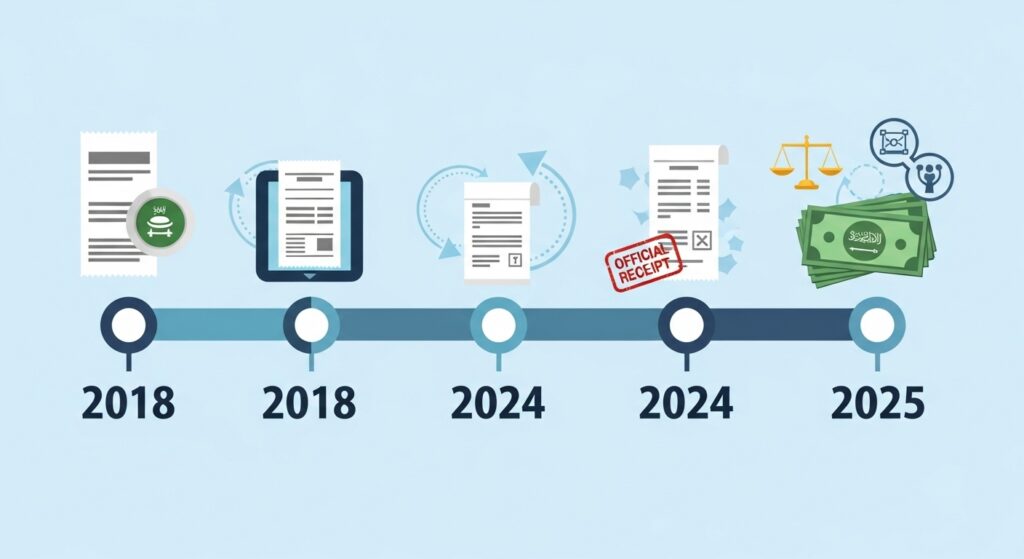
In the contemporary corporate landscape of Saudi Arabia, digital transformation is no longer a distant vision—it is an immediate operational requirement. At the heart of this transformation lies electronic invoicing, a cornerstone for improving operational efficiency, streamlining financial transactions, and ensuring absolute transparency. As the Kingdom moves closer to its Vision 2030 goals, the adoption of e-invoicing represents a monumental shift from traditional, error-prone manual methods to a sophisticated, integrated digital ecosystem. For businesses aiming to stay competitive, understanding the nuances of the Zakat, Tax, and Customs Authority (ZATCA) regulations and leveraging the right technology is critical. This guide explores how e-invoicing serves as a catalyst for growth and why choosing a high-performance e invoicing software saudi arabia is the most strategic move a modern enterprise can make. What is E-Invoicing? Beyond the Digital Image Many businesses initially mistake a scanned PDF or a digital photo of an invoice for an electronic invoice. However, under the ZATCA framework, an e-invoice is far more complex. It is a digital document generated, shared, and stored in a structured electronic format. The Technical Foundation: XML and PDF/A-3 A compliant e-invoice in Saudi Arabia consists of two primary components: The Human-Readable Part: Usually a PDF/A-3 file that looks like a traditional invoice. The Machine-Readable Part: An embedded XML (Extensible Markup Language) file. This allows ZATCA’s systems and your ERP to “read” the data without manual entry, eliminating 100% of interpretation errors. The Fatoora Platform Integration Under Phase 2 (the Integration Phase), invoices are not just stored locally; they are shared via API with ZATCA’s “Fatoora” platform. This system incorporates: CSID (Cryptographic Stamp Identifier): A digital “seal” that proves the invoice was issued by your specific system and has not been tampered with. QR Codes: Advanced codes containing the seller’s VAT number, timestamps, and total amounts, readable by the ZATCA VAT app for instant verification. UUID and Hashing: Each invoice contains a unique identifier and a “hash” of the previous invoice, creating an unbreakable chain that prevents the deletion or modification of records. The Efficiency Shift: Why E-Invoicing is a Game-Changer Adopting a robust e invoicing zatca solution is not just about staying on the right side of the law; it is about reclaiming lost time and capital. Studies show that e-invoicing cuts manual errors by up to 80% and processing time by 60% for Saudi businesses. 1. Drastic Reduction in Accounting Errors Manual data entry is the primary cause of financial discrepancies. Whether it’s a misplaced decimal point or a miscalculated VAT rate, human error can lead to costly audits. E-invoicing automation eliminates 95% of these mistakes. By integrating electronic payment systems directly with your billing, the data remains consistent from the moment of sale to the final entry in the general ledger. 2. Significant Time and Resource Savings Traditional invoicing is a slow-motion process: printing, mailing, following up, and manual filing. E-invoicing drops the “invoice-to-payment” cycle from an average of 30 days to just 5 days. This frees up nearly 70% of administrative time, allowing your finance team to move away from clerical tasks and toward strategic financial planning. 3. Unprecedented Transparency and Audit Readiness Real-time ZATCA tracking means your business is effectively “pre-audited.” Because the data is shared instantly with the authority, the risk of disputes or lengthy investigations is minimized. This transparency builds 5x higher credibility with clients and government bodies alike. Enhancing Operational Efficiency through ERP Integration The true power of an e invoice saudi arabia system is unlocked when it is not a standalone tool, but a part of an integrated Enterprise Resource Planning (ERP) solution. Daysum specializes in providing this seamless link, ensuring that every invoice issued triggers a cascade of automated efficiency throughout the company. Linking Sales and Inventory When an e-invoice is generated in a Daysum-integrated system: Inventory is updated instantly: Stock levels drop in real-time, preventing overselling. Financials are logged: The revenue and VAT liability are automatically posted to the correct accounts. Costing is accurate: The system calculates margins immediately, providing the management team with live data for better strategic decision-making. This level of integration can cut operational costs by 25-40% by reducing the need for manual reconciliation between different departments. ZATCA Compliance: The Evolution of Phase 1 and Phase 2 Saudi Arabia’s approach to e-invoicing has been structured to allow businesses to adapt gradually. However, as we move into 2025, the “Integration Phase” (Phase 2) is being fully enforced across most revenue tiers. The Timeline of Transformation Phase 1 (Generation Phase – Dec 2021): Focused on the issuance and storage of invoices. Businesses were required to stop using handwritten or manual Word/Excel invoices and switch to a technical solution. Phase 2 (Integration Phase – 2023 onwards): Mandates the API integration between the taxpayer’s system and ZATCA. This includes the requirement for XML formats and digital signatures. The 2025 Landscape: By 2025, Phase 2 targets near-universal adoption. Businesses that fail to integrate face severe consequences, including fines that can reach 50,000 SAR for serious violations like tampering with records or preventing ZATCA access. Top E-Invoicing Solutions Comparison: Why Daysum Leads When choosing a partner for your digital transition, it is vital to compare how different solutions handle the rigors of Saudi law and operational scale. Solution ZATCA Phase 2 ERP Integration Error Rate Cost Level Best For Daysum Full API/XML Native (Odoo) <1% Medium Comprehensive Operations ClearTax Certified API Add-on <2% Low-Med Tax-Focused Firms Qoyod Full Basic <3% Low SMBs / Startups AlBadr Compliant Sales Only 5% Low Small Retail The Daysum Advantage While standalone tools like ClearTax are excellent for tax-focused reporting, they often lack the depth needed for inventory management and manufacturing. Daysum provides a native odoo implementation saudi arabia that builds e-invoicing into the DNA of your business. This ensures that you don’t just meet a compliance checkbox, but actually gain a 25% productivity boost via unified data. Real Business Gains: The Numbers Behind the Switch The shift to e-invoicing with Daysum delivers measurable results that impact the bottom line: 85%

Read more
VAT in Saudi Arabia: Business Mechanism and Historical Development

VAT in Saudi Arabia: Business Mechanism and Historical Development

Value Added Tax (VAT) is undeniably one of the most widely implemented indirect taxes globally, currently applied by over 160 countries as a primary tool to boost government revenues, stabilize national budgets, and support long-term economic development. In the Kingdom of Saudi Arabia, the introduction and evolution of VAT represent a monumental shift in fiscal policy. Today, VAT in Saudi is recognized not merely as a tax, but as a core component of the ambitious Vision 2030 reforms. These reforms are strategically aimed at diversifying the national economy, reducing the historical dependence on oil revenues, and creating a sustainable financial future for generations to come. Start your zatca e-invoicing journey with a system built to meet Saudi compliance. Currently levied at a standard rate of 15% on most goods and services across the supply chain, VAT has generated hundreds of billions of Riyals to fund mega-projects and public services. To enforce and monitor this massive financial ecosystem, the General Authority of Zakat, Tax and Customs (ZATCA) processes an astonishing 8.2 billion e-invoices annually through its FATOORA platform. In this comprehensive guide, we will explore the intricate mechanism of VAT in Saudi Arabia, trace its historical development, detail the current rates and exemptions, outline the strict compliance obligations for businesses, and demonstrate how utilizing an advanced platform like Daysum can streamline your tax reporting and protect your enterprise from costly penalties. Definition and Core Concept of Value Added Tax (VAT) To navigate the regulatory landscape in Saudi Arabia, one must first deeply understand how VAT functions on a foundational level. Value Added Tax is defined as an indirect tax levied on all goods and services as they pass through multiple stages of the supply chain—from initial raw material production, to manufacturing, to wholesale distribution, and finally to the point of retail sale. The Mechanism of Input and Output VAT Unlike a traditional sales tax that is only collected once at the final point of purchase, VAT is fractional. Output VAT: This is the tax a business charges and collects from its customers when it sells a product or service. Input VAT: This is the tax a business pays to its suppliers when purchasing raw materials, inventory, or operational services. Businesses act as the government’s official intermediaries in this process. At the end of every tax period (monthly or quarterly), a company calculates the total Output VAT it collected and subtracts the total Input VAT it paid. The business then remits the “net difference” to ZATCA. If the Input VAT exceeds the Output VAT, the business is entitled to reclaim the difference as a tax refund. Ultimately, the final consumer—the everyday shopper—bears the total burden of the tax, as they cannot reclaim the VAT paid on personal purchases. By utilizing a robust electronic invoice ksa solution, companies can automate this complex tracking process, ensuring that every halala of Input and Output VAT is meticulously recorded and reported. The Historical Timeline and Evolution of VAT in KSA The implementation of VAT in Saudi Arabia did not happen overnight. It was the result of careful regional planning, economic forecasting, and responsive policy adjustments to global market conditions. Understanding this timeline is crucial to appreciating the current tax landscape. June 2016: The GCC Unified Agreement The conceptual groundwork was laid in June 2016 when the Gulf Cooperation Council (GCC) countries formally approved the implementation of a unified VAT framework. The goal was to establish a cohesive economic bloc, prevent tax evasion across borders, and create a standardized revenue stream for the Gulf states amid fluctuating global oil prices. February 2017: Saudi Arabia Ratifies the Agreement Saudi Arabia officially ratified the GCC agreement in early 2017. The Ministry of Finance and ZATCA immediately began a nationwide awareness campaign to prepare businesses, accountants, and consumers for the upcoming economic shift, initially setting the standard tax rate at a highly competitive 5%. January 2018: The Official 5% Launch On January 1, 2018, via Royal Decree M/113, VAT was officially introduced into the Saudi economy at a rate of 5%. This smooth rollout marked a historic milestone for the Kingdom, successfully integrating millions of transactions into a newly established digital tax registry. July 2020: The Strategic Increase to 15% In May 2020, as the global economy faced unprecedented challenges due to the COVID-19 pandemic and plummeting oil prices, the Saudi government took decisive action to protect its economy. Royal Decree No. (A/638) was issued to increase the VAT rate from 5% to 15%. This bold adjustment, which took effect on July 1, 2020, was a necessary economic stabilizer. It ensured that the government could continue funding vital healthcare services, infrastructure development, and Vision 2030 mega-projects without compromising the nation’s financial reserves. Strategic Objectives of the VAT System The imposition of a 15% VAT serves multiple strategic, long-term objectives that align perfectly with the Kingdom’s broader economic blueprint: Enhancing Non-Oil Government Revenues: VAT has proven to be an incredibly reliable revenue stream. It is estimated to generate over SAR 200 billion annually. These funds are directly injected into national infrastructure, public transportation, healthcare facilities, and educational institutions. Funding Vision 2030 Mega-Projects: The continuous flow of VAT revenue supports the capital required for transformative projects such as NEOM, the Red Sea Project, and Qiddiya, which are set to revolutionize the Kingdom’s tourism and technology sectors. Achieving Consumption-Based Equity: By shifting the tax burden to consumption rather than personal income, the system ensures a high degree of fairness. Individuals who consume luxury goods and spend more bear a proportionally higher share of the tax, while the government continues to provide essential subsidies and welfare programs for lower-income citizens. The Step-by-Step Mechanism of Tax Implementation For the VAT system to function flawlessly across millions of daily transactions, each stakeholder in the economy has specific, highly regulated roles. The Role of Businesses and Enterprises Businesses are the vital cogs in the VAT machine. They are legally mandated to: Charge and Collect: Accurately apply the 15% (or 0%) VAT rate to all taxable supplies

Read more
E-Invoicing and Improving E-Payment Processes in Businesses

E-Invoicing and Improving E-Payment Processes in Businesses

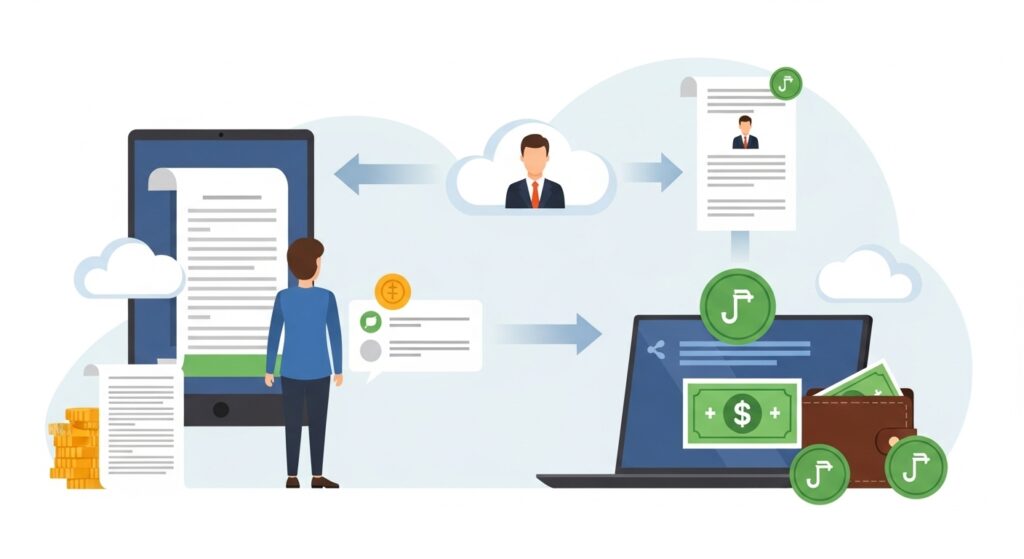
The financial ecosystem of the Kingdom of Saudi Arabia is currently undergoing one of the most profound and rapid digital transformations in the world. As the nation aggressively pursues the objectives outlined in Saudi Vision 2030, traditional, paper-based financial operations are rapidly becoming a relic of the past. At the epicenter of this monumental shift is the seamless integration of electronic invoicing with advanced electronic payment (e-payment) gateways. The sheer scale of this transformation is best illustrated by recent data: in 2025 alone, Saudi Arabia handled an astonishing 8.2 billion e-invoices via the Zakat, Tax and Customs Authority’s (ZATCA) FATOORA platform. This represents a massive 64% surge in digital billing activity compared to previous years. This explosion in digital invoicing is not happening in a vacuum; it is deeply intertwined with the rise of national and international e-payment gateways like Mada and SADAD. Today, by integrating compliant billing software with these payment networks, Saudi businesses have managed to slash processing times dramatically, boosting e-payment adoption to cover an impressive 75% of all commercial transactions in the Kingdom. In this comprehensive guide, we will explore the symbiotic relationship between e-invoicing and e-payments. We will dissect the current market landscape, analyze the tangible financial and operational benefits of digitizing your cash flow, examine real-world success cases from Saudi corporate giants, and evaluate how leading platforms like Daysum are providing the ultimate technological bridge to ensure your business remains competitive, compliant, and highly profitable. Market Overview: The Saudi Digital Financial Landscape To fully grasp the importance of integrating e-invoicing with e-payments, business leaders must first understand the strict regulatory environment and the robust technological infrastructure driving the Saudi market today. The ZATCA Phase 2 Rollout and Wave 24 ZATCA has taken a firm, phased approach to digitizing the economy to ensure maximum compliance and minimal market disruption. We are currently navigating the complexities of Phase 2, also known as the Integration Phase. This phase mandates real-time, instantaneous electronic invoicing for both B2B (Business-to-Business) and B2C (Business-to-Consumer) transactions. The rollout is executed in targeted waves. For instance, Wave 24, which goes into full effect in June 2026, specifically targets businesses with annual revenues exceeding SAR 375,000. For these businesses, generating an electronic invoice ksa is no longer just about creating a digital receipt; it is about linking highly structured XML invoices directly to the ZATCA FATOORA portal in real-time. This immediate data transfer is the government’s primary weapon for ensuring strict VAT compliance and drastically reducing tax fraud and commercial concealment. The E-Payment Infrastructure: Mada, Visa, and POS Devices Parallel to the invoicing mandate is the booming e-payment infrastructure. Saudi Arabia boasts one of the most advanced payment networks in the Middle East. The national payment network, Mada, processes millions of daily transactions with highly competitive merchant fees hovering around 1.75%. International gateways like Visa and Mastercard are also deeply embedded, typically carrying a fee structure of approximately 2.75% plus a fixed fee of SAR 1 per transaction. These payment gateways currently support a staggering network of over 700,000 Point of Sale (POS) devices scattered across the Kingdom. When a modern POS system is integrated seamlessly with an e-invoicing platform, the moment a customer taps their card, the payment is processed, the tax is calculated, the XML invoice is generated, and the data is sent to ZATCA simultaneously. This seamless micro-interaction is the very engine driving the Vision 2030 digitization goals. The Transformative Benefits of E-Payments for Businesses Transitioning from cash-heavy operations to streamlined e-payment ecosystems offers businesses far more than just technological novelty. It provides measurable, highly impactful financial benefits that directly improve the bottom line. 1. Slashing Operational Costs by 30-40% Traditional cash handling and paper invoicing are incredibly expensive. Businesses bear the hidden costs of purchasing receipt paper, maintaining printers, securing cash transit, and dedicating hundreds of human hours to manual data entry and reconciliation. By shifting to e-payments linked to digital invoices, companies can slash these operational and administrative costs by 30% to 40%. The elimination of paper alone represents a massive saving for high-volume retailers. 2. Speeding Collections from Weeks to Days In the B2B sector, the standard billing cycle has historically been painfully slow. A company issues a paper invoice, mails it to the client, waits for approval, and then waits weeks (or even months) for a physical check or a manual bank transfer. E-payments integrated with digital invoices change this paradigm completely. By embedding direct payment links into the digital invoice, businesses speed up their collections, reducing the cycle from weeks to mere days. 3. Achieving 98% Data Accuracy via Automated Reconciliation Manual accounting is prone to human error. Matching a stack of bank transfer receipts against a ledger of issued invoices is a tedious process that often results in mismatched funds. When utilizing a robust integrated accounting system, the e-payment gateway communicates directly with the general ledger. Once a payment is cleared, the system automatically marks the corresponding invoice as paid, achieving an unprecedented 98% data accuracy rate through automated reconciliation. 4. Improving Cash Flow by 50% for SMEs Cash flow is the lifeblood of Small and Medium Enterprises (SMEs). Late payments and delayed invoicing can easily bankrupt a growing business. By reducing errors, eliminating manual entry delays, and providing clients with instant, frictionless payment methods, SMEs have reported a 50% improvement in their operational cash flow. The Critical Role of E-Invoicing in Payment Processes E-payments cannot function efficiently in a corporate environment without the structural backbone of e-invoicing. The e-invoice acts as the legal and informational bridge that justifies the electronic transfer of funds. Instant Delivery and Verification Modern e-invoices enable instant delivery to the client via automated emails, SMS, or secure dedicated B2B portals. The moment an invoice is generated, the client receives it. Furthermore, every ZATCA-compliant B2C invoice includes a dynamic QR code. Customers can scan this code to instantly verify the authenticity of the transaction, creating immediate trust before they authorize their e-payment. Cutting Errors and Linking Payments Seamlessly Because e-invoices

Read more
How E-Invoicing Contributes to Improving Customer Experience

How E-Invoicing Contributes to Improving Customer Experience

In the era of rapid digital transformation, customer satisfaction demands far more than merely offering a high-quality product or a reliable service. Today’s consumers and B2B clients evaluate their relationship with a brand based on the entirety of their interaction—and the financial transaction is often the most critical touchpoint. In the Kingdom of Saudi Arabia, the transition toward a fully digital economy is rewriting the rules of customer engagement. The numbers speak for themselves: Saudi Arabia processed over 8.2 billion e-invoices in 2025 alone. This represents a staggering 64% surge from previous years, driven almost entirely by the Zakat, Tax and Customs Authority’s (ZATCA) FATOORA platform. This massive, nationwide adoption highlights the vital role of modernizing financial transactions. Operating within a market that has grown from USD 143 million in 2024 and is projected to skyrocket to USD 594 million by 2033, Saudi businesses are realizing that adopting an electronic invoice ksa solution is not just about regulatory compliance—it is a powerful strategic tool to dramatically improve efficiency and elevate customer interactions. In this comprehensive guide, we will explore exactly how the shift to electronic invoicing is redefining the customer experience in Saudi Arabia. We will delve into the market context, uncover the key benefits for consumers, analyze real-world success stories from Saudi corporate giants, and review how leading platforms like Daysum are setting new benchmarks for operational excellence. The Market Context: Vision 2030 and the ZATCA Mandate To understand how e-invoicing impacts the customer, one must first look at the macroeconomic shifts happening within the Kingdom. Saudi Vision 2030 aims to create a transparent, diversified, and highly digitized economy. At the core of this financial digitalization is the e-invoicing mandate implemented by ZATCA. The Phased Rollout and Wave 24 ZATCA’s approach to implementing e-invoicing has been meticulous and phased, ensuring businesses have the time to adapt. Currently, the rollout is progressing through its Integration Phase (Phase 2). As of the latest announcements, Wave 24 is targeting businesses with over SAR 375,000 in annual sales by June 2026. This phase mandates real-time electronic invoicing, requiring a direct API link between the business’s accounting software and ZATCA’s FATOORA portal. Reducing Fraud and Accelerating the Economy The primary governmental goal of e invoicing zatca integration is strict VAT compliance and the eradication of the hidden economy. By ensuring that every transaction is cryptographically stamped, the system drastically reduces tax fraud and manual accounting errors. However, the secondary effect is a massive acceleration in daily business transactions. With 8.2 billion invoices exchanged seamlessly via the FATOORA platform in 2025, the Saudi economy is moving faster than ever. This seamless digital tax reporting for all KSA companies means less time spent on back-office auditing and more time dedicated to frontline customer service. Why Customer Experience Hinges on the Billing Process Before diving into the specific technical benefits, it is crucial to understand the psychology of the customer journey. Customer Experience (CX) is the cumulative impression a buyer forms based on every interaction with a brand—from marketing and sales to delivery and post-purchase support. The Final Touchpoint The invoicing and payment stage is the final touchpoint in the purchasing journey. It is the moment where the customer formally hands over their money. If this process involves waiting in long lines for a paper receipt to print, dealing with mathematical errors, or struggling to get a proper tax breakdown, the customer leaves frustrated. A negative billing experience can easily eclipse a great product experience. Conversely, a smooth, instant, and highly transparent invoicing process leaves the customer feeling respected and secure. Improving this specific operational workflow has been proven to increase customer loyalty by 25% and reduce post-purchase complaints by up to 60%, simply because transparency breeds trust. Key E-Invoicing Benefits That Directly Enhance Customer Experience The transition from traditional paper receipts or basic PDFs to structured electronic invoices unlocks a wealth of features that directly benefit the end consumer and the B2B client. 1. Instant Access and Omnichannel Delivery Modern consumers despise clutter and delays. Traditional invoices are easily lost, damaged, or delayed in the mail. E-invoicing eradicates this problem by providing instant access. The moment a transaction is finalized, the electronic invoice is automatically delivered to the customer via their preferred channel—whether that is an email, a direct SMS, or a WhatsApp message. Furthermore, B2B clients can access dedicated digital portals to view, download, and manage their entire history of invoices with a specific vendor, eliminating the need to request duplicate copies from customer support. 2. QR Codes for Instant Verification and Trust One of the most visible and impactful elements of the ZATCA mandate for B2C transactions is the inclusion of a dynamic QR code. When a customer receives their digital or printed e-invoice, they can scan this QR code using the official ZATCA mobile application. In milliseconds, they can verify the authenticity of the invoice, the seller’s commercial registration, and the exact VAT amount paid. This level of verification builds immense trust, assuring the customer that they are dealing with a legally compliant, ethical business. 3. Accelerated Payment Processing E-invoicing dramatically speeds up the payment cycle. Because modern electronic invoices can embed secure, clickable payment links (integrating with Mada, Visa, Mastercard, or Apple Pay), customers can settle their bills instantly from their smartphones. This real-time validation cuts out the friction of bank transfers and manual check-writing. By linking the invoice directly to the payment gateway, businesses provide a smoother, more convenient experience that respects the client’s time. 4. Unmatched Transparency and Dispute Minimization Billing disputes usually arise from a lack of clarity. A scribbled paper receipt or a vague PDF often leads to arguments over what was charged. E-invoices, built on highly structured XML data and secured by cryptographic stamps, ensure absolute transparency. Every item, discount, and tax percentage is broken down with mathematical perfection. This clear detailing minimizes misunderstandings and virtually eliminates billing disputes, resulting in a harmonious merchant-client relationship. Real Impact Data: Success Stories from Saudi Giants To truly grasp

Read more
The Importance of E-Invoicing in Improving Business Efficiency and Simplifying Processes

The Importance of E-Invoicing in Improving Business Efficiency and Simplifying Processes

In today’s rapidly transforming global economy, the shift toward digitalization is no longer a futuristic concept—it is a present-day reality dictating the survival and growth of businesses. Nowhere is this more evident than in the Kingdom of Saudi Arabia, where the ambitious directives of Saudi Vision 2030 are actively reshaping the corporate landscape. At the very forefront of this digital revolution is the implementation of the mandated electronic invoicing system by the Zakat, Tax and Customs Authority (ZATCA). Since the rollout of the initial phases in December 2021, the ZATCA e-invoicing framework has fundamentally altered how Saudi businesses operate. The transition from paper-based receipts to structured digital files has yielded staggering results: companies adopting these systems have reported a 95% reduction in manual accounting errors and a 70% decrease in paper and physical archiving costs. With leading software providers like Daysum, obill, and Qoyod enabling invoice issuance in under 30 seconds, organizations are experiencing 80% faster workflows. In this comprehensive guide, we will explore the critical importance of e-invoicing in improving business efficiency, simplifying daily operations, and ensuring bulletproof compliance. We will dive deep into the tangible impacts of this technology, the features that drive operational excellence, and how choosing the right digital partner can elevate your business in a highly competitive market. Defining Operational Efficiency in the Modern Enterprise Before examining the profound impact of electronic invoicing, we must first establish a clear definition of “operational efficiency” within the context of a modern Saudi enterprise. The Core of Operational Efficiency Operational efficiency refers to the ability of an organization to maximize its available resources—specifically time, money, and labor—to deliver products or services with the least amount of waste. It involves minimizing operational costs, accelerating the execution of daily tasks, and driving higher overall productivity through intelligent automation. In the past, achieving high operational efficiency meant hiring massive teams of accountants to audit paper trails. Today, it means leveraging smart software to do the heavy lifting in fractions of a second. The Saudi Vision 2030 Digital Push The drive for efficiency aligns perfectly with the digital push mandated by Saudi Vision 2030. The Kingdom is actively moving toward a paperless, transparent, and highly competitive private sector. In KSA, the rollout of ZATCA Phase 2 (also known as the Integration Phase, which involves direct FATOORA portal linkage) acts as a powerful catalyst. While many view this mandate purely as a regulatory hurdle, forward-thinking business leaders recognize it as a unique opportunity. By complying with the electronic invoice ksa regulations using a robust automated system, companies gain a significant competitive edge, allowing them to scale their operations without scaling their administrative overhead. The Critical Importance of Business Efficiency Why does business efficiency matter so much, and how exactly does e-invoicing contribute to it? In a market where consumer expectations are higher than ever, speed and accuracy are the ultimate differentiators. Accelerating Processes and Slashing Errors Traditional invoicing is painfully slow. It requires an employee to manually type out client details, calculate the 15% Value Added Tax (VAT), print the document, and physically hand it to the client. E-invoicing accelerates these administrative processes by up to 80%. Because the system automatically calculates the tax and populates the client’s information from a secure database, manual data entry errors are virtually eradicated. Boosting Client Satisfaction Efficiency is not just an internal metric; it directly impacts the customer experience. Modern consumers and B2B clients expect immediate, clear, and professional documentation. By providing instant digital invoices via email or secure messaging platforms, businesses significantly boost client satisfaction and project a highly professional brand image. Deep Integration for Real-Time Analytics True efficiency is achieved when all departments within a business communicate seamlessly. Modern e-invoicing platforms do not operate in a vacuum. Advanced systems integrate the invoicing module directly with Enterprise Resource Planning (ERP) software, Point of Sale (POS) terminals, and e-commerce platforms like Salla and Zid. This deep integration allows executives to access real-time analytics regarding sales volume, inventory depletion, and cash flow, ensuring that decision-making is driven by live data rather than outdated monthly reports. Core E-Invoicing Efficiency Features The remarkable efficiency gains provided by electronic invoicing are powered by specific, highly advanced technological features. Below is a detailed breakdown of these features, their impact on your daily operations, and their alignment with ZATCA standards. E-Invoicing Feature Tangible Efficiency Gain ZATCA Tie-In / Standard Auto-Issuance Reduces issuance time from 5 minutes (manual) to literally seconds. Requires generation in structured XML format with a dynamic QR code. FATOORA Sync Provides instant government verification, preventing audit delays. Mandatory for Phase 2 Integration (direct API linkage to ZATCA). Cloud Archive Enables instant, localized searching of records spanning up to 5 years. Requires storage in the globally recognized PDF/A-3 archival format. Understanding the Technical Impact The XML and QR Code: The XML format allows machines to read and process the invoice instantly, while the QR code empowers buyers and government inspectors to scan and verify the transaction on the spot. The FATOORA Sync: By syncing directly with the government portal, businesses no longer have to spend weeks preparing tax reports. The government receives the data the moment the transaction occurs, completely simplifying the auditing process. Speeding Up Invoice Issuance and Workflows Time is the most valuable currency in any business. Electronic invoicing systems are engineered to save as much time as possible across every stage of the sales cycle. One-Click Generation and Distribution With a modern e-invoicing system, generating a tax invoice requires no more than a single click. Once the sale is registered in the POS or CRM system, the software instantly generates the compliant document. Furthermore, distribution is completely automated. The system can be configured to auto-send the invoice to the client’s email address or directly to their WhatsApp, effectively reducing the billing cycle from days to mere seconds. Live E-Commerce Synchronization For retail businesses, managing both a physical storefront and an online store can be an administrative nightmare. If a customer buys a product on your Salla

Read more
The Role of E-Invoicing in Enhancing Financial Transparency and Credibility

The Role of E-Invoicing in Enhancing Financial Transparency and Credibility

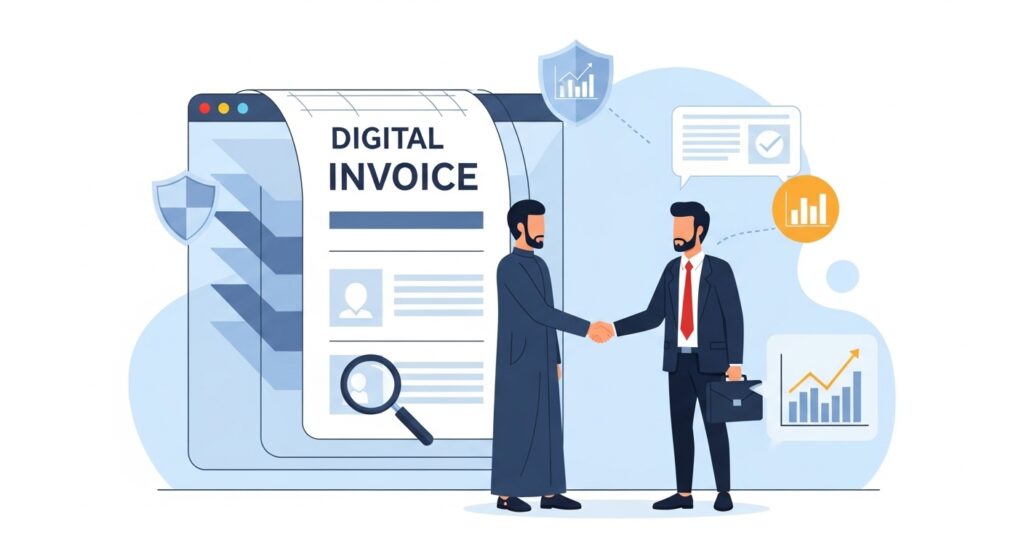
  The global economic landscape is undergoing a monumental shift, characterized by rapid digitalization and an uncompromising demand for transparency. In the Kingdom of Saudi Arabia, this transformation is not merely a corporate trend; it is a foundational pillar of Saudi Vision 2030. At the heart of this financial renaissance is the implementation of the electronic invoice ksa system, mandated by the Zakat, Tax and Customs Authority (ZATCA). The shift from traditional, paper-based accounting to a sophisticated, real-time digital grid has fundamentally altered how businesses operate. Recent data indicates that the implementation of ZATCA e-invoicing has successfully slashed tax evasion by an astounding 80%. This is largely attributed to the real-time monitoring capabilities of the FATOORA portal. Forward-thinking companies and early adopters—supported by advanced platforms like Daysum, ClearTax, and major telecommunications entities like STC—are reporting a 40% acceleration in invoice processing times and a 95% reduction in manual accounting errors. In this comprehensive guide, we will explore the profound role that electronic invoicing plays in enhancing financial transparency and credibility. We will delve into the technical mechanisms that make this possible, quantify the business benefits, review real-world Saudi success stories, and analyze how advanced ERP providers are leading the market in compliance and efficiency. Defining Financial Transparency and Credibility in the Modern Era To truly understand the impact of e-invoicing, we must first define what transparency and credibility mean in a modern financial context. These are no longer abstract buzzwords; they are measurable, operational realities. What is Financial Transparency? Financial transparency means maintaining accurate, accessible, and highly verifiable financial records. In the context of the Saudi market, it translates to the generation of structured XML and PDF/A-3 invoices that are instantly checkable through the ZATCA portal. When a business issues an e-invoice, it is no longer handing over a piece of paper that can be easily lost, altered, or forged. Instead, it is generating a dynamic data packet. Stakeholders—whether they are consumers, B2B clients, or government auditors—can instantly scan a QR code to verify the legitimacy of the transaction. This immediate verifiability removes the veil of obscurity from corporate finances, building deep, enduring trust across the entire supply chain. What is Financial Credibility? While transparency is about visibility, credibility is about trust and immutability. Financial credibility grows when stakeholders are confident that the data they are viewing cannot be manipulated. ZATCA’s mandate enforces this through tamper-proof Universally Unique Identifiers (UUIDs) and advanced cryptographic digital signatures. Once an invoice is issued and stamped, it is permanently sealed. Any attempt to alter the invoice post-issuance will break the digital signature, immediately flagging the document as fraudulent. With these protocols becoming mandatory for 99% of VAT-registered firms by the year 2026, the entire Saudi economy is moving toward a standard of absolute financial credibility. How E-Invoicing Drives Transparency: The Technical Mechanisms The leap from traditional invoicing to e-invoicing is powered by specific, highly sophisticated technological features. Each feature plays a distinct role in ensuring that every halala is accounted for. Below is a detailed breakdown of how these features drive transparency, mapped against ZATCA’s integration phases. Technical Feature Transparency & Credibility Impact ZATCA Mechanism / Phase Auto UUID & Dynamic QR Code Enables instant verification of the invoice’s authenticity by buyers and auditors via mobile scanning. Phase 1 (Generation) – Mandatory requirement for all tax invoices. FATOORA API Integration Facilitates government real-time review. B2B invoices are cleared before being shared with the buyer. Phase 2 (Integration) – Rolling out in targeted waves. Cryptographic Digital Signature Ensures post-issue immutability. Locks the document so no prices, dates, or VAT amounts can be altered. Handled via certified Cryptographic Service Providers (CSP). Decoding the Technology The Power of the UUID: The Universally Unique Identifier is a 128-bit number used to identify information in computer systems. In e-invoicing, it ensures that no two invoices can ever have the same identification code, completely eliminating the risk of duplicate invoicing or “double-booking” revenues. The FATOORA API: Application Programming Interface (API) connectivity means that a company’s accounting software speaks directly to the government’s servers. There is no middleman and no delay, ensuring that the government has a real-time pulse on the economy. ZATCA Compliance Benefits: Beyond Avoiding Penalties When business leaders discuss ZATCA compliance, the conversation often revolves around fear—specifically, the fear of heavy financial penalties. While it is true that failing to comply with e-invoicing regulations can result in severe fines of up to SAR 50,000 per violation, the benefits of leveraging robust e invoicing zatca software extend far beyond merely avoiding punishment. Automated VAT Reporting and Simplified Rules Advanced e-invoicing platforms automatically categorize transactions. They apply simplified invoice rules for B2C (Business to Consumer) transactions and standard tax invoice rules for B2B (Business to Business) transactions without requiring manual input from the cashier or accountant. At the end of the month or quarter, the system generates an automated, error-free VAT report. This automation saves hundreds of administrative hours and guarantees that the tax filed matches the tax collected flawlessly. Smart Validations Prevent Rejection One of the most critical features of a high-tier e-invoicing system is its ability to perform pre-submission checks. Platforms like Daysum perform over 150 smart validations in the background before an invoice is ever sent to the FATOORA portal. These checks verify everything from the exact 15-digit format of the buyer’s VAT registration number to the logical calculation of the 15% VAT on line items. By catching these errors pre-submission, companies avoid the administrative nightmare of dealing with rejected invoices and issuing complex debit/credit notes. Building Financial Credibility with Accurate Transaction Documentation At the core of a credible business is its ability to maintain pristine, unquestionable records. Electronic invoicing introduces a level of forensic accuracy to transaction documentation that paper ledgers could never achieve. The ISO 8601 Timestamp Standard Every ZATCA-compliant e-invoice must include a timestamp formatted to the ISO 8601 standard. This is not just a date on a page; it is a meticulously coded string of data that records the exact year, month,

Read more
The Difference Between E-Invoices and Traditional Invoices

The Difference Between E-Invoices and Traditional Invoices

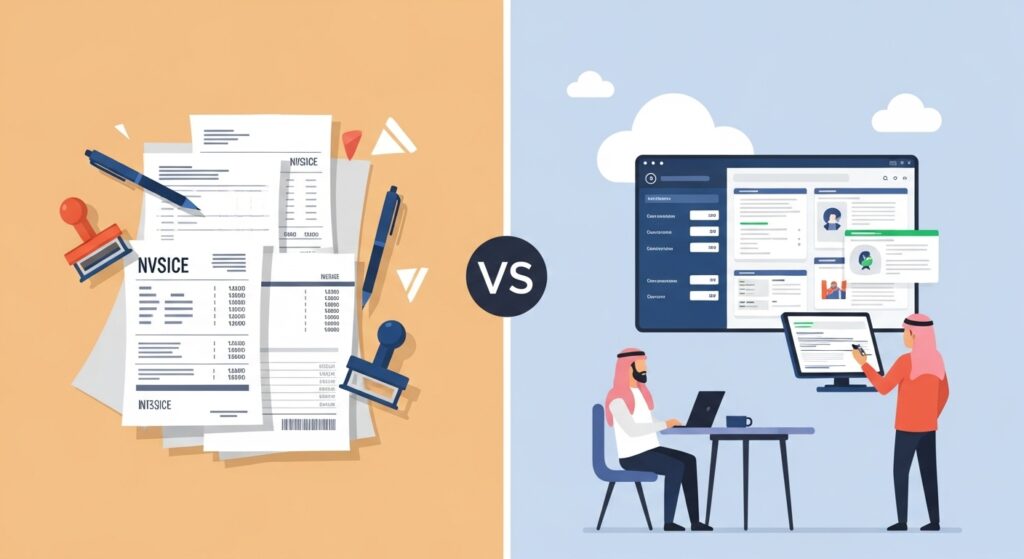
  In a world increasingly driven by rapid digital transformation and relentless technological innovation, adopting modern technological tools has evolved from a competitive luxury into a fundamental operational necessity. For businesses operating within the Kingdom of Saudi Arabia, this digital shift is deeply intertwined with the ambitious economic objectives of Vision 2030. At the very core of this financial modernization is the evolution of how businesses bill their clients, track their revenue, and report their taxes. Among the myriad of digital tools available to modern enterprises, electronic invoicing stands out as the most critical and universally mandated modern alternative to traditional invoicing. E-invoicing helps businesses drastically enhance their operational efficiency, minimize catastrophic human errors, and secure their financial supply chain. Transform your financial operations with a secure e invoicing Saudi Arabia solution that not only meets legal standards but actively drives your business forward. In this exhaustive, definitive guide, we will meticulously dissect the fundamental differences between traditional invoices and e-invoices, explore the hidden costs of outdated billing methods, analyze the strict regulatory landscape of the Zakat, Tax, and Customs Authority (ZATCA), and demonstrate how transitioning to a comprehensive digital ecosystem with Daysum will redefine your corporate profitability. Defining the Baselines: E-Invoices vs. Traditional Invoices To truly appreciate the magnitude of the shift toward digital billing, we must first clearly define the two methodologies. The distinction goes far beyond simply receiving a bill on a screen versus receiving it on a piece of paper; it involves a fundamental change in how financial data is structured, verified, and transmitted. The Anatomy of Traditional Invoices Traditional invoices are paper documents manually written, printed, or prepared using simple, non-integrated software (such as Microsoft Word or basic Excel spreadsheets) to document financial transactions. For decades, this was the global standard for requesting payment. A traditional invoice relies entirely on human intervention. An employee must manually type the client’s details, calculate the subtotal, apply the correct tax rate, print the document, place it in an envelope (or attach a static PDF to an email), and send it to the buyer. Upon receipt, the buyer’s accounting department must manually read the document and re-enter the data into their own financial system. This method is inherently inefficient, highly prone to typographical errors, and leaves a massive carbon footprint. Furthermore, from a regulatory standpoint, traditional invoices are incredibly easy to forge, alter, or lose, making tax audits a nightmare for both the business and the government. The Anatomy of E-Invoices E-invoices (electronic invoices) are highly structured digital documents issued, transmitted, received, and stored entirely electronically. Crucially, a true e-invoice is not just a digital picture of a paper invoice (like a scanned JPEG or a flat PDF). It is a data file—typically an XML file or a PDF/A-3 hybrid—that contains machine-readable data. In Saudi Arabia, e-invoices must strictly comply with the regulatory requirements set by ZATCA under the “Fatoora” initiative. A compliant e-invoice contains hidden cryptographic stamps, Universally Unique Identifiers (UUIDs), and dynamic QR codes. Because the data is structured, the buyer’s accounting software can instantly read and process the invoice without any human data entry. This automated system facilitates lightning-fast financial transactions, slashes administrative effort, and guarantees data integrity. The Hidden Financial Drains of Traditional Invoicing Many businesses hesitate to upgrade their accounting systems because they perceive their current manual processes as “free.” However, the hidden costs of traditional invoicing act as a silent drain on corporate profitability. The Cost of Materials and Logistics Every paper invoice carries a tangible physical cost. When you factor in the cost of high-quality company letterhead, printer ink, envelopes, and postage fees, a single traditional invoice can cost several riyals just to produce and send. For a mid-sized enterprise issuing thousands of invoices a month, these physical material costs accumulate into a massive annual expense that yields zero return on investment. The Burden of Physical Storage and Archiving Saudi commercial and tax laws require businesses to retain financial records for up to six years (and sometimes longer, depending on the sector). Storing tens of thousands of paper invoices requires physical space. Businesses are forced to rent climate-controlled storage rooms and purchase endless filing cabinets. Furthermore, locating a specific three-year-old invoice during a surprise tax audit requires hours of manual searching by administrative staff, pulling them away from productive work. The High Price of Human Error Manual data entry is statistically flawed. Even the most meticulous accountant will eventually mistype a Value Added Tax (VAT) calculation or transpose a digit in a client’s tax identification number. In a traditional workflow, an error on an invoice means the client will reject it. The invoice must then be voided, a credit note manually generated, and a new invoice issued and mailed. This cycle delays payment by weeks, severely impacting the company’s cash flow liquidity. For companies operating in specialized, high-value sectors, such as those using top gold accounting software, a single manual pricing error can result in catastrophic financial losses. The Saudi Context: Understanding ZATCA’s E-Invoicing Mandate The transition to e-invoicing in Saudi Arabia is not merely a suggestion for better business practices; it is a strict legal mandate enforced by ZATCA designed to eradicate the shadow economy and ensure fair tax collection. Phase 1: The Generation Phase Initiated in December 2021, Phase 1 required all VAT-registered businesses to completely abandon handwritten invoices and non-compliant computer-generated bills. Businesses were mandated to use a compliant electronic solution to generate invoices that included specific fields, such as the seller’s tax number and a scannable QR code. While this phase digitized the generation of the document, the invoice did not yet need to be sent to the government in real-time. Phase 2: The Integration Phase Phase 2, which is currently rolling out in targeted revenue-based waves, represents a massive technological leap. In this phase, a company’s billing software must integrate directly with ZATCA’s “Fatoora” portal via an Application Programming Interface (API). For B2B (Business-to-Business) Transactions: The invoice must be sent to ZATCA for “Clearance” before it

Read more
top
Business Challenges

Digital Transformation

Security

Automation

Gaining Efficiency