In the complex, high-velocity world of B2B gold distribution and jewelry manufacturing, the “Gold for Gold” exchange—where a wholesale client or retail branch trades in raw gold or old jewelry against new, manufactured pieces—is a standard operating procedure. However, for the financial controller, this process is fraught with accounting and fiscal risks. When managed manually, these exchanges often result in “ghost” entries, reconciliation nightmares, and, most dangerously, tax compliance failures.
For a Chief Financial Officer (CFO), the goal is to transform these exchanges from an administrative burden into a source of financial clarity. The solution lies in the deployment of a specialized Gold ERP that treats gold exchanges not as simple bartering, but as sophisticated financial events that require precise accounting and localized tax treatment. By automating the calculation of the cash difference and enforcing the ZATCA-compliant rule that VAT applies strictly to the workmanship (the added value) and not the raw asset, modern enterprises protect themselves from double taxation while simultaneously reclaiming hundreds of hours previously lost to manual ledger adjustments.
Also read: Gold VAT: How the System Auto-Calculates Taxes on Workmanship Only
1. The Accounting Identity: The Tax-Base Conundrum in Gold Exchanges
The fundamental challenge in gold exchange accounting is the “identity” of the gold itself. In the eyes of the tax authorities, gold bullion or scrap metal is a commodity—often treated as a non-taxable asset or a zero-rated supply in B2B transactions. Conversely, the labor, design, and manufacturing overhead (the “making charges” or “workmanship”) constitute a service, which is a taxable event.
When a wholesale distributor accepts gold in exchange for new goods, they are essentially conducting a dual-track transaction:
- A Purchase: Buying old gold from the client.
- A Sale: Selling new jewelry to the client.
If the accounting system does not automatically bifurcate these two values, the merchant risks double taxation. If the tax is applied to the total value of the new gold jewelry without deducting the value of the raw material asset provided by the client, the business pays VAT on an asset that should be tax-exempt. This is the “Double Taxation Trap.” A professional B2B accounting system must be able to perform this bifurcation at the transactional level, ensuring that the VAT output on the new piece is net of the asset value provided by the client, and compliant with the latest E-invoicing mandates.
2. Technical ERP Logic: Automating the Exchange Calculation
To achieve absolute accounting precision, the ERP system must execute a precise mathematical protocol. It is not sufficient to simply track the weight; the system must manage the financial value of the gold at the moment of the exchange.
The Automated Calculation Flow:
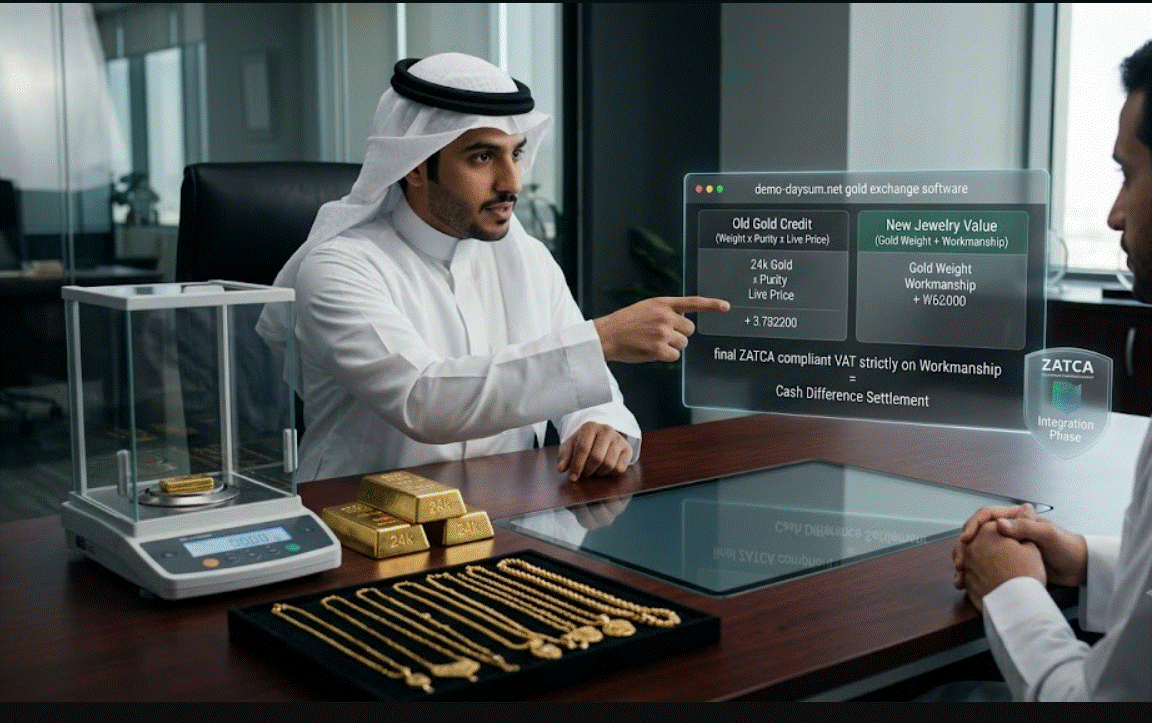
- Gold Asset Valuation: The system assesses the value of the incoming gold (the “Return”). It calculates this based on the weight and the purity (the Karat) of the incoming metal, multiplied by the live market Gram price at that specific moment. This establishes the “Credit” value the client has earned.
- New Piece Assessment: The system calculates the value of the new item being provided. This is the sum of the raw gold weight value and the New workmanship fee.
- VAT Bifurcation: The ERP engine is configured to isolate the workmanship fee from the gold value. It calculates the VAT exclusively on the workmanship component.
- Cash Difference Settlement: The final Cash difference (the amount the client needs to pay) is the net balance: [New Piece Gold Value + New Workmanship + VAT on Workmanship] – [Old Gold Credit Value].
By executing this calculation within the ERP, the system generates an audit-ready Gold invoice that clearly shows the gross price, the trade-in credit, the taxable workmanship base, and the final VAT amount. This process removes the possibility of human math errors and ensures that the financial data transmitted to the Tax authority is structurally perfect.
Manual vs. Automated ERP Accounting for Gold Exchanges
| Accounting Metric | Manual/Traditional Method | Automated B2B ERP System |
|---|---|---|
| Tax Calculation | Applied to total; risks double taxation. | Applied strictly to workmanship; prevents over-taxation. |
| Weight/Purity Tracking | Manual logs; error-prone and slow. | Real-time tracking of Gram and Karat conversion. |
| Audit Trail | Incomplete/Paper-based; difficult to verify. | Immutable, detailed ledger of every exchange. |
| Efficiency | Hours per day for reconciliation. | Seconds per transaction (Automated). |
3. The Localization Imperative: ZATCA and Regional Compliance
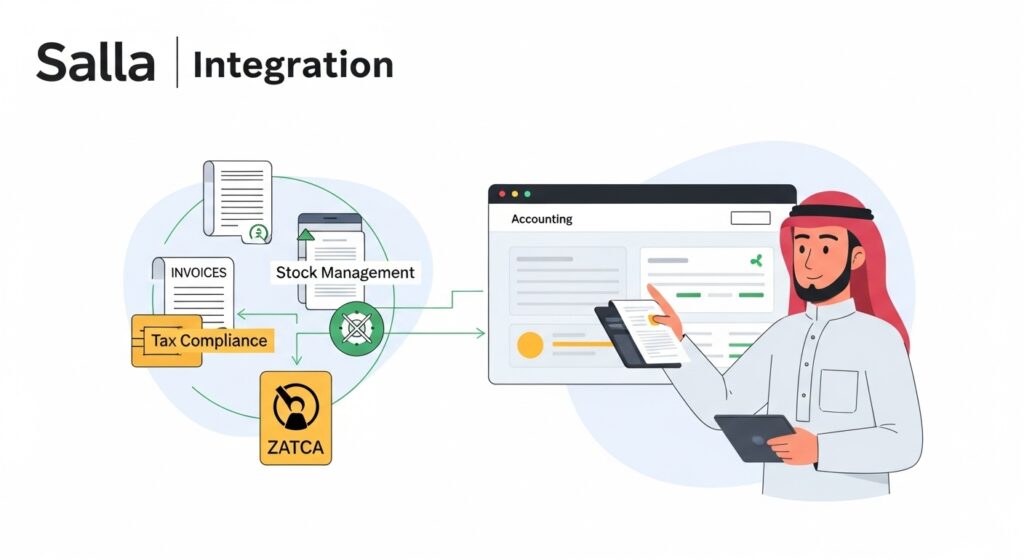
In regions such as the Kingdom of Saudi Arabia, compliance with the Zakat, Tax and Customs Authority (ZATCA) is the primary driver for digitizing the gold supply chain. Tax authorities require that electronic invoices be generated in a specific format (e.g., UBL XML) that contains all required cryptographic stamps and QR codes.
A localized ERP system does not just perform the math; it formats the transaction for government reporting. When a gold exchange occurs, the system automatically creates the credit note for the return (the old gold) and the invoice for the new item. Because the system is “localization-aware,” it knows that the ZATCA-compliant file must itemize the gold weight (tax-exempt) and the workmanship (taxable) separately. If a merchant attempts to issue an invoice that does not follow this itemization, the system rejects it, preventing the merchant from submitting an invalid file and triggering a penalty.
This level of localized accounting professionalism is what differentiates a generic business software from a dedicated B2B financial platform. For companies looking to integrate their entire financial lifecycle, digital transformation is the only path forward. Review this overview of digital transformation to see how such integrations provide a competitive edge.
4. Operational Efficiency and the Role of the CFO
For a CFO, the value of an automated gold exchange system is found in the “Accounting Identity” of the business. The system acts as a guardian of the General Ledger, ensuring that every time a gram of gold enters or leaves the vault, the corresponding financial account is updated.
Eliminating Manual (Reconciliations)
In a manual B2B environment, accounting teams spend hours at the end of each week trying to reconcile the physical gold weight in the vault with the theoretical weight in the ledger. Differences often arise because of incomplete documentation of exchanges.
When the ERP system mandates that an exchange cannot occur without a logged transaction, the ledger always matches the physical stock. The “Account-Ledger-Physical-Stock” triangle is closed. The CFO no longer needs to hunt for missing documentation because the system forces the documentation to exist as a condition of the transaction.
Scaling Through Automation
As the wholesale volume increases, the business cannot scale if the finance team is tied to spreadsheets. An automated system allows a jewelry manufacturer to handle 10 exchanges a day as efficiently as 1,000. It scales the process without scaling the administrative staff. This efficiency directly impacts the bottom line, freeing up resources to focus on expanding the B2B distributor network or investing in better manufacturing technologies. Managing your workforce efficiently starts with adopting modern solutions like A Guide For Saudi Companies On Compliance With Labor Laws Using HR Systems.
The CFO’s ROI on Gold Exchange Automation
| Financial Outcome | Mechanism of Improvement | Corporate Benefit |
|---|---|---|
| Reduced Tax Risk | Automated VAT split (Workmanship vs. Gold). | Eliminates overpayment of taxes and audit-related fines. |
| Increased Labor Efficiency | Real-time ERP ledger updates. | Reallocates human capital from manual data entry to strategic analysis. |
| Inventory Precision | Automated ledger-stock reconciliation. | Prevents shrinkage and improves asset valuation accuracy. |
| Client Satisfaction | Transparent, professional invoices. | Builds trust with B2B partners, increasing long-term retention. |
5. Implementation: Building the Accounting Foundation
To fully benefit from an automated gold exchange system, the B2B jewelry enterprise must undertake a thoughtful implementation process. The goal is to build a “Pure Accounting Identity” where the software is not just a storage tool, but an active participant in financial compliance.
1. Master Data Configuration
The foundation is your product master data. Every item must be classified correctly. Is it a finished jewelry piece? Is it raw bullion? What are the standard workmanship costs? These classifications must be built into the system with clear tax-treatment flags (Exempt/Taxable).
2. Workflow Automation
Define the exchange process within the ERP. When a distributor brings back old gold, the system must recognize it as a return against a purchase credit, not as a sale. This ensures the correct movement in the General Ledger.
3. Localization and Regulatory Reporting
Configure the system to pull the necessary tax codes specific to your region. Ensure that the e-invoicing engine is correctly mapped to report the “Taxable Base” (workmanship) and “Zero-rated Base” (gold) to the governmental tax authority’s portal in the required format.
Conclusion: Gold for Gold
The gold wholesale and jewelry manufacturing sector is shifting rapidly toward a model where financial transparency is the primary driver of growth. Relying on manual math for gold exchanges is a dangerous relic of a pre-digital past. By implementing a B2B-focused ERP, enterprises can automate the calculation of price differences and VAT with surgical accuracy, ensuring that taxes are applied only where they are legally due—on the workmanship.
This strategy protects the merchant from the risk of double taxation, eliminates the need for endless manual accounting reconciliations, and creates a professional financial audit trail that satisfies even the most stringent tax authorities. For the modern CFO, the implementation of such a system is not just an expense; it is a vital investment in the financial integrity, compliance, and future scalability of the wholesale jewelry business.
Frequently Asked Questions (FAQs)
Yes, an enterprise-grade ERP handles any material exchange by mapping the correct tax treatment to each material class. If the incoming gold is exchanged for silver, the system processes the gold return (as an asset) and the silver purchase (as a new transaction), calculating the appropriate tax base for the workmanship difference regardless of the material types involved in the exchange.
The system creates a balancing journal entry. When an exchange occurs, the system records the "Old Gold" as an inventory intake, the "New Jewelry" as an inventory outtake, and the Cash difference as either a cash/bank debit or a credit to the distributor's account (Accounts Receivable). This automated balancing ensures the balance sheet always reflects the net movement of cash and gold.
An professional, localized ERP system provides a central configuration panel where tax rates and reporting rules are updated. When a tax authority announces a change, the finance manager updates the rule in one location within the system. The ERP then automatically applies the new logic to all future invoices, ensuring immediate and total compliance without the need to modify individual transaction records.
While the focus here is B2B, the accounting logic is equally applicable to retail. However, in wholesale, the volumes and the scale of the Cash difference make automation a necessity rather than an option. The system provides the professional-grade ledger transparency required for bulk trade, whereas a standard retail POS might lack the complex cost-separation features needed for high-volume B2B manufacturing reconciliations.