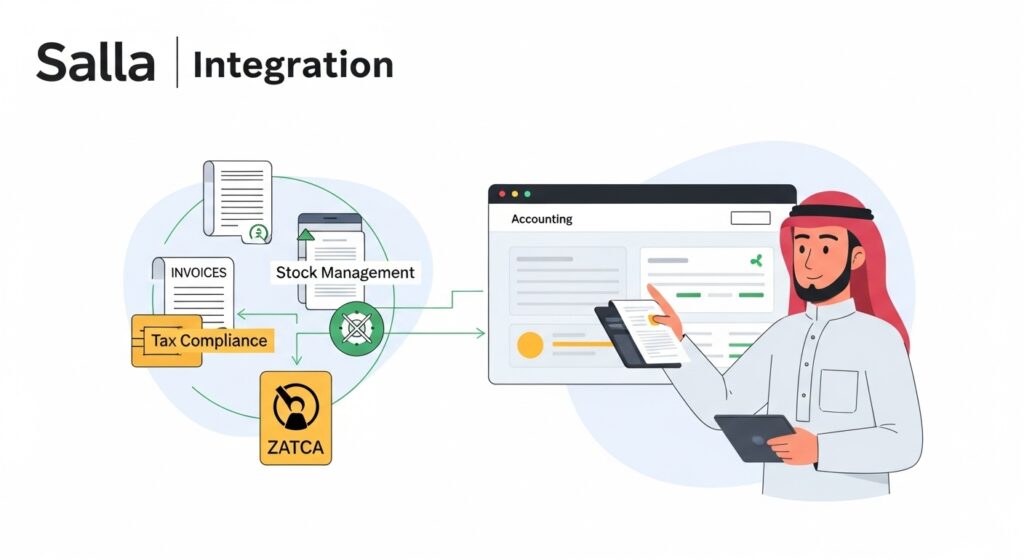
The retail and wholesale sectors across the Middle East, particularly in the Kingdom of Saudi Arabia and Egypt, are undergoing a profound and irreversible digital transformation. Driven by ambitious national economic visions, governments are overhauling their regulatory frameworks to ensure absolute financial transparency and eliminate the informal economy. For corporate enterprises, B2B distributors with direct-to-consumer outlets, and large-scale retail chains, this regulatory shift presents both a formidable challenge and an unprecedented opportunity. At the center of this transformation is the mandatory implementation of the E-receipt system.
Integrating your front-end POS system directly with the national Tax authority is no longer merely a technological upgrade; it is a critical legal requirement and the ultimate shield against crippling financial penalties. Operating disconnected cash registers in today’s heavily monitored commercial landscape exposes your enterprise to operational bottlenecks, catastrophic human errors, and severe compliance risks. In this comprehensive guide, we will explore the strategic mechanics of linking your point of sale to the E-receipt ecosystem. We will delve into how this vital integration dramatically speeds up Cashier performance, streamlines Retail sales, perfectly calculates Taxes, and permanently protects your business from government fines.
Also read: E-Invoicing in KSA: Comprehensive Guide for Seamless Integration to Avoid Fines
1. Understanding the E-Receipt Ecosystem and the Regulatory Mandate
To navigate the complexities of modern commercial compliance, business leaders and Chief Financial Officers (CFOs) must first understand the structural difference between standard electronic Invoices and the E-receipt. While an electronic invoice (B2B) is typically issued for transactions between two registered corporate entities and requires detailed tax identification from both parties, an E-receipt is specifically designed for B2C transactions or direct retail sales where the end-user is an individual consumer.
Regional regulatory bodies, such as the Zakat, Tax and Customs Authority (ZATCA) in Saudi Arabia and the Egyptian Tax Authority (ETA), have launched rigorous campaigns mandating the real-time reporting of all direct sales. The primary objective is to monitor the collection of Value Added Tax (VAT) instantaneously and prevent tax evasion.
For a B2B enterprise that also operates retail showrooms or factory outlets, this means that every single transaction processed by a Cashier must be digitally captured, encrypted, and transmitted to the Tax authority the exact second the sale is concluded. The government server then instantly validates the transaction and returns a unique cryptographic approval, often manifested as a dynamic QR code that must be printed on the physical or digital receipt given to the customer. Failing to comply with this real-time reporting mandate results in the immediate flagging of the transaction and potentially massive financial penalties for the merchant.
2. The Operational Hazards of Disconnected POS Systems
Many enterprises still rely on legacy POS system architectures that operate in isolation from their central ERP networks and external governmental portals. This technological isolation creates a hazardous operational environment that severely threatens the company’s profit margins and legal standing.
The Nightmare of Double Data Entry
When a system is not integrated, the Cashier is forced to finalize the transaction on the local register and then, either simultaneously or at the end of the shift, manually enter the sales data into a separate portal to generate the official E-receipt. This double data entry is a massive drain on human resources. It introduces a high probability of typographical errors—such as incorrect product codes, miscalculated Taxes, or wrong totals. A single data mismatch between your internal ledger and the portal of the Tax authority will automatically trigger a compliance audit.
Crippling the Customer Experience in Retail Sales
In the fast-paced world of Retail sales, speed is the ultimate currency. During peak seasons, holidays, or promotional events, customers expect a frictionless checkout experience. A disconnected system forces the Cashier to toggle between screens, wait for manual approvals, or physically recount items, leading to long, frustrating queues. This operational sluggishness severely damages brand reputation and drives customers straight to the competition.
The Looming Threat of Compliance Fines
The most severe consequence of a disconnected system is the risk of non-compliance. Tax authorities have established stringent rules regarding the timeframe in which an E-receipt must be reported. Delays caused by manual uploads, forgotten transactions, or structurally invalid Invoices (e.g., missing the mandatory QR code) result in automatic, cumulative fines. For a large enterprise processing thousands of transactions daily, these penalties can quickly escalate into millions, threatening the very survival of the business.
To understand how proper integration shields your business, you can explore the details of ensuring compliance with ZATCA regulations.
Operational and Compliance Comparison: Isolated POS vs. Integrated E-Receipt System
| Operational Metric | Isolated / Legacy POS System | Fully Integrated E-Receipt POS System | Direct Impact on B2B and Retail Merchants |
|---|---|---|---|
| Data Transmission to Tax Authority | Manual, delayed batch uploads requiring secondary human intervention. | Instantaneous, automated API transmission the millisecond a sale is closed. | Completely eliminates the risk of late-reporting fines and administrative fatigue. |
| Cashier Transaction Speed | Slow, plagued by manual data entry and multiple system toggling. | Lightning-fast, utilizing rapid Barcode scanning and single-click checkout. | Drastically reduces queue wait times and increases maximum daily sales capacity. |
| Accuracy of Tax Calculations | Highly prone to human error, leading to overpayment or dangerous underpayment. | 100% accurate, automatically calculating complex VAT rules based on product type. | Secures the company’s financial ledgers and prevents aggressive governmental audits. |
| Receipt Structure Validity | Often lacks mandatory cryptographic stamps or dynamic QR codes. | Automatically embeds all legally required security features directly onto the receipt. | Guarantees that every document handed to a customer is a fully legal, recognized tax document. |
3. The Mechanics of Seamless Integration: Accelerating the Checkout Process
Transforming a compliance burden into a distinct competitive advantage requires end-to-end automation. An integrated POS system leverages advanced software architecture to create a seamless, invisible bridge between your physical store, your central accounting system, and the Tax authority.
Here is how this sophisticated digital workflow operates in a fully optimized retail or wholesale showroom:
- Intelligent Barcode Scanning: The checkout process begins when the Cashier scans the product’s Barcode. The integrated system instantly recognizes the item, retrieving its exact price, applicable discounts, and specific tax classification from the central database.
- Automated Tax Computation: The financial engine within the POS immediately calculates the exact Taxes due. It differentiates natively between standard-rated, zero-rated, and tax-exempt items, ensuring the subtotal and VAT are mathematically flawless.
- Instant API Communication: The moment the customer’s payment is processed, the system packages the transaction data into a secure, encrypted payload (JSON). Through a direct API (Application Programming Interface) connection, it transmits this data to the government’s clearance portal in a fraction of a second.
- Verification and Generation: The government server verifies the data and instantly sends back a cryptographic stamp and a unique QR code. The POS system receives this data, merges it with the transaction details, and prints a fully compliant E-receipt.
This entire closed-loop process occurs in the background, faster than the Cashier can hand the change back to the customer. There is no double entry, no manual tax calculation, and zero delay.
4. Deep Localization: The Ultimate Shield Against Government Fines
For large B2B corporations and retail networks, generic software solutions are inadequate. The tax landscapes in the Middle East are highly specific and frequently updated. Protecting your enterprise requires a software ecosystem characterized by “Deep Localization.” This means the core architecture of your ERP and POS system must be natively fluent in the specific legal codes of the country in which it operates.
Aligning with ZATCA and ETA Standards
A localized system ensures that every technical parameter mandated by the government is strictly adhered to. In Saudi Arabia, for instance, Phase 2 of the e-invoicing mandate (the Integration Phase) requires stringent anti-tampering mechanisms, sequential invoice numbering without any gaps, and specific UUID (Universally Unique Identifier) formatting.
A localized ERP platform, such as Odoo Community implemented by a certified integrator like Daysum, guarantees this alignment out of the box. It prevents the Cashier from deleting or altering a finalized receipt—a practice strictly forbidden by tax authorities. Instead, it enforces the legal creation of electronic debit or credit notes for any returns or adjustments, maintaining an impeccable, unalterable audit trail. By maintaining this pristine digital ledger, the enterprise effectively neutralizes the risk of fines and fosters a highly transparent relationship with the government.
For a comprehensive breakdown of these technical requirements, we strongly recommend reviewing the ZATCA e-invoicing phase 2 checklist.
Tax Risk Matrix and Automated Compliance Shields
| Specific Tax & Compliance Risk | Consequence in a Non-Integrated System | Automated Protection via Localized POS Integration |
|---|---|---|
| Missing the Real-Time Reporting Window | Immediate financial penalties for late submission of daily retail sales. | Real-time API integration ensures data is cleared before the receipt is even printed. |
| Gaps in Sequential Invoice Numbering | Triggers severe tax audits under suspicion of tax evasion or deleted sales. | System strictly enforces immutable sequential numbering; voids are handled legally via credit notes. |
| Invalid or Missing Cryptographic QR Codes | The issued receipt is deemed legally void, subjecting the merchant to hefty fines per document. | The system automatically pulls the verified cryptographic stamp from the government server onto the receipt. |
| Mismatched Tax Rates on Specific Items | Overpaying taxes damages margins; underpaying results in fines and legal prosecution. | Centralized product management automatically applies the precise, legally mandated tax rate per Barcode. |
5. Beyond Compliance: Unleashing Business Growth with Odoo Community
While avoiding fines is a critical defensive strategy, the ultimate goal of linking your POS to the E-receipt system is to drive offensive business growth. When you partner with a specialized integrator like Daysum to deploy a localized version of Odoo Community, you are acquiring much more than a compliant cash register. You are adopting a holistic enterprise management platform.
Unifying the Commercial Ecosystem
An integrated POS does not merely speak to the Tax authority; it speaks to every other department within your corporation. When an E-receipt is generated, the system automatically deducts the sold items from your live inventory, updates the Cost of Goods Sold (COGS), and posts the exact revenue and tax liability to your general ledger. This omni-channel synchronization eliminates the need for manual end-of-month reconciliations.
Furthermore, this integration allows you to capture valuable customer data during the checkout process. By linking the POS transaction to your CRM, you can track consumer buying habits, analyze the performance of specific product lines, and launch highly targeted marketing campaigns. This data-driven approach is fundamental to maximizing profitability in competitive markets.
To explore the broader impact of this technological synergy on corporate expansion, delve into why this integration is crucial for financial transparency and growth. Additionally, you can learn more about its role in enhancing financial transparency and credibility across all your corporate branches. For modern jewelers looking to increase profitability, we highly recommend reading about Comparison Between Gold Accounting Software And Traditional Methods.
Conclusion: Link Your POS to the E-Receipt System
In the modern era of digitized taxation and rigorous regulatory oversight, operating a disconnected point of sale is a severe liability that no serious enterprise can afford. The mandate for the E-receipt represents a critical juncture for retail and B2B businesses operating direct sales channels. By fully integrating your POS system with the portals of the Tax authority, you transform a daunting compliance challenge into a massive operational advantage. You empower your Cashier to process transactions with lightning speed using intelligent Barcode technology, you ensure absolute mathematical accuracy in calculating Taxes and Invoices, and most importantly, you construct an impenetrable shield against governmental fines. Embracing a deeply localized, robust ERP solution like Odoo Community is the definitive strategy to secure your Retail sales, protect your profit margins, and confidently scale your business in a highly regulated digital economy.
Frequently Asked Questions (FAQs)
An e-invoice is typically used for B2B (Business-to-Business) transactions where both the buyer and seller are registered tax entities, requiring extensive details like the buyer's VAT number and commercial registry. An E-receipt, on the other hand, is issued for B2C (Business-to-Consumer) Retail sales. It focuses on reporting the transaction instantly to the Tax authority to ensure the VAT collected from the individual consumer is accurately recorded and cannot be manipulated by the merchant.
No, it actually achieves the exact opposite. A professionally integrated POS system communicates with the government servers via high-speed APIs. The data transmission, verification, and retrieval of the cryptographic QR code happen in milliseconds. Because the system automates all tax calculations and eliminates manual double-entry by the Cashier, the overall checkout speed is significantly faster and far more reliable, even during severe peak traffic.
A robust, enterprise-grade POS solution (like Odoo deployed by Daysum) is engineered with an intelligent "Offline Mode." If the internet connection fails, the Cashier can continue scanning Barcode items and processing sales seamlessly. The system securely encrypts and caches all the transaction data locally. The moment the internet connection is restored, the POS automatically pushes the backlog of Invoices to the Tax authority for clearance, ensuring zero data loss and uninterrupted business continuity.
Under the strict new tax regulations, simply "deleting" a finalized receipt from the system is illegal and will trigger an audit flag. An integrated system enforces compliance by preventing deletions. If a mistake occurs or a customer returns an item, the system requires the Cashier to issue a formal electronic "Credit Note" or "Return Receipt." This process legally reverses the transaction, automatically adjusts the Taxes owed, updates the inventory, and reports the correction to the government, keeping your company's audit trail perfectly clean and compliant.