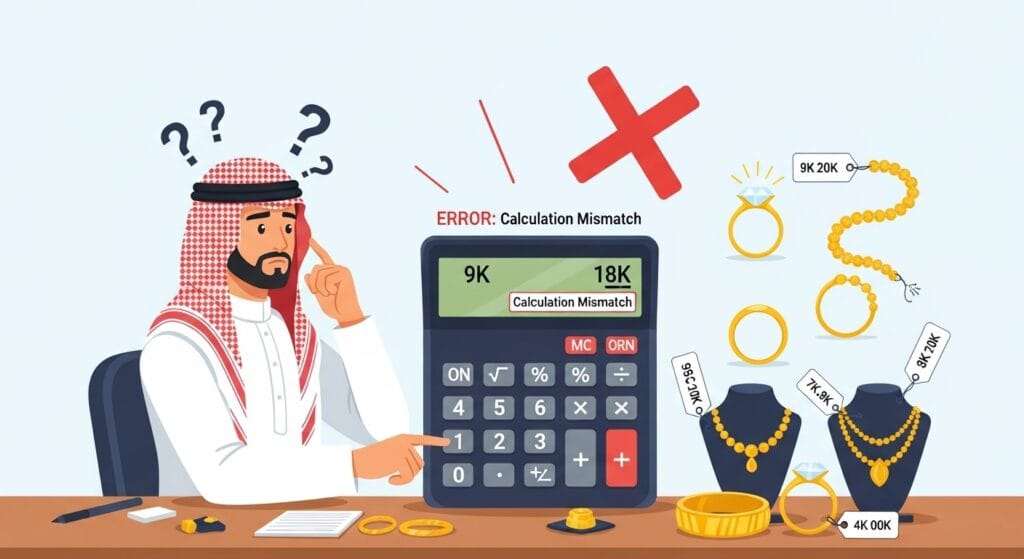
In the shimmering world of high-value trade, it is often said that “all that glitters is not gold.” In 2026, a more accurate proverb for the industry might be: “All that glitters is not profit—unless the data says so.” The gold industry holds a titan-like place in the global economy, serving as much more than a raw material for luxury; it is a safe-haven asset, a hedge against inflation, and the bedrock of financial stability for nations.
However, for the individual jeweler, wholesaler, or manufacturer, the beauty of the metal often masks the brutal complexity of its trade. As we navigate a year marked by rapid geopolitical shifts, fluctuating market prices, and the aggressive digital mandates of the Saudi Vision 2030, the importance of financial analysis has transitioned from a “back-office task” to a “front-line survival strategy.”
Success today requires more than an eye for design; it requires a gold inventory system that can track a milligram as accurately as it tracks a million riyals. In this definitive guide, we will explore the intricate layers of financial analysis in the jewelry sector and how leveraging the right ERP solutions can turn a volatile market into a playground for growth.
Deconstructing Financial Analysis for the Jewelry Sector
At its core, financial analysis for jewelry is the systematic evaluation of a business’s financial health, tailored specifically to the high-stakes, low-margin environment of precious metals and gemstones. Unlike standard retail, where inventory might depreciate or stay static, gold is a “live” asset. Its value changes while it sits in your display case.
1 Beyond the Balance Sheet: The “Live” Asset Challenge
Financial analysis in this sector isn’t just about looking at what you sold yesterday; it’s about understanding the “replacement cost” of your stock today. If the price of gold spikes by 5% globally, your sales revenue might look impressive, but if your financial analysis doesn’t account for the increased cost of restocking that gold, you may find yourself “selling into a loss.”
A thorough analysis encompasses:
- Revenue Streams: Distinguishing between bullion sales, scrap gold buy-backs, and craftsmanship fees (Making Charges).
- Cost Structures: Analyzing the volatility of raw material costs vs. fixed operational overheads.
- Cash Flow Velocity: Measuring how quickly “metal” turns back into “liquid cash” to re-enter the market.
2 The “Gold” Metrics: Key Performance Indicators (KPIs)
To master the market, a jeweler must move beyond simple “Profit vs. Loss” and embrace specialized KPIs.
A. Gross Margin Analysis
In jewelry, the gross margin is often razor-thin on the metal itself but high on the craftsmanship. A healthy analysis requires separating these two. The formula is:
$$\text{Gross Margin} = \frac{\text{Revenue} – \text{COGS}}{\text{Revenue}} \times 100$$
Using top gold accounting software allows you to see this margin per item, per carat, and even per artisan.
B. Return on Investment (ROI)
Whether you are investing in a new 3D jewelry printer or a marketing campaign for the Ramadan season, you need to know if your capital is working.
$$\text{ROI} = \frac{\text{Net Profit}}{\text{Total Investment}} \times 100$$
In 2026, with the rise of lab-grown diamonds and high-tech alloys, ROI analysis helps businesses decide which inventory categories deserve more capital allocation.
Why the Gold Industry is Defined by Data in 2026
The gold industry is famously volatile. Geopolitical tensions in Eastern Europe or the Middle East can send prices soaring in minutes. Without real-time financial analysis, a jeweler is essentially flying blind in a storm.
1 Informed Decision-Making in a Volatile Market
Strategy in the gold trade is a game of timing. Should you buy raw gold now, or wait for the central bank’s interest rate announcement? Financial analysis provides the historical context and predictive modeling needed to make these calls.
For example, a leading jewelry retailer in Riyadh recently utilized advanced data analytics to assess consumer trends during the Hajj season. They discovered that while gold demand remained steady, the preference had shifted from 22K traditional sets to 18K “lightweight” contemporary designs. By pivoting their production 45 days in advance, they increased their turnover by 40%. This wasn’t a “hunch”—it was the result of a rigorous odoo implementation saudi arabia that tracked sales trends down to the gram.
2 Advanced Risk Management and ZATCA Compliance
Risk management today isn’t just about price; it’s about regulation. In the Saudi market, the integration of e invoicing zatca Phase 2 has made financial transparency a legal mandate.
Financial analysis acts as an early warning system. By monitoring “Variance Analysis”—the difference between expected costs and actual costs—businesses can identify internal leakages, such as “unaccounted gold loss” during the polishing process, or external risks, such as tax non-compliance penalties that could wipe out an entire quarter’s profit.
Strategic Frameworks for Financial Mastery
To succeed, businesses must stop treating financial analysis as a “year-end” event and start treating it as a “per-transaction” habit.
1 Developing the Analysis Framework
A robust framework for a jewelry business in 2026 should look like this:
- Objective Setting: Are you analyzing for “Survival” (Cash flow) or “Expansion” (Market share)?
- Granular Data Collection: Your data must include the weight, purity (Karat), stone clarity, and the daily gold fix rate at the time of transaction.
- Real-Time Variance Reporting: Comparing your actual labor costs and metal loss against your “Standard Costing.”
- Strategic Adaptation: Using the insights to hedge your gold positions or adjust your “Making Charges” to stay competitive.
2 The Power of Comparative Benchmarking
Comparative analysis allows you to look at your neighbors without leaving your office. By benchmarking your gross margins and inventory turnover against industry standards in the GCC, you can identify if your pricing is too aggressive or if your stock is moving too slowly. If your competitors are turning over their 21K bridal sets every 60 days while yours take 120, you have a “dead capital” problem that only financial analysis can solve.
The Digital Revolution: Essential Tools for the Modern Jeweler
The days of the “green ledger” and manual calculators are over. The complexity of modern VAT, e-invoicing, and global gold fix rates requires a digital brain.
1 Enterprise Resource Planning (ERP) Systems
An ERP system like Daysum is no longer just a luxury; it is the central nervous system of the business. It integrates sales, inventory, and accounting into a single source of truth.
When you make a sale, Daysum doesn’t just print a receipt; it:
- Reduces the inventory weight in the vault.
- Calculates the VAT for ZATCA.
- Updates the cost-of-goods-sold based on the latest gold price.
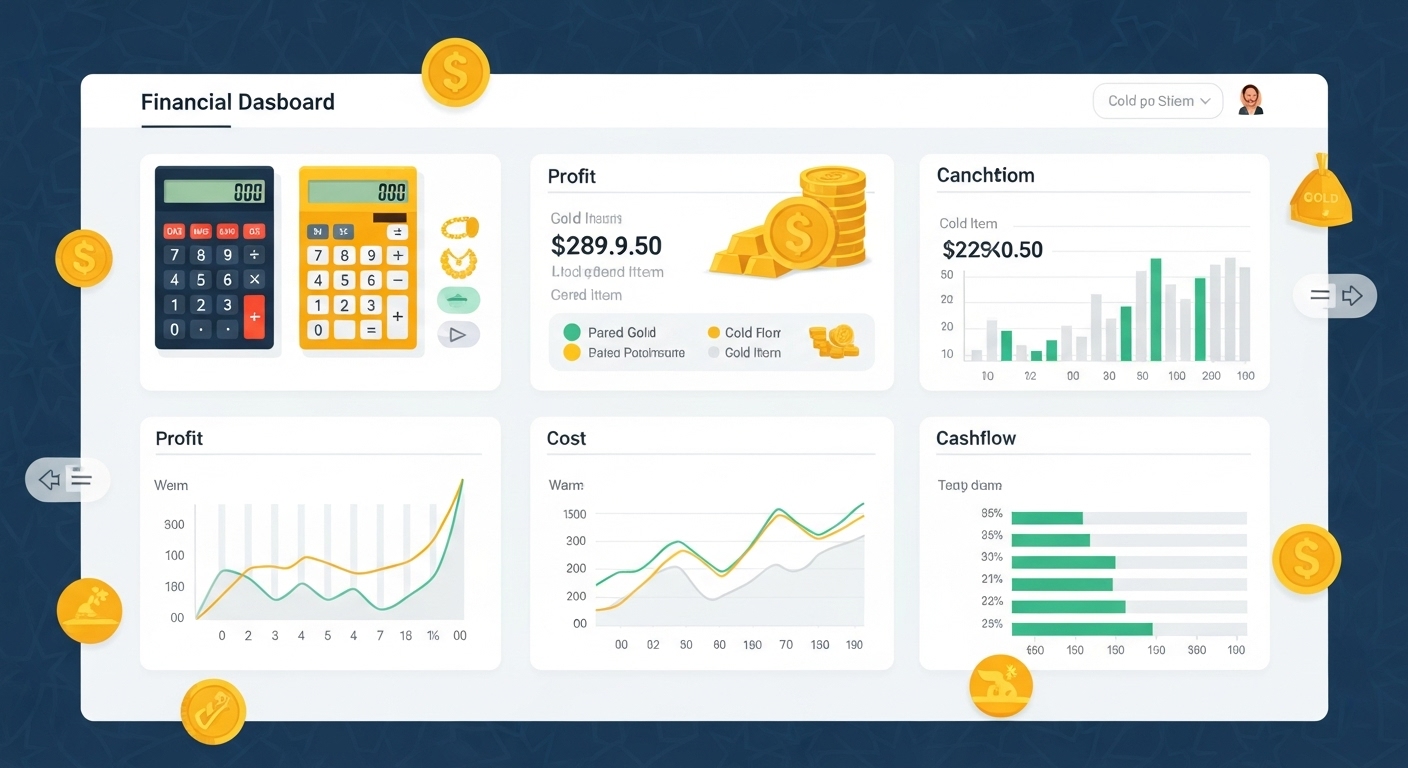
- Feeds this data into a real-time “Profitability Dashboard.”
Make the switch to smarter, faster business with modern e invoicing software saudi arabia.
2 Data Visualization and AI
In 2026, we are seeing the rise of AI-driven predictive analytics. Imagine an ERP that alerts you: “Gold prices are predicted to rise by 2% next week based on current market trends; consider restocking your 24K bullion now.” This is the future of financial analysis—moving from “What happened?” to “What will happen?”
Comparative Table: Manual vs. Automated Financial Analysis
|
Feature |
Manual Analysis (Ledgers/Excel) |
Automated Analysis (Daysum ERP) |
|
Data Accuracy |
High risk of “fat-finger” errors. |
99.9% accuracy via system integration. |
|
Speed of Insight |
Weekly or Monthly reports. |
Real-time dashboards. |
|
Gold Price Sync |
Manual updates (prone to lag). |
Instant sync with global/local gold fix. |
|
Compliance |
Difficult to manage Phase 2 ZATCA. |
Fully automated ZATCA Phase 2 XML/QR. |
|
Inventory Linking |
Disconnected from financial entries. |
Native link between “Weight” and “Value.” |
|
Decision Support |
Reactive (Looking backward). |
Proactive (Predictive modeling). |
The “Sharitiyah” and Field Analysis
In the Saudi gold market, a significant portion of trade is handled by field agents (Sharitiyah). Financial analysis for these mobile teams is historically difficult. Daysum solves this by providing mobile-integrated financial tracking. Every sale an agent makes in the field is instantly analyzed for margin and collection status, ensuring the “Home Office” has total control over its capital, regardless of where the gold is physically located.
Future Trends: Sustainability and Financial ESG
As we move toward the end of the decade, “Financial Analysis” is expanding to include ESG (Environmental, Social, and Governance) metrics. Saudi investors and consumers are increasingly asking: “Is this gold ethically sourced?” Future iterations of financial analysis will need to track the “Cost of Sustainability.” Businesses that use Daysum to document their supply chain transparency will not only be more compliant but will also command a “Trust Premium” in the market, leading to higher long-term ROI.
Conclusion: Turning Your Ledger into a Competitive Weapon
In conclusion, financial analysis is far more than a set of numbers on a screen; it is the ultimate competitive weapon in the gold industry. It empowers jewelry businesses to navigate volatility with confidence, manage risks with precision, and optimize every milligram of operations for maximum profit.
By embracing a systematic approach to analysis and utilizing the cutting-edge tools offered by Daysum, you can transform your business from a traditional shop into a data-driven enterprise. As the gold market continues to evolve at a breakneck pace, those who prioritize financial intelligence will be the ones who sustain growth and lead the market into the next decade.
To enhance your financial analysis capabilities and secure your place in the future of the gold industry, explore the solutions offered by Daysum! Contact us today to learn how our Gold ERP software can transform your financial analysis processes and drive your business success to new heights!
Frequently Asked Questions (FAQ)
Daysum is designed specifically for the Saudi market. It handles the complex "Clearance" and "Reporting" models required by ZATCA Phase 2. The system automatically generates the necessary XML files and cryptographic stamps for every jewelry sale, ensuring that your financial analysis is always based on legally compliant, audit-ready data.
Yes. One of the most critical aspects of financial analysis for manufacturers is tracking "Metal Loss." Daysum’s MRP (Manufacturing Resource Planning) module tracks the weight of gold from the raw state through every stage of production. Any unexplained variance is flagged in your financial reports, allowing you to identify inefficiencies in the workshop immediately.
Absolutely not. In fact, for small-to-medium boutiques, financial analysis is even more critical because there is less "cushion" for errors. Even a single mispriced 21K bridal set can significantly impact a small shop's monthly profit. Daysum offers scalable solutions that allow small businesses to access the same high-level data insights used by the industry giants.
Daysum’s native integration with live gold rates ensures that your "Inventory Valuation" is always current. On a traditional P&L, your stock value is static. With Daysum, your balance sheet reflects the "Market Value" of your gold, giving you a much more accurate picture of your company's actual net worth at any given moment.