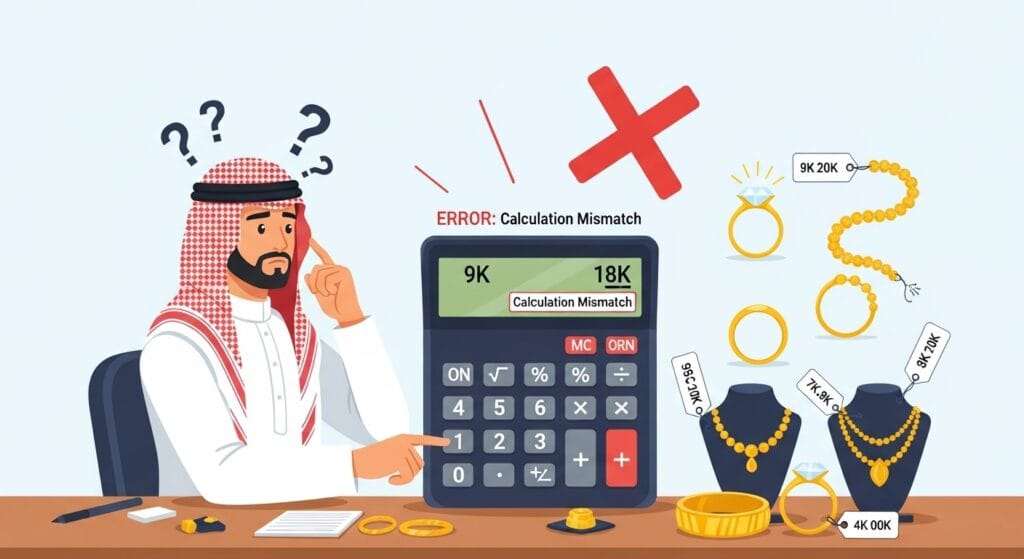
In the world of high-value commodities, a gold store is less like a traditional retail shop and more like a high-security financial vault. Every item on the shelf represents a significant portion of a company’s liquid capital, and even a minor discrepancy in weight or count can lead to substantial financial loss. For generations, jewelers relied on their memories and thick ledger books to track their treasures, but the modern market no longer allows for that margin of error. Today, the difference between a thriving jewelry brand and one that struggles to stay afloat often comes down to a single factor: the precision of their inventory management. When a business knows exactly what it owns, where it is, and what it’s worth at this very second, it gains a level of operational freedom that manual systems simply cannot provide.
Why Inventory Control is the Lifeblood of a Profitable Jewelry Business
Inventory management is often viewed as a back-office chore, but in reality, it is a front-line strategy. In the gold and jewelry sector, your inventory is your biggest expense and your only source of revenue. If you don’t respect the data behind your stock, the market will eventually force you to pay the price. Efficiently managing these assets involves a delicate balance of art and science, requiring a deep understanding of both customer desire and hard financial metrics.
Navigating the Tension Between Stockouts and Overstocking
One of the most difficult challenges for any jeweler is maintaining the “perfect” level of stock. Gold is expensive to hold. If you have too much capital tied up in heavy 22k gold sets that aren’t selling, that money is effectively “dead.” It can’t be used to pay suppliers, invest in marketing, or buy new, trendier designs. This “overstocking trap” is a common reason why seemingly successful shops face sudden liquidity crises.
On the other side of the coin is the “stockout” problem. Imagine a customer walking in looking for a specific weight of gold coins or a particular style of 18k bracelet they saw on your website. If your records are messy and you realize the item is sold out only after searching the back room, you’ve lost more than just a sale; you’ve lost a customer’s trust. By implementing a professional gold inventory system, you can set automated re-order points. When your stock of a popular item hits a certain level, the system alerts you, ensuring you never have to turn a buyer away empty-handed.
Boosting Service Standards with Instant Item Availability
The modern jewelry buyer is well-informed and expects a premium experience. When someone enters a high-end gold store, they are looking for more than a product; they are looking for a relationship built on professionalism. Nothing kills a luxury sale faster than a salesperson who is unsure of what they have in stock.
When your inventory is managed through a specialized gold management system, your staff can provide answers in seconds. They can use a tablet or a computer to instantly verify:
- Whether a specific ring size is available in another branch.
- The exact weight and karat of a piece without having to re-weigh it.
- The current price of an item based on the live gold market rate.
This level of speed and accuracy makes the customer feel valued and reassures them that they are dealing with a reputable, modern business.
Turning Inventory Data into Smarter Buying Decisions
Deciding what to buy for the next season shouldn’t be a guessing game. It should be a data-driven decision. If your inventory system tracks the “turnover rate” of every category, you can see the truth of your business. You might discover that while you love your heavy, traditional bridal sets, it’s actually the thin, everyday 18k jewelry that provides 70% of your cash flow.
With these insights, you can pivot your procurement strategy. You stop buying what isn’t moving and double down on what is. This optimization of the stock-mix is the secret behind the rapid growth of many modern jewelry chains. Using gold inventory management best practices allows you to stop being a “collector” of jewelry and start being an “investor” in high-turnover assets.
Maintaining Regulatory Integrity in a Transparent Market
The jewelry industry is under increasing scrutiny from regulatory bodies worldwide. In Saudi Arabia, for example, compliance with ZATCA and anti-money laundering (AML) regulations requires a level of record-keeping that is impossible to maintain by hand.
Your inventory records must be an open book. Every gram of gold that enters your shop must be traceable to a supplier, and every gram that leaves must be tied to an invoice. A digital system ensures that your “Gold Ledger” is always balanced. If an auditor walks in, you don’t have to panic. You can pull a report showing your stock-on-hand, its value, and the corresponding transaction history in a matter of clicks. This transparency protects your license and your reputation.
Revolutionary Technologies Reshaping the Jewelry Stockroom
The leap from paper to digital was the first wave of change. Now, we are in the second wave, where physical items are digitally linked to the software in real-time. These technologies have removed the “human factor” from inventory counts, drastically reducing the time spent on administrative tasks.
The Power of RFID: Moving Beyond Simple Scanning
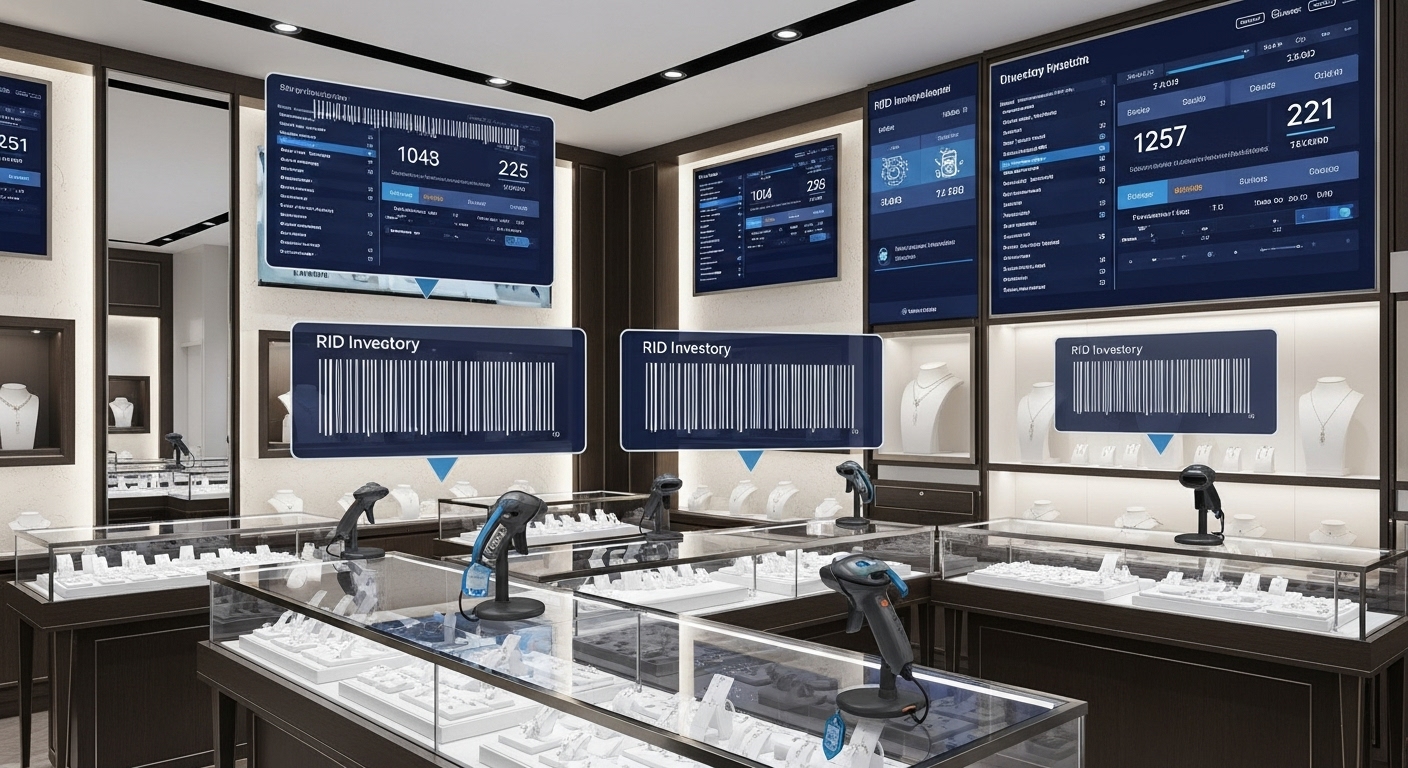
RFID (Radio Frequency Identification) is a game-changer for gold stores. Traditional barcoding requires a direct line of sight; you have to find the tag on every ring and scan it. If you have 2,000 items in a branch, a full audit takes hours, if not days.
RFID changes this entirely. An RFID reader can “sense” every tag in a tray or a display case simultaneously, even if the items are stacked. You simply wave the reader over the display, and within seconds, your centralized gold management system tells you if anything is missing. This allows for:
- Daily Audits: You can check your entire stock every morning before opening, ensuring zero shrinkage.
- Bulk Processing: When a new shipment of 50 items arrives, you can scan them all at once rather than one by one.
- Theft Prevention: RFID gates can alert staff if an item leaves a specific zone without being “de-activated” at the point of sale.
Barcode Scanning: The First Step Toward Digital Accuracy
While RFID is the gold standard, barcode scanning remains a vital and cost-effective first step for many retailers. Assigning a unique barcode to every piece of jewelry ensures that there is no confusion between two similar-looking items. When a piece is sold, the barcode scan instantly removes it from the inventory database and adds it to the sales report. This prevents the common “clerical error” where a 21k ring is accidentally recorded as an 18k ring, which can lead to significant accounting headaches at the end of the month.
Seamless POS Integration: Closing the Loop on Sales and Stock
Inventory management doesn’t happen in a vacuum; it happens at the Point of Sale (POS). The moment a salesperson clicks “Pay,” the inventory system should react. If your POS and inventory systems are disconnected, you are essentially flying blind.
A unified platform like Daysum ensures that your sales and stock are two sides of the same coin. When a customer trades in “old gold” for a new necklace, the system adds the scrap weight to your “Buy-In” inventory and removes the new piece from your “Showroom” inventory in one transaction. This real-time synchronization is what allows for accurate financial reporting and prevents the nightmare of “phantom inventory”—stock that appears on your books but isn’t actually in your safe.
Cloud-Based Scalability: Managing Your Safe from Anywhere
One of the biggest shifts in the industry is the move to the cloud. In the past, if an owner wanted to check the stock levels in their Jeddah branch while they were in Riyadh, they had to call the manager and wait for a manual count.
Cloud-based solutions provide instant access from any device. Whether you are at home, traveling for a trade show, or sitting in your main office, you can log in and see exactly how much 21k gold you have across all branches. This accessibility is crucial for owners who want to maintain a high level of control over their assets without having to be physically present in every shop. It’s about how gold inventory systems transform stores by making the manager’s job easier and the owner’s data more reliable.
Measuring the Impact: Manual vs. Automated Inventory Management
To visualize the sheer difference in operational efficiency, it’s helpful to compare the two methods across the most common daily tasks in a gold shop.
|
Operational Task |
Manual/Ledger-Based Management |
Automated Daysum Environment |
|
Inventory Audit |
Takes 6–8 hours; requires shop closure. |
Takes 5–10 minutes; can be done daily. |
|
Price Valuation |
Manual math based on today’s rate; high risk of error. |
Automatic valuation based on live market gold feed. |
|
Stock Discrepancies |
Hard to track “when” or “how” an item went missing. |
Instant alerts; full digital audit trail for every item. |
|
Re-Ordering |
Based on “gut feeling” or visual inspection. |
Automated alerts when stock hits a pre-set low point. |
|
Multi-Branch View |
Requires phone calls and manual reports. |
Real-time centralized dashboard for all locations. |
|
Regulatory Compliance |
Stressful manual filing for ZATCA/Tax audits. |
One-click reports that are audit-ready and compliant. |
Frequently Asked Questions
The system treats "Buy-In" gold as a separate category of inventory. When you purchase old jewelry from a customer, you enter the weight and karat. The best gold accounting software then adds this to your scrap stock. You can later track when this scrap is sent to a refinery or exchanged with a wholesaler for new designs, ensuring your "Total Metal Weight" is always accurate.
Yes. A professional system includes a "Job Bag" or "Repair" module. When an item leaves the showroom to go to the workshop, its status changes from "Available" to "In Repair." This ensures the item isn't accidentally sold while it's away and gives you a clear record of exactly which pieces are currently with the goldsmith.
Significantly. Most internal theft happens because of "foggy" records where it’s unclear exactly when a piece went missing. Digital systems create a strict chain of custody. Since audits can be performed daily and every action is logged to a specific user, the opportunity for unrecorded "shrinkage" is almost entirely eliminated.
Absolutely. Specialized systems allow for "composite" inventory. This means the system tracks the weight of the gold separately from the carats of the stones. When you view the item's value, the system calculates the gold price based on the live market and adds the fixed value of the stones and the labor (Ojoor), giving you a perfect total price.
While every team is different, modern interfaces are designed to be as intuitive as a smartphone app. Most staff can learn the basics of scanning and selling in a few hours. The more complex tasks, like inventory reconciliation or reporting, usually take a few days to master. The time saved by eliminating manual math and paper logs far outweighs the initial learning curve.