
In today’s competitive jewelry market, particularly within the rapidly expanding economy of Saudi Arabia, data-driven decision-making is no longer a luxury but a necessity. The Kingdom’s retail landscape is shifting, and for businesses specializing in precious metals, the ability to translate raw numbers into actionable growth plans is the defining factor of success. By analyzing sales data, jewelers can gain valuable insights into customer behavior, identify trends, and optimize their strategies to drive growth.
Recent market observations show that Saudi jewelry stores achieved up to 167% sales growth through the implementation of SEO-driven analytics and robust backend systems. Digitizing your operations with advanced gold software built for the Saudi market is the first step toward reclaiming your competitive edge.
Why Sales Analysis Matters in the Saudi Context
The Saudi jewelry market is unique, characterized by high seasonal volatility, specific cultural preferences for high-karat gold (such as 21K and 22K), and a strict regulatory environment governed by ZATCA. Analyzing sales data allows you to look past the surface-level revenue and understand the mechanics of your profitability.
Revealing Customer Preferences
Sales analysis reveals which karats are trending and which specific designs resonate with the local demographic. For instance, do your customers in Riyadh prefer traditional heavy bridal sets, or is there a growing trend toward minimalist 18K gold in Jeddah? Data removes the guesswork, allowing you to cut slow-moving stock by up to 30%.
Measuring Seasonal Peaks
In Saudi Arabia, sales data analysis highlights the massive impact of Ramadan, the two Eids, and the peak wedding seasons. By identifying these peaks, a business can optimize its gold inventory system to ensure high-demand items are never out of stock during the most profitable weeks of the year.
Identifying Marketing ROI
Many jewelers spend heavily on social media influencers and digital ads. Data analysis helps calculate the return on investment (ROI) for each campaign. In one notable case, a Saudi jewelry firm saw a 247% increase in organic clicks by shifting their budget to high-performing channels identified through sales trend analysis.
Ensuring Regulatory Compliance
With the rollout of the Phase 2 Integration for the Zakat, Tax and Customs Authority (ZATCA), data accuracy is synonymous with legal compliance. Utilizing zatca approved accounting software ensures that your sales data is not only used for growth but is also perfectly formatted for government audits, avoiding costly fines.
Effective Analysis Steps: A Framework for Growth
To achieve a 167% revenue jump, as seen in top-performing Saudi firms, you must follow a structured approach to your data. Below is a framework designed for the local market.
Table 1: Sales Data Analysis Framework
|
Step |
Purpose |
Recommended Saudi-Relevant Tools |
|
1. Data Collection & Cleaning |
Consolidate POS, e-commerce, and CRM data while removing duplicates and errors. |
Daysum ERP, DEXEF, Odoo |
|
2. Descriptive Analysis |
Summarize historical performance (means, trends, top-sellers). |
Power BI, Excel, Daysum Dashboards |
|
3. Diagnostic Analysis |
Investigate root causes (e.g., why did sales drop in Q3?). |
Qaraterp, Skysoft, Custom SQL |
|
4. Predictive Analysis |
Forecast future trends using historical patterns and market indicators. |
Daysum AI Modules, Trendsoft |
|
5. Prescriptive Analysis |
Recommend specific actions (e.g., targeted promotions for VIP customers). |
Wazen, iSales, Daysum CRM |
The Four Levels of Jewelry Sales Data Analysis
1. Descriptive Analysis: “What Happened?”
This is the foundational level where you summarize your data using metrics like mean, median, and standard deviation. In a jewelry context, this involves looking at your total sales for the last quarter and identifying your top-performing karats. It provides a baseline to celebrate successes and identify glaring inefficiencies in your gold erp system.
2. Diagnostic Analysis: “Why Did It Happen?”
If your sales in 18K gold rings dropped by 15% in February, diagnostic analysis digs into the “why.” Was it due to a localized price hike? Did a competitor launch a major promotion? Did your sales team require more training? By investigating the root causes, you prevent repeating the same mistakes.
3. Predictive Analysis: “What Will Happen?”
By using historical data and statistical models, you can forecast future sales trends. This is crucial for planning your golden inventory system. Predictive models can tell you that based on the last three years of data, you need to increase your stock of 21K bridal sets by 25% three weeks before the start of the summer wedding season.
4. Prescriptive Analysis: “How Can We Make It Happen?”
The highest level of analysis suggests specific actions. If the data shows a high interest in gold coins during economic fluctuations, a prescriptive recommendation would be to launch a targeted email campaign to your “investment-tier” customers. Implementing best gold accounting software allows these recommendations to be generated automatically through machine learning algorithms.
Top Jewelry Analytics Tools in Saudi Arabia
Choosing the right technology is essential for accurate reporting. The Saudi market requires tools that handle Arabic support, Karat conversions, and ZATCA integration.
Table 2: Leading Saudi Gold ERP Competitors
|
Platform |
Key Sales Analytics Features |
Saudi Compliance |
Pricing Model |
|
Daysum ERP |
Live dashboards, global gold price sync, AI-driven inventory forecasting. |
Full e-invoicing zatca Phase 2 |
SaaS Subscription |
|
DEXEF |
300+ detailed reports, specific item profitability, multi-branch tracking. |
ZATCA Approved |
Per-user license |
|
Wazen |
Performance analysis for sales teams, promotional ROI tracking. |
ZATCA Integrated |
Cloud-based |
|
Qaraterp |
Cloud-based demand forecasting, specialized gold shop modules. |
Localized Support |
Enterprise custom |
|
Skysoft Khwarizmi |
Detailed karat analytics, support for local workshop accounting. |
Arabic-first interface |
Modular |
When selecting your platform, it is vital to ensure that your choice supports e invoicing zatca to streamline your financial reporting and avoid manual data entry errors that could lead to audit discrepancies.
Strategies for Improving Sales Based on Data Analysis
Once you have gathered and cleaned your data, the real work begins: transforming those insights into revenue. Here are four data-driven strategies for the modern jeweler.
1. Product Optimization
Not all gold is created equal in the eyes of the consumer. Data analysis allows you to:
- Identify Best-Sellers: Focus your display space and marketing budget on your top-performing products.
- Optimize Inventory: Analyze turnover rates to ensure you aren’t overstocked on heavy 24K items while losing customers because you lack 18K options.
- Dynamic Pricing: Use live market data to set optimal pricing. When the global gold price fluctuates, your gold retail software should adjust your margins in real-time to protect your profit.
2. Strategic Customer Segmentation
In the Saudi market, your customers are diverse. Segment them into:
- VIP Buyers: High-frequency, high-value purchasers who expect personalized styling and private viewing sessions.
- Seasonal Shoppers: Those who buy primarily during Eid or weddings.
- Investment Buyers: Customers focused on the purest gold forms and low making charges.
By developing tailored marketing campaigns for each segment, you can boost repeat sales and increase the lifetime value of every customer.
3. Sales Team Performance Analysis
A gold accounting erp shouldn’t just track products; it should track people. Monitor individual and team metrics to:
- Identify training needs for sales staff who struggle to close high-value sales.
- Implement incentive programs based on specific KPIs like “average upsell value.”
- Reward top performers to boost morale and retention within the sales force.
4. Marketing Campaign Effectiveness
Never guess if an ad worked. Measure the ROI for every campaign. If a Snapchat ad for 18K necklaces yielded a 300% ROI while an Instagram campaign for bridal sets yielded only 50%, you know exactly where to allocate next month’s budget. Shifting spend to high-ROI channels based on campaign analytics is how the most successful firms achieve rapid scaling.
Case Study: Saudi Success Stories
The 167% Revenue Jump
A mid-sized jewelry retailer in Dammam was struggling with stagnant sales, hovering around 2.1 million SAR semi-annually. By implementing a rigorous sales analysis framework using Daysum, they discovered that their digital marketing was targeting a demographic that preferred investment gold, while their inventory was 90% fashion jewelry. After re-aligning their inventory and digital strategy based on these data insights, their revenue climbed to 5.8 million SAR in just six months—a 167% increase.
Karat Profitability Optimization
A luxury boutique in Riyadh utilized daily item reports to track which karats provided the best gross margin after accounting for labor and fluctuating market prices. They found that while 21K gold had higher volume, their 18K designer pieces provided 40% more profit per gram. By slightly shifting their sales team’s focus and storefront displays toward the higher-margin 18K items, they increased net profits by 22% in a single quarter without increasing their total sales volume.
Take control of your billing process with an electronic invoice KSA solution tailored for your business.
Implementation Framework: How to Start
Transitioning to a data-driven model requires a cultural and technical shift within your organization. Follow these steps for a successful rollout:
- Consolidate Data Sources: Ensure your POS, e-commerce, and manual ledgers are fed into a single gold erp platform.
- Cleanse Historical Data: Remove duplicate customer profiles and fix erroneous weight entries to ensure your baseline is accurate.
- Establish KPIs: Define what “success” looks like. Is it higher turnover? Better gross margins? Choose 3-5 metrics to monitor weekly.
- Integrate Compliance: Ensure your system is one of the zatca approved accounting software options to handle the financial side of your data automatically.
- Pilot and Scale: Start by analyzing a single branch or a specific product category before rolling the framework out to your entire enterprise.
2026 Technology Trends in Sales Analysis
The future of the Saudi jewelry market lies in the convergence of AI and real-time data.
- AI Analytics: By 2026, systems will achieve 94% accuracy in analyzing unstructured data, such as social media sentiment, to predict the next big jewelry trend before it hits the shelves.
- Cloud HRMS Convergence: Successful firms will integrate their sales data with cloud hrms solutions to optimize staffing levels during predicted peak sales hours.
- Hyper-Localization: Systems will provide specific data on localized demand, telling a retailer exactly how a store in a Riyadh mall should differ in inventory from a street-side shop in Makkah.
- Advanced Odoo Integration: For larger groups, an odoo implementation saudi arabia will become the standard for managing multi-industry holdings with a specialized focus on precious metals.
Conclusion
By effectively analyzing sales data, jewelers in Saudi Arabia can gain the valuable insights necessary to drive business growth in a complex, fast-moving market. Using the right tools and techniques allows you to make data-driven decisions that improve customer satisfaction, optimize operations, and significantly increase profitability.
Whether you are managing a single boutique or a nationwide chain, the move toward data is no longer optional. Embracing analytics is how you navigate the complexities of the modern market and emerge as an industry leader.
Want to take your jewelry business to the next level? Daysum offers a comprehensive jewelry ERP solution that empowers you to analyze sales data, manage inventory, and streamline operations with a system built for the Kingdom.
Elevate your jewelry business with Daysum’s Saudi-tailored sales analytics—schedule a free demo today and experience the power of data-driven insights!
Frequently Asked Questions (FAQs)
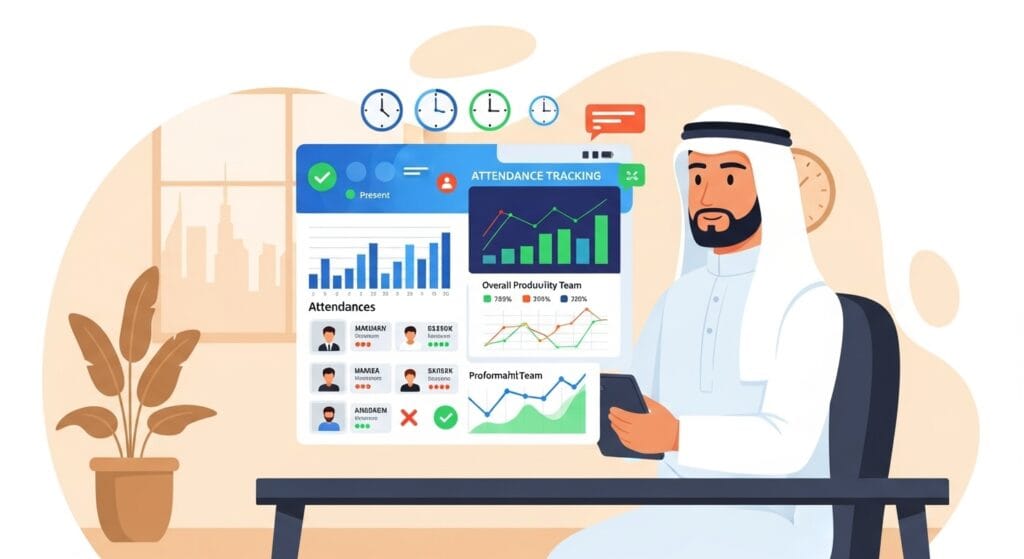
In any fast-paced business, time is the one resource you can never get back. Yet, it’s the one most easily lost. A few employees arriving late, extended breaks, “buddy punching,” and the slow, agonizing process of manual payroll—these small “time thefts” add up to a significant drain on your resources. In the competitive landscape of Saudi Arabia, you can no longer afford this inefficiency. Many managers believe that tracking time is just about “catching” late employees. But this is a dated perspective. A modern Time Attendance System is not a tool of punishment; it’s a strategic asset for building a culture of accountability, ensuring fairness, and—most importantly—unlocking hidden layers of productivity across your entire organization. This guide explores how upgrading from an old-fashioned sign-in sheet or a basic fingerprint reader to an integrated, modern system can transform your business, all while ensuring full compliance with Saudi Labor Law. The Old Way: Why Your Manual System is Costing You Money Let’s be honest: is your current attendance “system” truly a system? For many businesses, it’s a patchwork of inefficient tools: This “old way” is not just inefficient; it’s a direct drain on profitability. It wastes your HR team’s valuable time on low-value data entry, creates payroll errors that damage employee morale, and gives you zero real-time insight into your actual workforce. What is a “Modern Time Attendance System”? A modern Time Attendance System, especially in the context of Saudi Arabia, is a software-centric solution that is integrated, automated, and intelligent. It’s often cloud-based and acts as the central hub for all employee time data. Its key components include: Part 1: How a Modern System Directly Improves Punctuality Punctuality is the foundation of a disciplined and effective workforce. A modern system builds this foundation not through fear, but through transparency and fairness. 1. It Creates 100% Transparency and Accountability When employees know their arrival is logged accurately to the second—without dispute—behavior naturally changes. The ambiguity of a paper log (“I arrived at 9:02, not 9:10”) is gone. This digital record becomes the single source of truth, eliminating arguments and fostering a culture where time is respected. 2. It Eliminates “Buddy Punching” This is the most immediate impact. Advanced biometric scanners (fingerprint or facial recognition) ensure that the person clocking in is the person who is actually there. This single change instantly cleans up your attendance data and ensures that those who are late are recorded as such. 3. It Provides Instant, Automated Alerts A modern system can be configured to automatically send a notification (via email or mobile app) to both the employee and their direct manager when a “late arrival” or “early departure” is flagged. This creates an immediate, consistent feedback loop. The manager doesn’t have to wait until the end of the month; they can address the issue the same day. 4. It Promotes Fairness and Boosts Morale Nothing kills morale faster than high-performing, punctual employees seeing their colleagues consistently arrive late with no consequences. A transparent system ensures that everyone is held to the same, fair standard. It protects your best employees from feeling taken advantage of and signals that professionalism is valued. Part 2: The Link: How Punctuality and Data Unlock True Productivity Fixing lateness is just the beginning. The real power of a modern time attendance system is what it does with the data it collects. 1. It Gives Managers Data-Driven Insights Productivity is about solving the root cause of problems, not just the symptoms. A modern system provides analytics that help managers stop being “police” and start being “coaches.” 2. It Supercharges Your HR and Payroll (The Biggest Productivity Gain) The biggest productivity leak is often in your HR department. A modern, integrated system reclaims days of lost time every single month. Task The “Old Way” (Manual / Basic System) The “Modern Integrated Way” (Daysum’s Solution) Data Collection HR spends 2-3 days manually downloading logs, re-typing data, and chasing managers for timesheets. Automated. Data flows from the clock-in device directly into the HRMS in real-time. (Time Saved: 2-3 days) Overtime Calculation Manually calculated on a spreadsheet. High risk of errors and non-compliance with Saudi Labor Law. Automated. The system instantly calculates all overtime (150% base salary) and leave based on pre-set, compliant rules. (Time Saved: 1-2 days) Payroll Generation Manually keying in all attendance and overtime data into the payroll system. High risk of typos. Integrated. The approved timesheet data is already in the system. HR just clicks “Generate Payslips.” (Time Saved: 1-2 days) By automating this entire process, you free your HR team from 5-7 days of mind-numbing, error-prone admin. They can now focus on high-value, productive tasks: recruiting top talent, developing training programs, and improving company culture. 3. It Optimizes Real-Time Operations For retail, manufacturing, or healthcare, a manager’s dashboard showing who is on-site right now is a powerful productivity tool. If a shift starts and three people haven’t clocked in, the manager knows immediately and can re-allocate resources from another department to cover the gap, ensuring production lines keep moving and customers are served. The Critical Link: Compliance with Saudi Labor Law You cannot manage time and attendance in the Kingdom without a deep understanding of Saudi Labor Law. A generic, off-the-shelf system will fail you. A proper Time Attendance System in Saudi Arabia must be pre-configured to handle: Daysum: Your Fully Integrated Odoo HRMS & Attendance Solution This is where Daysum provides unmatched value. We don’t offer a standalone attendance tool that you have to patch into your other software. We provide a fully integrated HRMS solution built on Odoo, where Time & Attendance is a core, native module. The Daysum Advantage: Frequently Asked Questions (FAQs) Q1: My employees will feel like “Big Brother” is watching them. How do I handle this? This is a valid concern. The key is communication. Frame the new system not as a tool for punishment, but as a tool for fairness and accuracy. Emphasize the benefits to them: Q2: What’s the difference between a biometric…
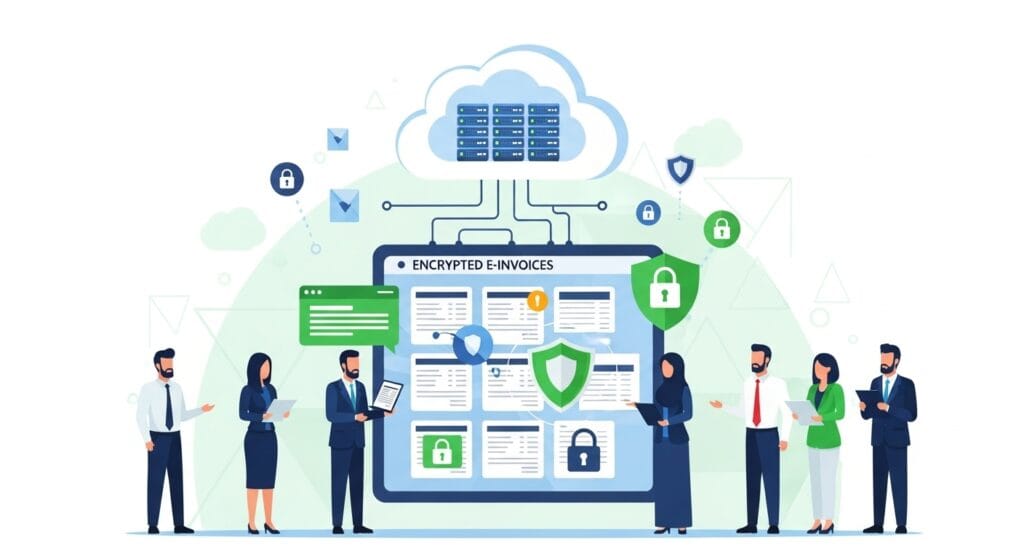
As Saudi Arabia’s businesses undergo a rapid digital transformation, the Zakat, Tax and Customs Authority (ZATCA) e-invoicing (Fatoora) system stands as a cornerstone of this new, digital-first economy. The rollout of Phase 2 (the Integration Phase) is compelling businesses to move beyond simple compliance and integrate their core financial systems directly with ZATCA’s platform. This integration, however, opens a critical new conversation. While most businesses are rightly focused on compliance—”Does my system meet ZATCA’s rules?”—many are overlooking an equally vital, long-term question: “Is my data secure?“ When you choose an e-invoicing solution, you are not just buying a piece of software. You are entrusting a partner with the most sensitive data your company possesses: your complete sales ledger, your pricing, your customer list, and your core financial records. In this new landscape, choosing from the many e-invoicing solution providers in Saudi Arabia becomes a decision that is as much about security and data privacy as it is about compliance. This article will guide you through the essential security considerations and provide a checklist for what to demand from your provider. Why E-invoicing Security is Non-Negotiable An e-invoice is not just a digital version of a paper receipt. It is a structured data file (XML) containing the DNA of your business transactions. The stakes for protecting this data are enormous: Your data’s security is only as strong as the weakest link, and that weak link is often the third-party provider you choose. ZATCA’s Built-in Security: The Foundation The good news is that ZATCA designed the Fatoora system with a robust security foundation. Your provider isn’t starting from scratch; they must adhere to a strict set of protocols. Here are the core security features mandated by ZATCA itself: This framework ensures the integrity of the invoice and the security of its transmission to ZATCA. But what about the security of your data while it’s sitting on your provider’s server? That is the provider’s responsibility. 7 Security Questions You MUST Ask Your E-invoicing Provider ZATCA secures the pipeline to their platform. Your provider must secure the platform itself. Before you sign any contract, demand clear, specific answers to these questions: Cloud vs. On-Premise: A Modern Security Comparison Many businesses traditionally believe that an on-premise server (in their office) is more secure. In the modern era of ZATCA compliance, this is often a dangerous misconception. Security Aspect On-Premise Solution Secure Cloud Provider (like Daysum) ZATCA Updates Your IT Team’s Responsibility. Must manually update APIs and security patches from ZATCA. Slow and high-risk. Provider’s Responsibility. Patches and updates are rolled out instantly and automatically to all users. Physical Security Your server room. Vulnerable to theft, fire, or flood. Enterprise-grade data centers with 24/7 security, biometric access, and redundant power. Cybersecurity Relies on your local firewall and IT team, who are generalists. Managed by a dedicated team of cybersecurity specialists using advanced threat detection. Backups & Recovery Your responsibility. Often manual, infrequent, and stored in the same building. Automated & Geo-Redundant. Backed up daily to multiple secure locations. Total Cost of Security Extremely high. Includes hardware, IT salaries, and software licenses. Included in your subscription. You get enterprise-grade security for a fraction of the cost. The verdict: For over 99% of businesses, a reputable, ZATCA-approved cloud provider offers vastly superior security and reliability than an on-premise solution. Daysum: Security & Compliance at the Core of Your ERP Choosing from the list of e-invoicing solution providers in Saudi Arabia is a critical decision. At Daysum, security isn’t an add-on; it’s the foundation of our Odoo ERP solution. We don’t just “bolt on” a ZATCA module. Our e-invoicing solution is a native, core function of your integrated accounting, sales, and inventory system. The Daysum Security Guarantee: Frequently Asked Questions (FAQs) Q1: Is my data shared with ZATCA secure? Yes. The connection between your provider’s system and ZATCA’s Fatoora platform is a highly secure and encrypted API. This “digital tunnel” is designed to protect data in transit. Q2: Can ZATCA see all my business secrets, like my costs or employee salaries? No. ZATCA only requires the data points listed in the e-invoicing regulation, which are related to the invoice itself (seller, buyer, items, quantities, price, tax). They do not have access to your internal costs, payroll, HR records, or other private data within your ERP. Q3: What’s the biggest security mistake a business can make with e-invoicing? Choosing an unapproved provider or using a simple, standalone invoicing tool that isn’t part of a secure, integrated system. This creates data silos, increases the risk of a breach, and often leads to manual data entry errors. Conclusion: Choose a Partner, Not Just a Provider Your e-invoicing system is the new digital heart of your business’s finances. The security of this system is paramount. Don’t choose a provider based on price alone. Scrutinize their security, their infrastructure, their backup plans, and their commitment to data privacy. Choose a long-term partner who sees security not as a checkbox, but as a core responsibility. Don’t leave your most critical financial data at risk. Contact Daysum today for a free, confidential consultation. We’ll assess your current compliance and show you what a truly secure, integrated, and ZATCA-approved ERP solution looks like.
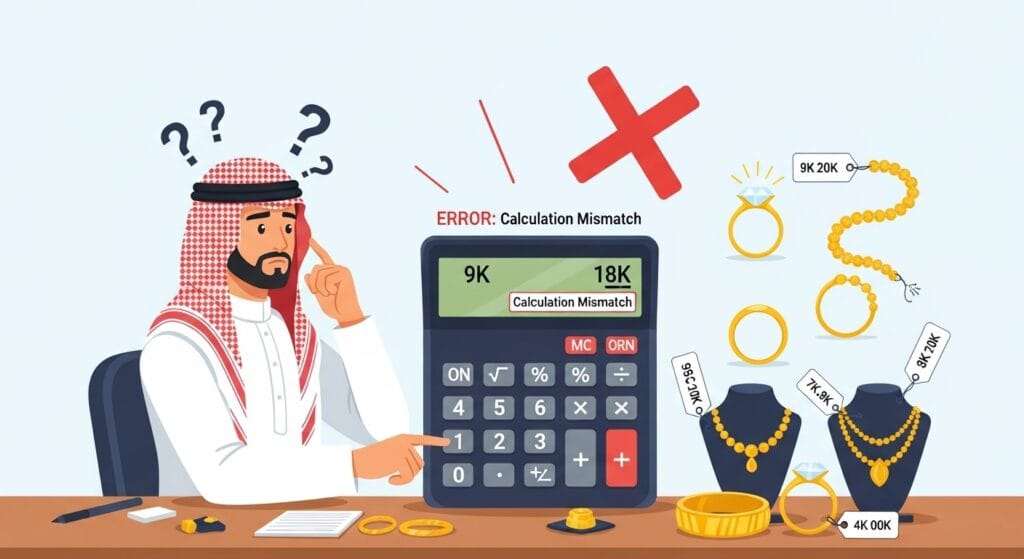
In the gold and jewelry business, precision is not just a virtue; it’s the bedrock of your profitability. A single miscalculation, a misplaced decimal point, or a simple rounding error can cascade into thousands of riyals in losses. This is especially true in the complex, daily task of gold karat conversion. Whether you’re buying old gold from a customer, pricing new inventory, or valuing your stock, you are constantly converting between different purities: 24k, 22k, 21k, and 18k. To solve this, many jewelers rely on a Gold Karat Converter / Calculator, either a handheld device or a simple web app. These tools seem like a perfect solution, but they hide a dangerous secret: they are only as good as the data you put in, and the manual process of using them is riddled with potential for human error. This article exposes the seven most common and costly mistakes businesses make when using a gold karat calculator and reveals how to eliminate them permanently with an integrated system. First, Why is Karat Conversion So Critical? Before we dive into the mistakes, let’s establish why this calculation is the lifeblood of your business. A “Karat” (k) is a measure of gold purity out of 24 parts. Your business revolves around converting these purities into a single, standard value—the price of pure 24k gold. The Core Formula a Gold Karat Calculator Uses The math itself is simple. A calculator just automates this one formula: Pure Gold Weight = Total Item Weight × (Item Karat / 24) The calculator does this simple math. The mistakes happen in the human actions surrounding this formula. The 7 Costly Mistakes to Avoid Here are the most common errors we see businesses make every single day. Mistake #1: Confusing “Total Weight” with “Pure Gold Weight” This is the single most devastating blunder. An inexperienced salesperson weighs an 18k ring, sees “10g” on the scale, and applies the full 10g value to the customer’s trade-in. They have just paid for 10g of pure gold but only received 7.5g. This is an immediate 25% loss on the transaction. How to avoid it: This is a training issue. Staff must understand they are buying the pure gold content, not the total weight of the item. Mistake #2: Using the Wrong (or Old) Gold Price A calculator is useless if the price-per-gram you use is wrong. Gold prices fluctuate by the minute. Mistake #3: Forgetting to Deduct Gemstone Weight This is an incredibly common and costly error. A customer brings in a heavy 18k ring with a large (and often low-quality) stone. Mistake #4: Ignoring Non-Gold Components (Springs, Clasps, etc.) Similar to stones, many jewelry pieces contain non-gold parts to function. The most common are the tiny steel springs inside the clasps of necklaces and bracelets. Mistake #5: Relying on a Standalone, Disconnected Calculator This is the workflow error that re-introduces risk. Mistake #6: Using a Simple Converter for Complex Pricing When pricing your own inventory for sale, a simple karat converter is not enough. Mistake #7: Assuming the Karat is Correct A calculator is only as good as the numbers you feed it. The Problem: A Standalone Calculator vs. An Integrated System As you can see, the problem isn’t the math; it’s the manual human process around the math. The solution is to remove the human error. Feature Standalone Calculator (Web/Phone) Daysum Gold ERP System Data Entry Manual: Staff must type in weight, karat, and price. Integrated: Connects to the scale, pulls the live price automatically. Price Source Static: Relies on the user finding and typing in the correct price. Dynamic: Pulls the correct live “Buy” or “Sell” price feed instantly. Gemstone Deduction Manual: Relies on the salesperson remembering to do it. System Prompt: The workflow forces the user to enter a stone weight (even if it’s “0”). Security Very Low: High risk of typos and intentional fraud. No audit trail. Very High: All calculations are logged, automated, and tied to a user. No manual entry of final value. Accounting None: The calculation is disconnected from your books. Fully Integrated: The transaction posts directly to your inventory and accounting ledgers. The Ultimate Solution: Stop Calculating, Start Integrating A standalone Gold Karat Converter / Calculator is a band-aid. The permanent solution is a Gold Management System where the calculation is an invisible, automated, and 100% accurate part of your workflow. Here is the workflow in the Daysum Gold ERP System: There is zero manual calculation. Zero chance of a typo. Zero chance of using the wrong price. Zero chance of forgetting stones. The entire transaction is logged, secure, and 100% accurate. Frequently Asked Questions (FAQs) Q1: What’s the formula to convert 18k to 21k? You must convert through 24k (pure gold). Q2: Can I just trust the karat stamp on the jewelry? For most new, branded items, yes. But for old gold or scrap, it is always a best practice to test any high-value or suspicious items with an acid test or XRF scanner to verify the purity. A calculator assumes the karat you tell it is correct. Q3: How does your system get the live gold price? Our Daysum Gold ERP System integrates directly with official global and local live price feeds. This ensures your pricing is accurate to the second, protecting your margins on every single transaction. Q4: What about the alloys and other metals mixed in? That is exactly what the karat calculation is for. An 18k item is 18 parts gold and 6 parts other metals (alloys). The calculation (18 / 24) finds the value of only the 18 parts of gold and correctly ignores the 6 parts of less valuable alloy. Conclusion: Ditch the Calculator, Upgrade Your System A Gold Karat Converter / Calculator is a simple tool for a complex job. While it’s better than nothing, it leaves your business dangerously exposed to costly human errors, from simple typos to forgotten gemstone deductions. Stop risking your hard-earned profits on manual calculations. The solution is not…
Sales data identifies "stagnant" or slow-moving stock. By recognizing these items early, you can launch targeted promotions to clear them, freeing up capital to invest in high-turnover products. This reduces the 20% average storage cost associated with overstocking in the KSA market.
While standard programs handle basic math, they often fail to manage the unique complexities of the jewelry industry, such as karat weight conversions, labor charges, and live gold market price fluctuations. Using a dedicated gold management system ensures that your sales analysis is accurate and industry-specific.
Phase 2 requires a live, digital link between your sales system and the government’s servers. This means your sales data must be accurate in real-time. Choosing e invoicing saudi arabia software ensures this link is maintained, providing a clean data stream that you can then use for your own business analysis.
By tracking KPIs such as "Average Transaction Value" and "Items Per Sale" within your ERP, you can see which staff members are excelling at upselling and which need more training. Linking this data with hrms cloud solutions allows you to create performance-based incentive programs that drive revenue.