In the era of rapid digital transformation, customer satisfaction demands far more than merely offering a high-quality product or a reliable service. Today’s consumers and B2B clients evaluate their relationship with a brand based on the entirety of their interaction—and the financial transaction is often the most critical touchpoint. In the Kingdom of Saudi Arabia, the transition toward a fully digital economy is rewriting the rules of customer engagement.
The numbers speak for themselves: Saudi Arabia processed over 8.2 billion e-invoices in 2025 alone. This represents a staggering 64% surge from previous years, driven almost entirely by the Zakat, Tax and Customs Authority’s (ZATCA) FATOORA platform. This massive, nationwide adoption highlights the vital role of modernizing financial transactions. Operating within a market that has grown from USD 143 million in 2024 and is projected to skyrocket to USD 594 million by 2033, Saudi businesses are realizing that adopting an electronic invoice ksa solution is not just about regulatory compliance—it is a powerful strategic tool to dramatically improve efficiency and elevate customer interactions.
In this comprehensive guide, we will explore exactly how the shift to electronic invoicing is redefining the customer experience in Saudi Arabia. We will delve into the market context, uncover the key benefits for consumers, analyze real-world success stories from Saudi corporate giants, and review how leading platforms like Daysum are setting new benchmarks for operational excellence.
The Market Context: Vision 2030 and the ZATCA Mandate
To understand how e-invoicing impacts the customer, one must first look at the macroeconomic shifts happening within the Kingdom. Saudi Vision 2030 aims to create a transparent, diversified, and highly digitized economy. At the core of this financial digitalization is the e-invoicing mandate implemented by ZATCA.
The Phased Rollout and Wave 24
ZATCA’s approach to implementing e-invoicing has been meticulous and phased, ensuring businesses have the time to adapt. Currently, the rollout is progressing through its Integration Phase (Phase 2). As of the latest announcements, Wave 24 is targeting businesses with over SAR 375,000 in annual sales by June 2026. This phase mandates real-time electronic invoicing, requiring a direct API link between the business’s accounting software and ZATCA’s FATOORA portal.
Reducing Fraud and Accelerating the Economy
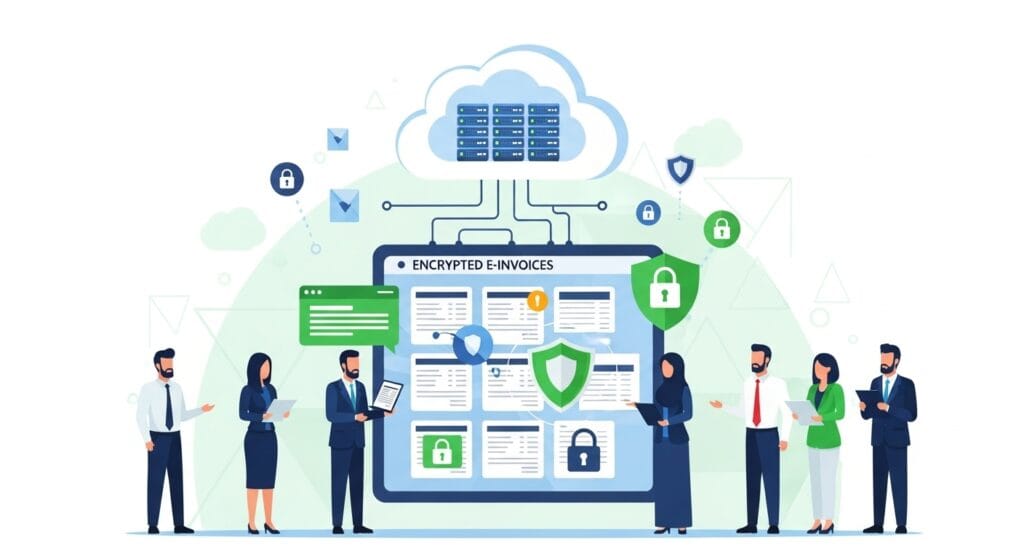
The primary governmental goal of e invoicing zatca integration is strict VAT compliance and the eradication of the hidden economy. By ensuring that every transaction is cryptographically stamped, the system drastically reduces tax fraud and manual accounting errors.
However, the secondary effect is a massive acceleration in daily business transactions. With 8.2 billion invoices exchanged seamlessly via the FATOORA platform in 2025, the Saudi economy is moving faster than ever. This seamless digital tax reporting for all KSA companies means less time spent on back-office auditing and more time dedicated to frontline customer service.
Why Customer Experience Hinges on the Billing Process
Before diving into the specific technical benefits, it is crucial to understand the psychology of the customer journey. Customer Experience (CX) is the cumulative impression a buyer forms based on every interaction with a brand—from marketing and sales to delivery and post-purchase support.
The Final Touchpoint
The invoicing and payment stage is the final touchpoint in the purchasing journey. It is the moment where the customer formally hands over their money. If this process involves waiting in long lines for a paper receipt to print, dealing with mathematical errors, or struggling to get a proper tax breakdown, the customer leaves frustrated. A negative billing experience can easily eclipse a great product experience.
Conversely, a smooth, instant, and highly transparent invoicing process leaves the customer feeling respected and secure. Improving this specific operational workflow has been proven to increase customer loyalty by 25% and reduce post-purchase complaints by up to 60%, simply because transparency breeds trust.
Key E-Invoicing Benefits That Directly Enhance Customer Experience
The transition from traditional paper receipts or basic PDFs to structured electronic invoices unlocks a wealth of features that directly benefit the end consumer and the B2B client.
1. Instant Access and Omnichannel Delivery
Modern consumers despise clutter and delays. Traditional invoices are easily lost, damaged, or delayed in the mail. E-invoicing eradicates this problem by providing instant access. The moment a transaction is finalized, the electronic invoice is automatically delivered to the customer via their preferred channel—whether that is an email, a direct SMS, or a WhatsApp message. Furthermore, B2B clients can access dedicated digital portals to view, download, and manage their entire history of invoices with a specific vendor, eliminating the need to request duplicate copies from customer support.
2. QR Codes for Instant Verification and Trust
One of the most visible and impactful elements of the ZATCA mandate for B2C transactions is the inclusion of a dynamic QR code. When a customer receives their digital or printed e-invoice, they can scan this QR code using the official ZATCA mobile application. In milliseconds, they can verify the authenticity of the invoice, the seller’s commercial registration, and the exact VAT amount paid. This level of verification builds immense trust, assuring the customer that they are dealing with a legally compliant, ethical business.
3. Accelerated Payment Processing
E-invoicing dramatically speeds up the payment cycle. Because modern electronic invoices can embed secure, clickable payment links (integrating with Mada, Visa, Mastercard, or Apple Pay), customers can settle their bills instantly from their smartphones. This real-time validation cuts out the friction of bank transfers and manual check-writing. By linking the invoice directly to the payment gateway, businesses provide a smoother, more convenient experience that respects the client’s time.
4. Unmatched Transparency and Dispute Minimization
Billing disputes usually arise from a lack of clarity. A scribbled paper receipt or a vague PDF often leads to arguments over what was charged. E-invoices, built on highly structured XML data and secured by cryptographic stamps, ensure absolute transparency. Every item, discount, and tax percentage is broken down with mathematical perfection. This clear detailing minimizes misunderstandings and virtually eliminates billing disputes, resulting in a harmonious merchant-client relationship.
Real Impact Data: Success Stories from Saudi Giants
To truly grasp how transformative e-invoicing is for customer experience, we must look at the real-world metrics from major organizations operating within the Kingdom. The implementation of digital billing has yielded phenomenal results across various sectors.
STC (Saudi Telecom Company)
As a titan of the telecommunications industry, STC processes millions of invoices monthly. By fully adopting an advanced e-invoicing framework, STC managed to cut its invoice processing time from an average of 7 days down to just 3 days. This massive leap in efficiency resulted in a 30% saving on administrative costs. More importantly, because corporate and individual clients received their bills faster, clearer, and with easier payment options, STC reported a 15% boost in overall customer satisfaction post-adoption.
Jarir Bookstore
Operating in the fast-paced retail sector requires immense precision. Jarir Bookstore transitioned its legacy billing systems to a modern retail erp saudi arabia framework integrated with FATOORA. The results were astounding. Jarir reduced complex B2B issuance time from 48 hours to a mere 2 hours. Furthermore, by automating data entry, they reduced invoicing fraud by 80% and enhanced overall data accuracy to 98%. For the customer, this meant faster checkout times, zero errors on their receipts, and a vastly improved shopping experience.
Almarai
In the FMCG (Fast-Moving Consumer Goods) sector, Almarai handles incredibly high volumes of B2B transactions with distributors and supermarkets. Upon implementing their e-invoicing solution, Almarai slashed billing errors by 50% and reduced physical paper use by an incredible 70%. By achieving 100% compliance, they ensured that their distributors received highly reliable, instantaneous billing, strengthening their B2B relationships and supply chain efficiency.
Saudi Arabian Baytur
In the construction sector, billing cycles are notoriously long and complex. Saudi Arabian Baytur adopted e-invoicing and successfully halved their invoicing cycles down to 15 days. They cut data errors by 60% and reduced administrative costs by 40%. This not only dramatically improved their own cash flow but also significantly improved client satisfaction, as project owners received clear, indisputable, and prompt financial documentation.
Setting the National Standard
Large early adopters like Saudi Aramco and Al Rajhi Bank have essentially set the national standard. By pioneering deep ERP-to-FATOORA links, they have proven that total financial digitization is not just a regulatory hurdle, but a pathway to world-class operational excellence and superior stakeholder satisfaction.
Saudi E-Invoicing Competitors Overview
As the 2026 deadlines approach, the Saudi software market is flooded with providers offering e-invoicing capabilities. However, the impact these platforms have on the customer experience varies wildly. Below is a comprehensive overview of the top competitors, detailing their features, pricing, and compliance levels.
|
Software Provider |
Key CX & Operational Features |
Pricing / Market Focus |
ZATCA Compliance Level |
|
Daysum |
Full ERP integration, auto-email/WhatsApp delivery, bilingual (Arabic/English) support, real-time sync. |
SAR 750/year base (Highly affordable for high value). |
Fully Approved (Phase 1 & 2) |
|
Qoyod |
Real-time FATOORA link, automated recurring invoices, detailed client dashboards. |
Higher tier pricing due to complex accounting services. |
Phase 2 Compliant |
|
Wafeq |
Spreadsheet-friendly UI, strong regional support, easy transition from legacy tools. |
Affordable entry point tailored for standard SMEs. |
ZATCA Approved |
|
Daftra |
Basic ERP functionalities, broad MENA-wide presence, good inventory tracking. |
Comprehensive management pricing structure. |
Fully Supported |
|
TopNotepad |
Extremely simple UI, recognized on ZATCA’s recommended provider list. |
Basic pricing for low-volume e-invoicing. |
ZATCA Recommended |
Why Integration Matters for Customer Experience
While basic platforms like TopNotepad or Wafeq are great for micro-businesses that issue a few invoices a month, they lack the horsepower to truly enhance the customer journey at scale.
This is where a solution like Daysum stands out. Daysum offers an integrated Enterprise Resource Planning (ERP) environment at a very low-cost entry point. For a Saudi business, undertaking an odoo implementation saudi arabia through a provider like Daysum ensures that the e-invoicing module speaks directly to the inventory, CRM, and sales modules. When a customer buys an item, the inventory updates instantly, the CRM logs the purchase, and the invoice is emailed in seconds. It is this interconnected ecosystem that creates a flawless customer experience.
Elevating Niche Markets: The Importance of Specialized Software
It is important to note that customer experience expectations change depending on the industry. A customer buying a cup of coffee has different expectations than a B2B client purchasing construction materials, or a consumer buying high-value jewelry.
In specialized sectors, generic e-invoicing software often creates friction. Take the gold and jewelry market in Saudi Arabia, for example. A customer purchasing a gold necklace expects complete transparency regarding the weight of the gold, the global market price per gram at the time of purchase, and the specific “making charge” applied by the jeweler. Furthermore, ZATCA has highly specific VAT rules regarding precious metals.
Using the best gold accounting software, such as the specialized modules offered by Daysum, allows jewelers to auto-calculate these complex metrics in real-time. The resulting e-invoice provides the customer with a crystal-clear, legally compliant, and highly detailed breakdown of their high-value purchase. This level of transparency is the ultimate driver of customer trust and satisfaction in niche retail.
The Daysum Advantage: Your Pathway to Superior CX
If your business is looking to transition to e-invoicing, or if you are looking to upgrade from a basic system to a Phase 2-ready powerhouse, Daysum offers an unparalleled suite of tools designed to put your customer first.
Speed, Localization, and Support
Daysum guarantees an incredibly fast 24 to 72-hour setup and activation time. You do not have to endure weeks of system downtime. Designed specifically for the Saudi market, the platform offers native Arabic and English support, ensuring that your staff can use the system efficiently and your diverse customer base receives invoices in their preferred language.
Seamless E-Commerce Ecosystem
For modern businesses, the digital storefront is just as important as the physical one. Daysum provides out-of-the-box integration with major Saudi e-commerce platforms like Salla and Zid. When a customer completes a purchase online, Daysum instantly generates the XML/QR code invoice, registers it with FATOORA, and emails the receipt to the buyer—ensuring your online customer experience is as legally compliant and delightfully fast as an in-store transaction.
Do not let outdated billing processes frustrate your customers and bottleneck your growth. Embrace the digital future, ensure total compliance, and build lasting customer loyalty. Start your free trial with Daysum today and transform your billing into your greatest customer service asset.
Frequently Asked Questions (FAQs)
A ZATCA-compliant e-invoice contains an encrypted, dynamic QR code. When a customer receives this invoice, they can scan the QR code using the official government application to instantly verify that your business is legally registered, the invoice is authentic, and the VAT amount is accurate and officially reported. This immediate, third-party verification provides absolute peace of mind and builds immense trust in your brand's integrity.
Yes, significantly. E-invoicing systems eliminate the delays associated with physical mail or manual PDF generation. Advanced platforms like Daysum can automatically generate and email the invoice the moment a service is completed. Furthermore, these systems can embed direct online payment links into the digital invoice and send automated, polite follow-up reminders before the due date, which has been shown to reduce payment delays by up to 50%.
Absolutely. Without an integrated ERP, online store owners often have to manually export sales data from Salla, input it into a separate accounting tool, and then manually email a tax receipt to the customer hours or days later. With Daysum’s direct integration, this process is instantaneous. The customer receives a highly professional, ZATCA-compliant digital invoice in their inbox the very second their online payment is approved, resulting in a much faster and more satisfying post-purchase experience.
Not if you choose the right provider. While transitioning software can seem daunting, platforms like Daysum are designed for rapid deployment, typically taking only 24 to 72 hours to activate. Because the user interface is highly intuitive and fully supports Arabic and English, your cashiers and sales team can learn the system quickly. Ultimately, the automation of tax calculations and data entry will make your checkout process much faster, completely eliminating long lines and customer frustration.