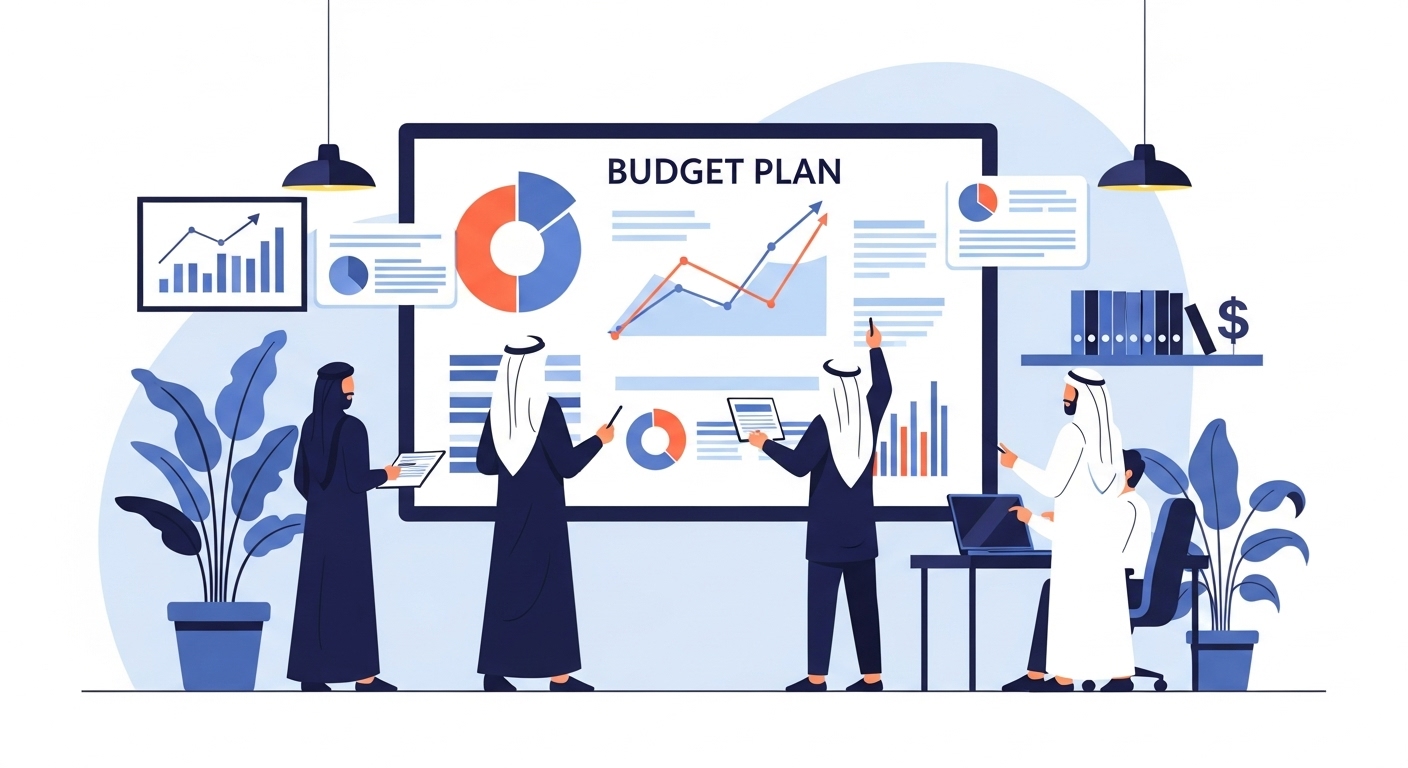
In today’s dynamic and hyper-competitive business environment, achieving sustainable growth is no longer a matter of intuition or guesswork; it requires rigorous financial discipline and forward-looking strategies. Among the most critical tools in a chief financial officer’s arsenal is the estimated budget for sales. Preparing an accurate, flexible, and comprehensive sales budget is the foundational step toward achieving corporate excellence in a volatile market. It acts as the financial compass for the entire organization, dictating production schedules, marketing spend, and human resource allocations.
Imagine having a crystal-clear roadmap that guides your enterprise toward sustainable growth by combining deep, empirical analyses of historical data with realistic, actionable future forecasts. Today, this level of precision is made possible through advanced enterprise resource planning tools such as the Daysum ERP system, which seamlessly streamlines and efficiently manages complex financial operations. Simplify your workflow and stay compliant with zatca e-invoicing from Daysum while ensuring your financial projections align with strict regulatory standards.
In this comprehensive, deep-dive guide, we will take you on a practical journey that transforms market challenges into lucrative opportunities. We will equip you with the advanced strategies, methodologies, and technological tools needed to develop an estimated budget that perfectly reflects your company’s vision and ambitious commercial goals for 2026 and beyond.
The Anatomy of an Estimated Sales Budget
Before diving into the methodology of creation, it is vital to understand what an estimated sales budget actually represents. It is not merely a quota or a sales target; it is a meticulously calculated financial document that estimates the total sales revenue a company expects to generate within a specific future period (monthly, quarterly, or annually).
The Domino Effect of the Sales Budget
The sales budget is universally recognized as the “starting point” of the master corporate budget. Every other departmental budget depends entirely on the numbers projected here:
- Production Budget: Manufacturers cannot know how many units to produce or raw materials to order without knowing the projected sales volume.
- Marketing Budget: Marketing departments allocate their ad spend based on the projected revenue returns outlined in the sales budget.
- Human Resources Budget: Integrating your financial forecasts with cloud hrms solutions allows HR to plan for hiring seasonal staff or calculating projected sales commissions and bonuses.
Relying on outdated spreadsheets to manage this cascading data often leads to disconnected departments and financial blind spots. Achieving true digital transformation requires a professional odoo implementation saudi arabia to ensure that when a sales forecast is updated, every connected department receives the data in real-time.
Phase 1: Preparation, Planning, and Strategic Alignment
A robust estimated budget is built on a foundation of clear strategic objectives and accurate historical data.
Identifying Strategic Objectives
Begin the budgeting process by setting key, measurable objectives based on your executive board’s vision and future plans. Are you aiming to increase market share by 5%? Are you planning to launch a new product line, or are you looking to achieve a specific revenue growth rate in a newly entered geographic region?
These macroeconomic goals must be translated into microeconomic sales targets. Utilizing the Daysum ERP system allows management to refine these goals by generating precise analytical reports that highlight which product categories are historically the most profitable, and which regions show the highest growth potential.
Collecting and Analyzing Historical Data
You cannot accurately predict the future without thoroughly understanding the past. Review past sales data and analyze seasonal trends, market disruptions, and competitor influences.
In a traditional setup, gathering this data takes weeks of consolidating spreadsheets from various branches. Utilizing Daysum ERP at this stage is crucial. The system instantly processes millions of data points, filtering out anomalies (such as a one-time massive corporate order that skews the average) and laying a solid, mathematically sound foundation for your estimated budget.
Phase 2: Establishing Assumptions and Market Estimates
Once you have your historical data, you must apply “assumptions.” Assumptions are the variable factors that will influence your future sales performance.
Defining Economic and Market Assumptions
You must determine the external and internal factors that will underpin your estimates. Key assumptions to consider include:
- Macro-Economic Trends: Inflation rates, changes in interest rates, or shifts in consumer purchasing power.
- Regulatory Changes: Implementation of new taxes or compliance mandates. For instance, utilizing advanced e invoicing software saudi arabia ensures that your pricing and revenue assumptions accurately account for VAT and ZATCA Phase 2 compliance costs.
- Industry-Specific Trends: Are there new competitors entering the market? Is there a technological shift disrupting your product line?
- Internal Capacity: Do you have the logistical capacity to support a 20% increase in sales volume?
Linking these external market assumptions with the internal historical data housed within Daysum enhances forecast accuracy and transforms a “guess” into a highly reliable estimated budget.
Estimating Future Sales Volume
Using the combined power of your historical data and your established market assumptions, estimate the anticipated sales volume for the upcoming period. It is highly recommended to break this down granularly: by product line, by sales territory, and by individual sales representative. Daysum’s predictive analytics provide precise, AI-driven predictions that are essential for crafting a resilient budget.
Phase 3: Developing the Budget Model
The framework in which you build your budget dictates its usability. While many companies still start with Excel, modern enterprises use ERP systems to design dynamic financial models.
Designing the Financial Model
Whether transitioning from Excel or working directly within Daysum ERP to streamline data entry, your financial model must be structured logically. A comprehensive model should include dedicated modules for:
- Time Periods: Monthly, quarterly, and annual breakdowns.
- Unit Volume: The physical number of items or services expected to be sold.
- Pricing Structures: Expected average selling prices, including anticipated discount strategies or wholesale tier pricing.
- Seasonal Adjustments: Modifiers for period-specific factors (e.g., a 30% multiplier for retail sales during the holiday season).
This model serves as the structural framework for your estimated budget and ensures that all relevant financial data is organized effectively and is easily readable by stakeholders.
Seamless Data Entry and Verification
Input all estimates and assumptions into your model. In a manual system, this is where “fat-finger” errors destroy budget accuracy. By leveraging Daysum’s automated features, the system constantly cross-references inputs for logical consistency. If a regional manager inputs a 500% sales increase without a corresponding increase in marketing spend, the system flags the anomaly for executive review, maintaining absolute precision in your estimated budget.
Phase 4: Sales Distribution and Periodic Adjustments
A flat 10% growth rate spread evenly across 12 months is a lazy, inaccurate budget. Sales rarely happen in a straight line.
Allocating Sales Across Time Periods
Based on historical performance and known seasonal trends, you must distribute the total annual sales targets over appropriate periods. For instance, in the Middle East, the holy month of Ramadan and the Eid holidays drastically shift consumer spending behaviors.
For commercial retail stores, leveraging a robust retail erp saudi arabia ensures that seasonal retail spikes—such as the massive surge in gold and jewelry purchases during wedding seasons—are accurately plotted on the sales calendar. Utilize Daysum’s forecasting tools to pinpoint these high-performing periods and adjust the monthly estimated budget accordingly to prevent stockouts and manage cash flow.
Reviewing and Aligning Operational Plans
A sales budget does not exist in a vacuum. Once the sales distribution is mapped out, you must ensure that your estimates are perfectly in sync with your production and procurement plans. If your budget predicts a massive spike in sales in Q3, your procurement team needs to order raw materials in Q2. Adjust the figures as needed to maintain consistency across departments, and use Daysum reports to facilitate alignment meetings between the VP of Sales and the VP of Operations.
Phase 5: Reporting, Execution, and Continuous Review
The creation of the budget is only half the battle; executing it and monitoring performance is where true financial management occurs.
Preparing the Final Executive Report
Once your financial model is complete and aligned with other departments, compile a detailed, visually engaging report for the board of directors and executive management. This report should clearly outline:
- An executive summary of the strategic objectives and underlying market assumptions.
- The time-based, territory-based, and product-based distribution of projected sales.
- A detailed risk analysis highlighting potential gaps, market threats, and contingency plans.
Daysum data can be seamlessly exported into beautiful, comprehensive dashboards and reports, reinforcing the professionalism and strategic importance of your estimated budget.
Periodic Review and Agile Updates
An estimated budget is a living document. Establish a strict routine for regular reviews—typically at the end of every month or quarter—to ensure objectives are being met and to monitor unexpected market changes. If actual sales in Q1 fall short of the budget by 15%, the budget for Q2-Q4 must be re-forecasted to reflect the new reality. This allows for timely, agile updates using Daysum tools, ensuring data accuracy and operational stability at every stage of the fiscal year.
Practical Case Study: Transforming Targets into Reality
To illustrate the power of this methodology, let us look at a practical example.
The Scenario:
Company X, a mid-sized wholesale distributor, recorded $1,000,000 in sales last year. Based on their market analysis and aggressive growth forecasts, executive management assumes a 10% increase for the coming year, setting a target of $1,100,000.
Step 1: Defining Objectives
The company sets a firm target of a 10% overall growth rate, but specifies that this growth must come primarily from a newly introduced premium product line.
Step 2: Collecting Data via Daysum ERP
The finance team uses the previous year’s Daysum data to identify peak performance periods. They discover that 40% of their sales historically occur in the fourth quarter (Q4).
Step 3: Developing the Dynamic Model
Instead of dividing $1,100,000 evenly by 12 months ($91,666/month), the financial analysts distribute the target based on historical weightings. They allocate 40% ($440,000) specifically to Q4, factoring in higher marketing spend during the holiday season. They leverage Daysum to automatically organize the data and calculate the required weekly run-rates.
Step 4: Cross-Departmental Review
The finance team compares the Q4 distribution with the production capacity plans. The production manager notes a potential bottleneck in November. Based on this feedback, the model is adjusted to push early-bird discounts in October to smooth out the production curve.
Step 5: Reporting and Monitoring
A comprehensive report is prepared for executive management. As the year progresses, the sales team utilizes the ERP dashboard to track their actual daily sales against the estimated budget, allowing management to make real-time, data-driven decisions to keep the $1.1M target on track.
Key Benefits of Preparing an Automated Estimated Budget
Transitioning from manual guesswork to an automated, ERP-driven sales budget provides transformational benefits to a modern enterprise:
|
Benefit Category |
Manual Budgeting (Spreadsheets) |
Automated Budgeting (Daysum ERP) |
|
Clarity of Vision |
Obscured by fragmented data and formula errors. |
Crystal clear, supported by actual historical data and real-time visualization. |
|
Consistency of Plans |
Departments operate in silos, leading to misaligned goals. |
Total coordination among sales, production, and marketing via a unified database. |
|
Operational Flexibility |
Rigid; takes weeks to re-forecast when the market changes. |
Highly agile; allows for instant periodic adjustments and scenario modeling. |
|
Monitoring and Control |
End-of-month surprises due to delayed manual reporting. |
Live dashboards that measure performance and compare actuals against estimates daily. |
|
Enhanced Decision-Making |
Based on “gut feeling” and outdated macro data. |
Provides deep analytical data that supports sound, defensive financial strategies. |
With these structured steps and the advanced features offered by Daysum, preparing an estimated budget for sales evolves from a tedious administrative chore into a dynamic, systematic process. It ensures precise financial planning, total adaptability to market disruptions, and ultimately drives your company’s strategic objectives forward.
Start your journey toward ultimate financial clarity and sustainable, profitable growth today by empowering your enterprise with Daysum ERP and a flawlessly crafted estimated budget!
Frequently Asked Questions (FAQ)
While often used interchangeably, they are distinct concepts. A sales forecast is a prediction of what a company expects to sell based on current market trends and historical data; it is an estimate of what will happen. A sales budget, on the other hand, is a management plan and a financial commitment; it dictates what a company must achieve to meet its overall financial goals and allocates the necessary resources to make it happen.
In today's fast-paced economic environment, the traditional "annual set-and-forget" budget is obsolete. Best practices suggest utilizing a "Rolling Forecast" model. Companies should review their actual sales versus budgeted sales at the end of every month. If significant market disruptions occur (such as a sudden change in supply chain costs or new regulatory taxes), the budget should be formally re-forecasted quarterly to remain relevant and actionable.
Absolutely. Daysum is designed for scalable, modern enterprises. It seamlessly handles multi-currency transactions and budgeting. You can input your sales targets in local currencies for your international branches, and the system will automatically consolidate the estimated budget into your base corporate currency using real-time or projected exchange rates, eliminating complex manual conversions.
Excel is a powerful tool, but it lacks data security, version control, and real-time integration. In Excel, a single broken formula can corrupt an entire company's financial plan without warning. An ERP system like Daysum provides a "Single Source of Truth." It pulls real-time data directly from your point-of-sale and inventory modules, ensures complete audit trails for every budget alteration, and automatically syncs the approved sales budget with your procurement and HR modules, something standalone spreadsheets simply cannot do.