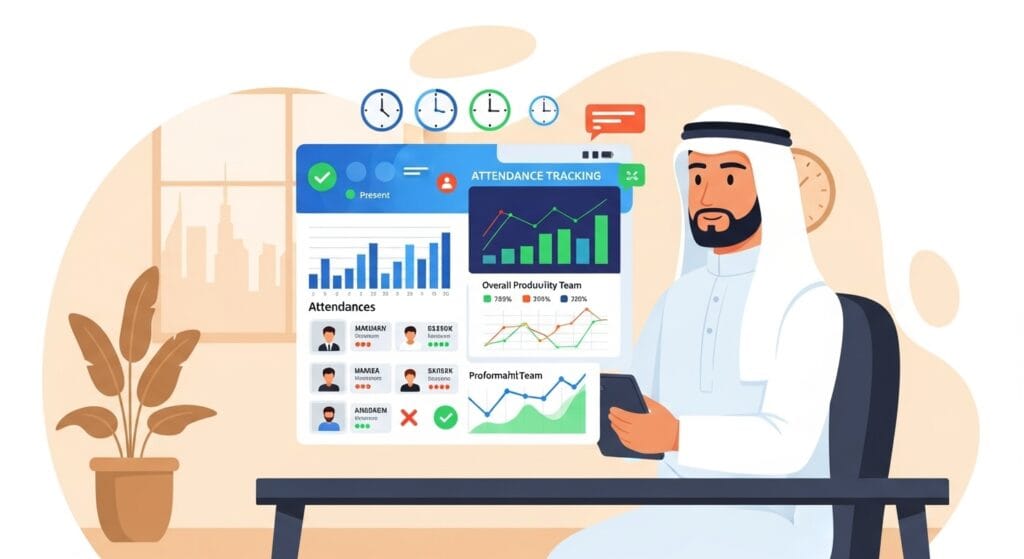
The relationship between an employer and an employee has historically been defined by a strict hierarchy of oversight. For decades, the simple act of recording one’s presence at work required a physical intermediary—a punch card, a manual ledger, or a supervisor’s watchful eye. However, as the digital transformation within the Kingdom of Saudi Arabia accelerates under the banner of Vision 2030, this dynamic is undergoing a profound shift. The rise of self-service applications for attendance management is not merely a change in hardware; it represents a move toward institutional trust and operational transparency. By placing the power to manage time, leaves, and attendance directly into the hands of the workforce, companies are discovering that autonomy often leads to higher engagement and significantly more accurate data.
Defining the Digital Shift in Time and Attendance Management
At its core, a self-service attendance application is a digital gateway that allows employees to perform administrative tasks that were previously the sole domain of Human Resources. Instead of being passive subjects of a monitoring system, employees become active managers of their own professional schedules. This transition is essential for modern businesses that operate with remote teams, flexible hours, or multiple project sites where a central “clock-in station” is physically impossible to maintain.
Bridging the Gap Between Employee Freedom and Managerial Oversight
One of the most significant psychological hurdles in business management is the balance between accountability and micromanagement. Traditional attendance systems often feel like a “gotcha” tool, designed to catch employees who are late or absent. Self-service apps flip this narrative. When an employee can see their own attendance patterns in real-time, they take ownership of their punctuality. They no longer need to wait for a monthly report to know if they have exceeded their leave balance; the information is available at their fingertips. This transparency builds a culture of mutual respect, where the system is seen as a tool for empowerment rather than a mechanism for surveillance.
The Mechanics of Real-Time Synchronization and Geofencing
The technical backbone of these applications relies on the marriage of mobile hardware and cloud-based databases. Unlike legacy systems that require manual data uploads at the end of the week, modern self-service apps synchronize instantly.
- Identity Verification: Utilizing the high-resolution cameras on modern smartphones, apps use AI-driven facial recognition to ensure that the person clocking in is indeed the registered employee, effectively eliminating “buddy punching.”
- Location Intelligence: Through GPS geofencing, managers can define specific virtual boundaries around an office building or a construction site. An employee can only “check in” if their device is physically within that predefined radius.
- Connectivity Resilience: Recognizing that internet stability can vary, especially in remote desert sites, advanced apps offer offline modes. They store the timestamp and location locally and push the data to the central server the moment a connection is restored.
Why Saudi Enterprises are Prioritizing Mobile-First Attendance Solutions
The Saudi labor market is unique in its scale, diversity, and regulatory rigor. For companies operating in Riyadh, Jeddah, or the growing industrial hubs of the Eastern Province, the administrative overhead of managing thousands of employees can be paralyzing. Mobile-first solutions provide a scalable answer to these logistical challenges.
Navigating the Complexities of Mudad and WPS Compliance
In Saudi Arabia, payroll is not just an internal accounting matter; it is a point of national regulatory compliance. The Wage Protection System (WPS) and the Mudad platform require companies to provide clear, verifiable links between an employee’s contracted hours and their final payout. Discrepancies here can lead to heavy fines or the suspension of government services.
By utilizing self-service apps that feed directly into the payroll engine, businesses can ensure that every riyal paid is backed by a digital attendance record. This level of synchronization is why many leaders are looking at how to ensure your hr system complies with saudi labor laws. When the employee “signs off” on their hours via the app, it creates a dual-verified record that stands up to any audit.
Eliminating the Administrative Bottleneck in HR Departments
The HR department should be the strategic engine of a company, focusing on talent acquisition, training, and culture. Instead, in many firms, they are buried under a mountain of paper leave requests and manual attendance corrections.
The shift to self-service models is a game-changer for HR professionals. When employees handle their own data entry—updating personal details, requesting sick leave, or correcting a missed punch—the HR team’s role shifts from “data entry” to “data approval.” This significantly reduces the time spent on low-value tasks. For a deeper understanding of this transition, it is helpful to explore how do self-service systems help reduce the burden on hr management, as the time saved often translates directly into higher strategic output for the entire organization.
Evaluating the Core Capabilities of Modern Self-Service Portals
When an organization decides to move toward a self-service model, it is crucial to understand that not all applications are built with the same level of depth. A high-quality portal must be intuitive enough for a first-time user but robust enough to handle the complex logic of Saudi labor regulations.
Facial Recognition and Biometric Anti-Fraud Measures
Security is the primary concern in any attendance system. If a system can be fooled, it loses its value. Self-service apps have replaced the “shared tablet” model with the employee’s own device. By using facial recognition, the app captures a biometric “signature” that is far more secure than a password or a PIN.
- Liveness Detection: Modern AI can distinguish between a real human face and a photograph or a video, ensuring that an employee cannot clock in using a picture of a colleague.
- Device Binding: To prevent fraud, many apps “bind” the employee’s account to a single physical device. This ensures that an employee cannot give their login credentials to a friend to clock in from a different phone.
Automated Calculations for Overtime and Saudi Labor Entitlements
Calculating overtime in a manual environment is a nightmare of “rounding errors” and disputes. Self-service applications automate this logic based on the specific shift rules defined by the company. Whether it is a 9-to-5 office shift or a 12-hour rotating site shift, the app knows the exact threshold for overtime.
Furthermore, the system can handle the nuances of Saudi holidays, Ramadan hours, and weekend premiums. When an employee looks at their app, they can see exactly how many hours of “standard time” and “overtime” they have accumulated for the month. This clarity is a major driver of time attendance system saudi arabia productivity, as employees feel more motivated when they see the direct financial impact of their extra effort.
Comparing Top Self-Service Attendance Platforms in the Saudi Market
The Saudi market is now home to several world-class attendance platforms, each with its own specific strengths. Choosing the right one requires a balance between feature sets and the specific needs of your industry.
|
Platform |
Key Differentiators |
Best Suited For |
|
DOTS HR |
High-level AI facial recognition and multi-location GPS tracking with live analytics. |
Large-scale construction and facility management firms. |
|
Injazat HR |
Strong focus on Mudad/WPS compliance and automated entitlement calculations. |
Mid-to-large enterprises prioritizing regulatory safety. |
|
Truein |
Face scanning and mobile geofencing specifically designed for remote and field teams. |
Logistics and service companies with distributed workforces. |
|
Daftra |
User-friendly QR code scanning and biometric anti-fraud measures for SMEs. |
Small to medium retail and hospitality businesses. |
|
Daysum |
Seamless self-service portals with real-time tracking and comprehensive Saudi HR integration. |
Businesses seeking a unified, scalable HR and attendance ecosystem. |
Strategic Benefits of Implementing a Unified Attendance Ecosystem
Beyond the immediate convenience of a mobile app, the true value of these systems lies in their ability to integrate with the broader business infrastructure. A standalone app is just a tool; a unified system is a competitive advantage.
Scalability and the Power of Cloud Infrastructure
A company that starts with 50 employees might find itself with 500 in a year. Legacy on-premise systems often struggle to handle this kind of rapid growth. This is where hrms cloud solutions saudi arabia prove their worth. Cloud systems scale automatically, providing the same level of performance whether you have ten users or ten thousand. They also ensure that the business is always running on the latest version of the software, with the newest security patches and feature updates, without requiring an internal IT team to manage the rollout.
Future-Proofing for the New Generation of Labor
The Saudi workforce is becoming younger and more tech-savvy. For the new generation of Saudis entering the private sector, paper-based systems and clunky desktop software are seen as relics of the past. They expect the same level of user experience at work that they get from their favorite social media or banking apps.
Investing in the best self-service applications for attendance management in saudi arabia is a signal to your employees that you are a modern, forward-thinking employer. It improves the “Employer Brand” and helps in the retention of top talent who value efficiency and transparency. As we look at the self-service systems future in attendance management in saudi arabia, it is clear that AI and mobile integration will continue to evolve, making the “office clock” a thing of the past.
Frequently Asked Questions
Most professional self-service applications only track location at the specific moment of clock-in and clock-out. They do not track the employee’s movement throughout the day or after work hours. This "on-demand" location verification ensures that the company gets the proof of presence they need without infringing on the employee's personal privacy outside of their work duties.
Yes. One of the primary features of self-service is "Attendance Correction." If an employee forgets to clock in, they can submit a request through the app with the correct time and a brief explanation. Their manager then receives an alert to approve or reject the correction. This eliminates the need for the employee to visit the HR office and ensures the records remain accurate.
High-quality Saudi-focused apps like Daysum allow HR managers to set specific "Ramadan Shifts" in the system. The app automatically recognizes the reduced hours (typically 6 hours for Muslim employees) and adjusts the overtime calculation logic accordingly. This ensures that the company remains compliant with the Ministry of Human Resources and Social Development (MHRSD) regulations without manual adjustments.
While mobile-first is the trend, most systems offer a "shared kiosk" mode. A single tablet can be placed at a central location, and employees can use facial recognition or a QR code to clock in. This provides a backup for those without devices and ensures that the transition to digital doesn't leave anyone behind.
Modern cloud systems are designed for easy data migration. You can typically export your employee list and existing attendance history into a CSV file and upload it to the new platform in minutes. Most systems also offer APIs that can connect to your old fingerprint hardware if you want to keep it as a backup while transitioning the majority of your team to the mobile app.