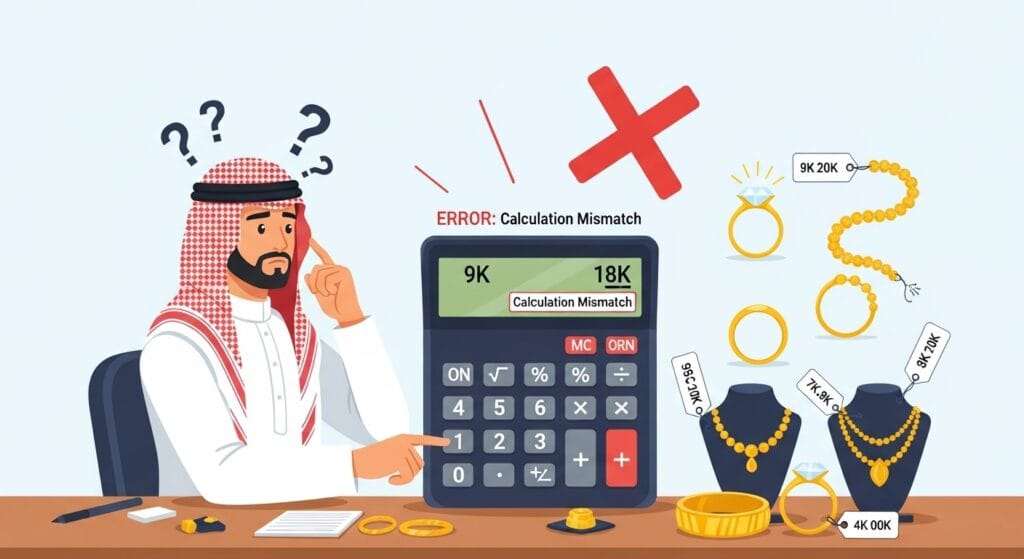
Operating a retail business in the precious metals and gem sector is fundamentally different from selling standard consumer goods. When your inventory is tied directly to volatile global market indices, and every gram of material carries immense financial weight, relying on basic point-of-sale systems or manual ledger books is a direct threat to your profit margins. A single miscalculation in the weight of a stone, a slight error in applying the daily making charge, or a misplaced physical asset can result in thousands of riyals in lost revenue.
To maintain total control over these high-value assets and complex financial variables, industry leaders are transitioning to specialized digital platforms. By adopting dedicated enterprise resource planning tools, owners can completely transform how they handle daily operations. Exploring the core capabilities of these platforms reveals exactly why replacing legacy methods with sophisticated technology is the only sustainable path for growth in the modern jewelry market.
The Transformation of Physical Stock Control
Inventory is the lifeblood of any jewelry enterprise. However, managing it involves much more than simply counting items on a shelf. Every piece has a unique composition—combining different karats of gold, varied weights, and potentially multiple types of precious stones. Maintaining an accurate count of these complex items requires precision that human accounting simply cannot sustain over time.
Real-Time Tracking from Workshop to Display Case
When you implement new inventory management technologies for gold stores, the entire lifecycle of a piece of jewelry becomes visible on your digital dashboard. The moment a new shipment of bracelets arrives from the wholesale supplier or a custom ring is finished in your internal workshop, it is logged into the system.
This continuous tracking creates an unbroken chain of custody. If a specific diamond necklace is moved from the main display window to the secure overnight vault, the system records the exact time of the movement and the specific employee who authorized it. This level of immediate oversight prevents items from being misplaced during busy shifts and ensures that the physical count perfectly matches the digital ledger at any given second.
Eliminating Manual Audits with Barcode Integration
Traditional stock-taking in a jewelry store is a grueling process. It typically involves closing the store for an entire day, pulling every single item from the trays, and manually checking them against a printed spreadsheet. This method is incredibly slow and highly susceptible to human error.
Modern platforms utilize advanced barcode and RFID (Radio Frequency Identification) scanning. Each piece is tagged with a tiny, specialized label containing a unique identifier.
- Rapid Auditing: During an audit, an employee simply passes a handheld scanner over a tray of 50 rings, and the system instantly verifies all 50 items against the database in a matter of seconds.
- Instant Sales Logging: At the point of sale, scanning the tag instantly pulls up the item’s exact weight, karat purity, and base cost, completely eliminating the need for the cashier to manually type in long serial numbers.
Why Are Automated Stock Alerts Necessary?
In the retail jewelry business, certain styles and weights move faster than others. A specific design of an 18k gold chain might be your best seller during the wedding season. If you run out of this item without realizing it, you are actively turning away guaranteed revenue.
Intelligent software continuously analyzes your sales velocity. You can set minimum threshold levels for specific categories or individual items. When your stock of those popular 18k chains drops to three pieces, the system automatically triggers an alert to the purchasing manager. This proactive approach ensures your display cases remain fully stocked with the items your customers actually want to buy, preventing dead zones in your inventory.
Lot and Serial Number Tracking for Ultimate Security
High-value assets require individualized tracking. While a supermarket might group all identical cereal boxes under one code, a jeweler must treat every identical-looking ring as a distinct financial asset.
Assigning a unique serial number to every single piece allows for granular tracking. If a customer returns a ring for a resizing or a repair, the serial number instantly pulls up the original date of purchase, the exact weight at the time of sale, and the specific staff member who handled the transaction. Furthermore, relying on a centralized gold management system to reduce theft and increase profitability deters internal shrinkage. Employees know that every piece is uniquely identifiable and constantly monitored, significantly reducing the temptation for internal theft.
Mastering Cost and Profit Calculations in a Volatile Market
The financial mechanics of selling gold are uniquely complicated. You are not buying a product for $50 and selling it for $100. The base cost of your inventory fluctuates every single minute based on the global commodities exchange. Managing these moving targets manually often leads to stores accidentally selling items at a loss during sudden market spikes.
Decoding the Cost of Goods Sold (COGS)
To understand your true profit, you must know exactly what each piece cost you to acquire and prepare for sale. This goes far beyond the raw material price.
Utilizing Daysum accounting for gold and jewellery COGS management allows you to break down the cost of a single ring into multiple distinct variables:
- Raw Material: The specific weight of the gold multiplied by the market rate on the day of acquisition.
- Stone Value: The distinct cost of the diamonds or emeralds set into the piece.
- Labor and Making Charges: The fees paid to the artisan or factory for crafting the design.
- Wastage: The tiny percentage of gold dust lost during the polishing and finishing process, which must be factored into the final cost.
The software automatically aggregates all these variables the moment the item is entered into inventory. When the item is eventually sold, the system instantly compares the final sale price against this exact, highly detailed COGS calculation, revealing your true net margin.
Automated Profit Margin Analysis
Understanding which products are driving your business is critical for future purchasing decisions. Are you making more money selling high-volume, low-margin 21k bangles, or low-volume, high-margin diamond engagement rings?
The software provides dynamic analytical reports that slice your sales data by category, purity, brand, or even specific suppliers. You can clearly see that while imported Italian chains generate high revenue, the locally crafted bridal sets are actually delivering the highest net profit percentages. This data empowers owners to allocate their purchasing budgets strategically, investing more heavily in the categories that truly grow the bottom line.
Generating Flawless Financial Reports
At the end of the month, business owners need a clear, unvarnished look at their financial health. Relying on disorganized receipts and fragmented spreadsheets makes generating accurate Profit and Loss (P&L) statements nearly impossible.
Because every inventory movement and every sale is intrinsically linked to the accounting module, generating these reports takes only a few clicks. The system automatically updates the balance sheet, depreciates physical assets accurately, and prepares the ledger for tax season. This immediate financial clarity allows you to see exactly where your cash is tied up, ensuring you maintain healthy liquidity to purchase new stock when market prices are favorable.
What Additional Features Drive Business Expansion?
Beyond tracking stock and calculating margins, premium platforms are designed to actively assist in the growth of the enterprise. By automating the heavy lifting of daily administration, the technology allows your sales team to focus on building relationships and closing deals. Let us examine the exact features that separate standard point-of-sale systems from true enterprise solutions.
|
Core Feature |
Technical Mechanism |
Direct Business Benefit |
|
Live Gold Rate Updates |
API integration with global commodities markets continuously updates the base value of all store inventory. |
Ensures that you never sell an item below its current replacement cost during sudden market surges. |
|
Multi-Branch Synchronization |
Cloud-based architecture connects the databases of all physical storefronts to a single central headquarters. |
Allows management to view total company inventory at once, and facilitates secure, trackable stock transfers between different cities. |
|
Customer Relationship Management (CRM) |
Captures client data at the point of sale, including purchase history, ring sizes, and significant personal dates. |
Enables highly targeted marketing campaigns, allowing staff to reach out with personalized recommendations before a client’s wedding anniversary. |
|
Automated Tax Compliance |
Built-in tax engines apply the correct VAT rates specifically to the making charges or the total item value depending on local regulations. |
Completely eliminates calculation errors at the checkout counter, protecting the business from costly audits and government fines. |
The Critical Need for Live Pricing Synchronization
In the precious metals industry, prices do not wait for the end of the month. A geopolitical event can cause the price of an ounce of gold to spike dramatically within hours. If your store is still pricing items based on yesterday’s rates, you are actively losing money on every transaction.
Understanding gold price updates and how to manage them through software is vital. The system connects directly to global feeds. When the price of 24k gold shifts on the international market, the software automatically recalculates the retail price of every single 18k, 21k, and 22k item in your display cases instantly. Your sales staff do not need to punch numbers into a calculator while the customer waits; the barcode scanner simply pulls the exact, up-to-the-second price, ensuring your margins remain strictly protected regardless of market volatility.
Building Loyalty Through Advanced CRM
Jewelry is an emotional purchase. Customers buy these items to celebrate life’s most significant milestones—engagements, weddings, the birth of a child, or major anniversaries. A customer who buys an engagement ring from you is highly likely to return for the wedding bands, provided you maintain the relationship.
The built-in CRM module acts as the memory of your sales team. When a client walks in, the salesperson can pull up their profile and immediately see their past purchases. They can say, “I see you bought the white gold sapphire pendant last year; we just received the matching earrings.” Furthermore, the system can send automated SMS reminders to your top clients a week before their spouse’s birthday, offering a VIP discount. This level of personalized service is what transforms a one-time buyer into a lifelong patron.
Managing Complex Multi-Store Operations
As your brand grows from a single boutique to a regional chain, maintaining operational consistency becomes incredibly difficult. If a customer in your Jeddah branch wants a specific diamond cut that is currently sitting in the Riyadh vault, your staff needs a way to locate it instantly.
Cloud platforms unify your entire network. A salesperson can search the global inventory, locate the item in another branch, and generate an internal transfer request ticket directly from their terminal. The system tracks the item as it leaves the first store, while it is in transit, and confirms its safe arrival at the destination. Discovering exactly how gold management software affects operational efficiency across multiple locations demonstrates that growth no longer means losing control over your assets.
Navigating Regulatory Landscapes: The ZATCA Mandate
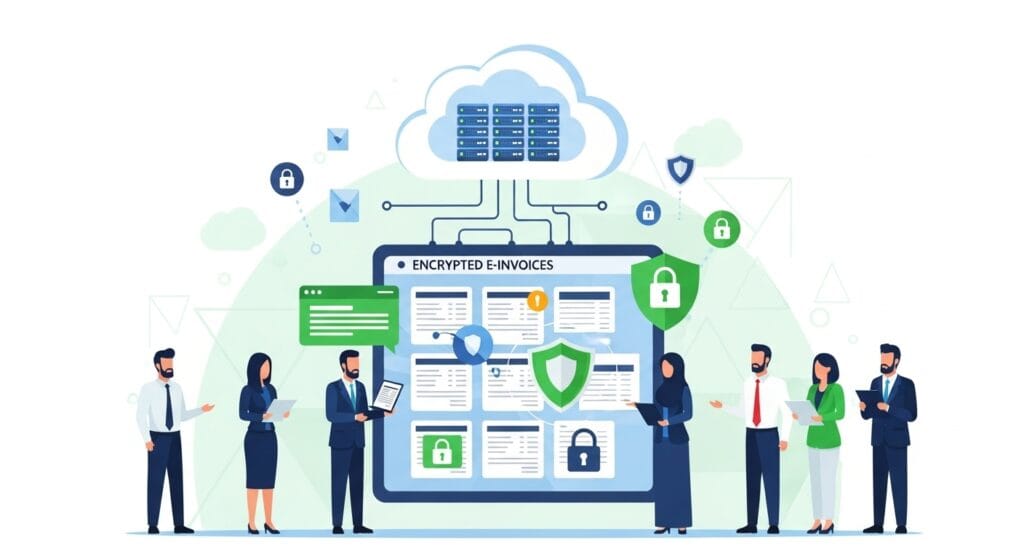
For jewelry businesses operating within the Kingdom of Saudi Arabia, adopting advanced software is no longer just a strategic choice for efficiency; it is a strict legal requirement. The Zakat, Tax and Customs Authority (ZATCA) has aggressively rolled out electronic invoicing mandates designed to increase financial transparency and combat tax evasion across all retail sectors.
The Shift to Electronic Invoicing
Writing out paper receipts or using unlinked cash registers is now entirely illegal for commercial enterprises. The government requires that every transaction is digitally logged and formatted according to highly specific technical standards.
When a customer purchases a gold set, the invoice generated must contain specific cryptographic stamps, a scannable QR code, and detailed breakdowns of the VAT applied. Because jewelry transactions often involve complex scenarios—such as a customer trading in scrap gold to offset the price of a new piece—calculating the exact taxable amount manually is exceptionally risky. The software handles these complex trade-in calculations automatically, applying VAT only to the correct portion of the transaction (typically the new making charges and the difference in gold value).
Seamless Integration with Phase 2 Requirements
The implementation of ZATCA regulations is happening in stages, with the second phase being significantly more technically demanding than the first. In Phase 2, businesses are required to establish a direct, automated integration between their internal point-of-sale systems and the central ZATCA portals.
This means that the moment a sale is finalized in your store, the data must be securely pushed to the government servers for real-time clearance and verification. Relying on an ERP platform like Daysum ensures that you are fully prepared for ZATCA phase 2 e-invoicing in Saudi Arabia. The software acts as a secure bridge, automatically formatting the XML files, generating the required cryptographic hashes, and communicating with the authority’s servers in the background. Your cashiers simply complete the sale as normal, while the software guarantees that your business remains 100% compliant with the law, completely eliminating the stress of unexpected audits or heavy financial penalties for non-compliance.
The jewelry industry rewards precision, security, and exceptional customer service. Attempting to run a modern store using outdated administrative tools forces your team to spend their time managing paper instead of managing your clients. By adopting a comprehensive digital management platform, you secure your physical assets, protect your profit margins from market volatility, and build a highly scalable foundation capable of supporting decades of sustained commercial growth.
Frequently Asked Questions
The system features a dedicated "Scrap/Trade-in" module. The cashier weighs the customer's old gold, and the software automatically calculates its value based on the live purchasing rate for that specific karat. This trade-in value is then automatically deducted from the total price of the new item being purchased, and the system correctly splits the transaction for accurate VAT reporting and inventory updating.
Yes. Advanced software relies heavily on Role-Based Access Control (RBAC). You can configure the system so that your floor sales staff only see the final retail price and the barcode data on their terminals, while the store manager and the accounting department have access to the detailed COGS, wholesale costs, and overall profit margins.
Modern cloud-based POS systems are designed with offline capabilities to prevent business disruption. If your internet drops, the cash register will continue to scan items, calculate prices based on the last known gold rate, and print receipts. All transaction data is stored locally on the terminal's cache. The moment the internet connection is restored, the system automatically pushes all the offline sales data up to the central cloud servers without losing a single record.
The initial setup does require a dedicated effort, but premium software providers supply templates to make the process smooth. You typically export your current stock lists into a formatted Excel spreadsheet, which is then uploaded directly into the new database in bulk. The provider's implementation team will guide you through mapping your categories, setting up your starting gold rates, and generating your first batch of physical barcode tags.
The software includes specific manufacturing and workshop tracking features. When a 15-gram ring is sent to the back room for polishing and returns weighing 14.8 grams, the system logs this difference. This 0.2-gram reduction is categorized specifically as "Wastage" or "Manufacturing Loss" rather than missing inventory. This allows the accounting module to accurately absorb the cost of the lost gold as a legitimate business expense rather than flagging it as an internal theft issue.