In today’s rapidly transforming global economy, the shift toward digitalization is no longer a futuristic concept—it is a present-day reality dictating the survival and growth of businesses. Nowhere is this more evident than in the Kingdom of Saudi Arabia, where the ambitious directives of Saudi Vision 2030 are actively reshaping the corporate landscape. At the very forefront of this digital revolution is the implementation of the mandated electronic invoicing system by the Zakat, Tax and Customs Authority (ZATCA).
Since the rollout of the initial phases in December 2021, the ZATCA e-invoicing framework has fundamentally altered how Saudi businesses operate. The transition from paper-based receipts to structured digital files has yielded staggering results: companies adopting these systems have reported a 95% reduction in manual accounting errors and a 70% decrease in paper and physical archiving costs. With leading software providers like Daysum, obill, and Qoyod enabling invoice issuance in under 30 seconds, organizations are experiencing 80% faster workflows.
In this comprehensive guide, we will explore the critical importance of e-invoicing in improving business efficiency, simplifying daily operations, and ensuring bulletproof compliance. We will dive deep into the tangible impacts of this technology, the features that drive operational excellence, and how choosing the right digital partner can elevate your business in a highly competitive market.
Defining Operational Efficiency in the Modern Enterprise
Before examining the profound impact of electronic invoicing, we must first establish a clear definition of “operational efficiency” within the context of a modern Saudi enterprise.
The Core of Operational Efficiency
Operational efficiency refers to the ability of an organization to maximize its available resources—specifically time, money, and labor—to deliver products or services with the least amount of waste. It involves minimizing operational costs, accelerating the execution of daily tasks, and driving higher overall productivity through intelligent automation. In the past, achieving high operational efficiency meant hiring massive teams of accountants to audit paper trails. Today, it means leveraging smart software to do the heavy lifting in fractions of a second.
The Saudi Vision 2030 Digital Push
The drive for efficiency aligns perfectly with the digital push mandated by Saudi Vision 2030. The Kingdom is actively moving toward a paperless, transparent, and highly competitive private sector. In KSA, the rollout of ZATCA Phase 2 (also known as the Integration Phase, which involves direct FATOORA portal linkage) acts as a powerful catalyst. While many view this mandate purely as a regulatory hurdle, forward-thinking business leaders recognize it as a unique opportunity. By complying with the electronic invoice ksa regulations using a robust automated system, companies gain a significant competitive edge, allowing them to scale their operations without scaling their administrative overhead.
The Critical Importance of Business Efficiency
Why does business efficiency matter so much, and how exactly does e-invoicing contribute to it? In a market where consumer expectations are higher than ever, speed and accuracy are the ultimate differentiators.
Accelerating Processes and Slashing Errors
Traditional invoicing is painfully slow. It requires an employee to manually type out client details, calculate the 15% Value Added Tax (VAT), print the document, and physically hand it to the client. E-invoicing accelerates these administrative processes by up to 80%. Because the system automatically calculates the tax and populates the client’s information from a secure database, manual data entry errors are virtually eradicated.
Boosting Client Satisfaction
Efficiency is not just an internal metric; it directly impacts the customer experience. Modern consumers and B2B clients expect immediate, clear, and professional documentation. By providing instant digital invoices via email or secure messaging platforms, businesses significantly boost client satisfaction and project a highly professional brand image.
Deep Integration for Real-Time Analytics
True efficiency is achieved when all departments within a business communicate seamlessly. Modern e-invoicing platforms do not operate in a vacuum. Advanced systems integrate the invoicing module directly with Enterprise Resource Planning (ERP) software, Point of Sale (POS) terminals, and e-commerce platforms like Salla and Zid. This deep integration allows executives to access real-time analytics regarding sales volume, inventory depletion, and cash flow, ensuring that decision-making is driven by live data rather than outdated monthly reports.
Core E-Invoicing Efficiency Features
The remarkable efficiency gains provided by electronic invoicing are powered by specific, highly advanced technological features. Below is a detailed breakdown of these features, their impact on your daily operations, and their alignment with ZATCA standards.
| E-Invoicing Feature | Tangible Efficiency Gain | ZATCA Tie-In / Standard |
|---|---|---|
| Auto-Issuance | Reduces issuance time from 5 minutes (manual) to literally seconds. | Requires generation in structured XML format with a dynamic QR code. |
| FATOORA Sync | Provides instant government verification, preventing audit delays. | Mandatory for Phase 2 Integration (direct API linkage to ZATCA). |
| Cloud Archive | Enables instant, localized searching of records spanning up to 5 years. | Requires storage in the globally recognized PDF/A-3 archival format. |
Understanding the Technical Impact
- The XML and QR Code: The XML format allows machines to read and process the invoice instantly, while the QR code empowers buyers and government inspectors to scan and verify the transaction on the spot.
- The FATOORA Sync: By syncing directly with the government portal, businesses no longer have to spend weeks preparing tax reports. The government receives the data the moment the transaction occurs, completely simplifying the auditing process.
Speeding Up Invoice Issuance and Workflows
Time is the most valuable currency in any business. Electronic invoicing systems are engineered to save as much time as possible across every stage of the sales cycle.
One-Click Generation and Distribution
With a modern e-invoicing system, generating a tax invoice requires no more than a single click. Once the sale is registered in the POS or CRM system, the software instantly generates the compliant document. Furthermore, distribution is completely automated. The system can be configured to auto-send the invoice to the client’s email address or directly to their WhatsApp, effectively reducing the billing cycle from days to mere seconds.
Live E-Commerce Synchronization
For retail businesses, managing both a physical storefront and an online store can be an administrative nightmare. If a customer buys a product on your Salla or Zid e-commerce store, advanced e-invoicing systems capture that data instantly. The system issues the ZATCA-compliant invoice in the background and emails it to the online shopper without any human intervention. This live sync ensures that online sales are just as compliant and efficient as in-store purchases.
Massive Time and Resource Savings
The operational simplification brought about by e-invoicing translates directly into massive savings in both time and physical resources.
Eliminating Printing and Shipping Costs
The hidden costs of traditional paper invoicing are staggering. Businesses must continuously purchase specialized receipt paper, expensive printer ink, physical folders, and filing cabinets. Additionally, mailing physical invoices to B2B clients incurs recurring shipping fees. E-invoicing eliminates 100% of these costs.
Saving 40 Administrative Hours Weekly
In a mid-sized enterprise, the accounting department can easily spend up to 40 hours a week—the equivalent of one full-time employee—just matching paper invoices with bank statements and manually entering data into ledgers. By automating data capture from external systems, e-invoicing software frees up these 40 hours. Your financial team can redirect this massive amount of time toward strategic financial planning, budgeting, and growth forecasting.
Enhanced Process Management and Customization
Simplifying processes does not mean losing control over them; in fact, e-invoicing gives management unprecedented oversight over daily operations.
Live Dashboards and Error Alerts
Top-tier e-invoicing platforms feature live executive dashboards. At a glance, a business owner can see total daily revenue, pending unpaid invoices, and total VAT collected. More importantly, these systems feature pre-submission error alerts. If an invoice is missing a client’s 15-digit VAT number, the system will flag the error before attempting to sync with ZATCA, ensuring that you never face rejection from the FATOORA portal.
Industry-Specific Customization
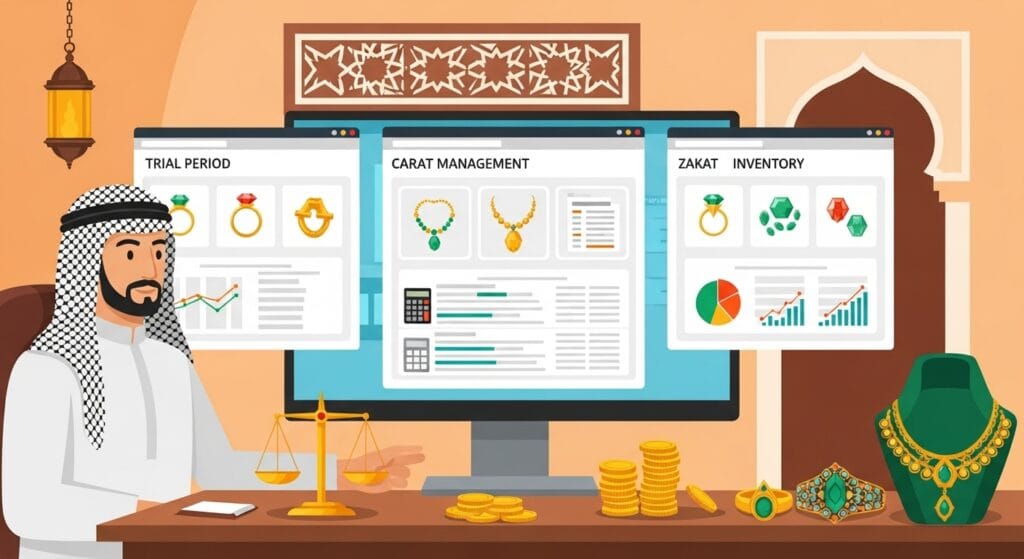
Not all businesses operate the same way, and a one-size-fits-all approach ruins efficiency. Highly specialized sectors require specialized invoicing. For example, the jewelry industry deals with volatile commodities. Using the best gold accounting software allows a jewelry store to automatically separate the daily fluctuating global price of raw gold from the fixed making charges on the e-invoice. This level of industry-specific customization ensures that the business remains highly efficient and strictly compliant with ZATCA’s unique tax rules for precious metals.
Tangible Impacts: The Numbers Speak for Themselves
When evaluating the transition to an electronic invoicing system, executives want to see hard data. The tangible impacts of automating your billing processes are profound and easily measurable.
| Operational Impact | Proven Metric | Business Implication |
|---|---|---|
| Error Reduction | 95% Decrease | Eliminates the need for constant corrections, credit notes, and frustrating client disputes. |
| Transaction Speed | +80% Faster | Faster checkouts at POS terminals and quicker payment cycles for B2B accounts receivable. |
| Paper Cost Savings | 70% Savings | Immediate improvement to the bottom line by removing recurring physical office supplies. |
These metrics prove that implementing a robust e-invoicing framework is an investment with an incredibly fast Return on Investment (ROI). The software effectively pays for itself within the first few months through administrative savings alone.
Comprehensive Risk Protection and Tax Compliance
Efficiency is completely negated if a business is crippled by legal disputes or government fines. E-invoicing acts as an impenetrable shield protecting the enterprise from compliance risks.
Preventing Tampering and Fraud
Traditional invoices are incredibly susceptible to internal fraud, unauthorized alterations, and forgery. ZATCA-compliant e-invoicing systems utilize a Universally Unique Identifier (UUID) and a Cryptographic Digital Signature for every single document. These features act as a digital wax seal. If anyone attempts to alter the invoice amount or date after it has been issued, the cryptographic hash breaks, immediately flagging the document as tampered. This zero-tolerance architecture completely eliminates manual fraud opportunities.
Zero ZATCA Fines and Audit-Ready Reporting
Failing to comply with ZATCA regulations can result in fines reaching up to SAR 50,000 per violation. By utilizing a system that features pre-send error detection and direct API integration with the government, businesses guarantee zero ZATCA fines.
Furthermore, because the system enforces uniform formatting and automatically categorizes VAT data, the business is perpetually “audit-ready.” Whether you need to file a monthly VAT return or undergo a sudden external audit, the e invoicing zatca framework ensures that pristine, accurate reports can be generated and exported in a matter of seconds.
Analyzing the Saudi E-Invoicing Competitors Landscape
As the Kingdom races toward the 2026 deadline where 99% of VAT-registered businesses must be fully integrated, the software market has become highly saturated. Choosing the right platform is critical for maximizing efficiency.
Below is an analysis of the top competitors in the Saudi market:
| Software Platform | Estimated Annual Cost (SAR) | Efficiency Standout Feature & Target Audience |
|---|---|---|
| Daysum | 3,600+ | Full ERP, Salla/Zid Sync, POS, and specialized modules (e.g., Gold ERP). |
| Qoyod | 2,400+ | Strong accounting focus with free training workshops for users. |
| obill | 528+ (44/month) | Basic invoicing via WhatsApp distribution; includes a 15-day free trial. |
| e-invoice | Free (Basic Tier) | Highly simplified system strictly for micro-SMEs with minimal transactions. |
Why Basic Systems Fall Short
While free or low-cost systems like e-invoice or obill might appeal to micro-businesses, they severely lack the horsepower required by growing enterprises. They often require manual data transfer between separate inventory and accounting tools, which entirely defeats the purpose of “operational efficiency.”
Conversely, platforms like Daysum offer an all-in-one ecosystem. Whether you are running a chain of supermarkets, managing a massive e-commerce brand, or utilizing a specialized gold erp system for your jewelry enterprise, a centralized software ensures that every department speaks the exact same digital language.
The Daysum Advantage: Your Pathway to Total Efficiency
Transitioning to a new digital system can seem daunting, but it is the most vital step your company will take in the Vision 2030 era. Daysum has positioned itself as the premier partner for Saudi businesses looking to elevate their operational efficiency while guaranteeing 100% ZATCA compliance.
Rapid Deployment and Full Integration
Daysum understands that businesses cannot afford extended downtime. That is why they offer a rapid 24 to 72-hour setup and activation process. You do not have to wait months to modernize your workflow.
Because Daysum is built on world-class frameworks, it acts as a comprehensive Enterprise Resource Planning tool. Undertaking an odoo implementation saudi arabia through Daysum means your e-invoicing is natively connected to your HR management, supply chain, inventory, and CRM.
Localized Support for Saudi Businesses
Technology is only as good as the people supporting it. Daysum provides dedicated, localized Arabic and English customer support. Whether you need help setting up your Salla integration or require guidance on Phase 2 FATOORA linkage, expert assistance is always available.
Stop letting manual processes, hidden errors, and outdated paper trails drain your company’s profitability. Simplify your operations, protect your business from compliance fines, and accelerate your growth. Start your free Daysum trial today and experience the ultimate standard in business efficiency.
Frequently Asked Questions (FAQs)
By eliminating the need for manual data entry. In a traditional setup, accountants spend hours typing invoice details from a sales ledger into an accounting program, manually calculating the 15% VAT, and filing physical copies. E-invoicing automates this entire cycle. When a sale is made at the POS or online, the system instantly calculates the VAT, generates the compliant XML/PDF invoice, syncs it with the general ledger, and archives it in the cloud. This end-to-end automation reclaims dozens of administrative hours every week.
Failing to integrate your invoicing system directly with ZATCA’s FATOORA portal during your mandated wave violates Saudi tax laws. The consequences are severe and immediate. ZATCA can impose fines ranging from SAR 5,000 to SAR 50,000 per violation. Furthermore, non-compliant invoices will not be recognized as valid tax documents, which can lead to the rejection of your VAT returns, suspension of government services, and severe disruptions to your B2B relationships.
Yes, absolutely. Daysum is designed for the modern omni-channel retailer. It features direct, out-of-the-box API integrations with leading Saudi e-commerce platforms such as Salla and Zid. When a customer completes a purchase on your website, Daysum automatically captures the data, issues a ZATCA-compliant electronic invoice to the buyer's email, and instantly updates your central inventory and accounting records—all without any manual intervention.
The gold and jewelry sector operates under highly specific and complex VAT regulations in Saudi Arabia. Often, VAT is only applied to the "making charge" (the labor cost) rather than the volatile global market price of the raw gold itself. Generic invoicing tools cannot easily separate these values dynamically. Specialized software, like Daysum's Gold ERP, syncs with live global gold prices and automatically separates the raw material weight from the making charges, ensuring the generated e-invoice is perfectly accurate, transparent, and strictly compliant with ZATCA rules for precious metals.