The retail landscape in Saudi Arabia is undergoing a massive shift, driven by digital transformation and the ambitious goals of Vision 2030. For the furniture retail sector, this rapid growth brings both immense opportunities and complex logistical challenges. Selling furniture is not like selling standard consumer goods; it involves managing bulky items, handling intricate custom orders, tracking multiple variations of fabrics and finishes, and coordinating complex delivery and assembly schedules. To thrive in this competitive market, relying on outdated spreadsheets or fragmented software is no longer viable. This is where a specialized furniture ERP (Enterprise Resource Planning) system becomes the cornerstone of your business success.
In this comprehensive guide, we will explore exactly how adopting the right ERP software can help furniture stores across the Kingdom of Saudi Arabia dramatically reduce costly errors, streamline their daily operations, and ultimately improve overall efficiency and profitability.
Also read: The Best Way to Manage Furniture Dimensions and Custom Orders in the System
The Complexities of the Modern Furniture Retail Market
Running a successful furniture store involves juggling countless moving parts. From the moment a customer walks into the showroom to the final delivery of a bespoke dining set, the margin for error is incredibly thin. A simple miscommunication regarding a fabric color or a miscalculation in warehouse inventory can lead to delayed deliveries, frustrated customers, and significant financial losses.
In the Saudi Arabian market, where consumer expectations for quality and prompt service are higher than ever, retailers must maintain flawless operations. Customers expect a seamless omnichannel experience, meaning your physical showroom data must perfectly match your online store data. To achieve this level of operational excellence, forward-thinking businesses are turning to successful digital transformation initiatives, placing robust ERP solutions at the heart of their strategy.
Why Generic Software Fails Furniture Retailers
Many businesses attempt to manage their operations using a patchwork of different software applications: one system for accounting, another for inventory, and perhaps a simple point-of-sale (POS) system for the checkout counter. This fragmented approach inevitably leads to data silos. When your systems cannot communicate with each other in real-time, your staff is forced to perform manual data entry, which is the primary cause of operational errors.
A dedicated retail ERP designed specifically for the furniture industry eliminates these silos. It provides a single source of truth across all departments, ensuring that everyone—from the sales representative on the showroom floor to the warehouse manager and the finance team—is looking at the exact same, up-to-date data.
Transforming Core Departments with Furniture ERP
A comprehensive furniture ERP system does not just improve one aspect of your business; it revolutionizes every department. Let us break down how this powerful software enhances various facets of a furniture retail enterprise.
1. Empowering Sales Management
Effective sales management is the lifeblood of any retail business. In a furniture store, the sales process is often consultative and can span several days or weeks as customers measure their spaces and consider their options.
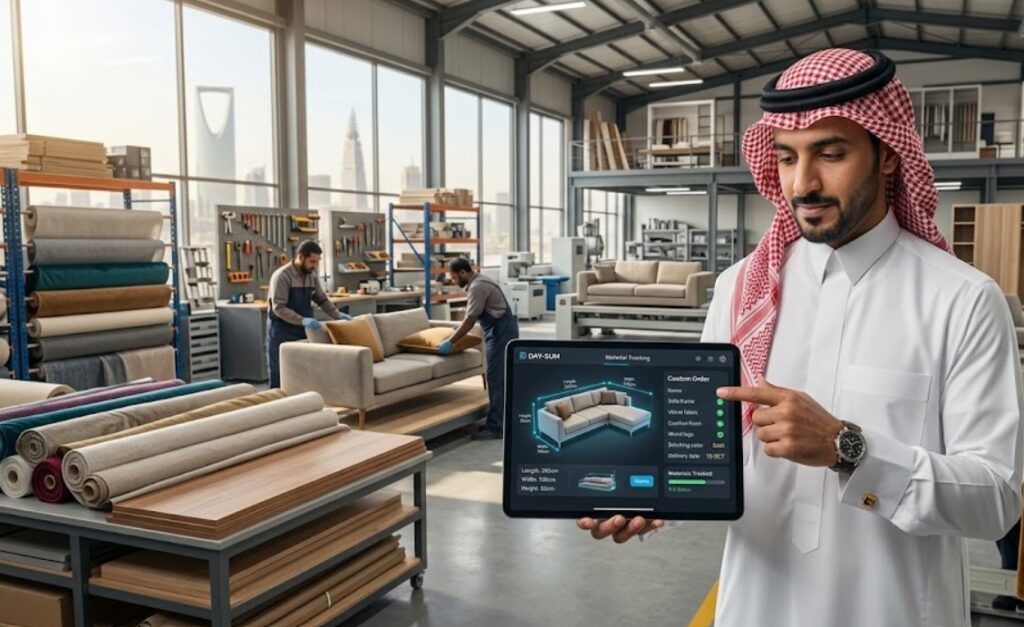
With an integrated ERP system, your sales team is armed with real-time information. If a customer in your Riyadh showroom asks about the availability of a specific velvet sofa, the sales representative can instantly check the ERP via a tablet to see if it is in stock at the local warehouse, at a branch in Jeddah, or if it needs to be backordered from the manufacturer.
Furthermore, the system stores customer purchase history, preferences, and quotes. This allows sales reps to follow up effectively, offer personalized recommendations, and close deals faster without the risk of promising inventory that does not exist.
2. Streamlining Showroom Operations
Showroom operations require a delicate balance of customer service and administrative efficiency. An ERP system simplifies the checkout process, handles complex pricing tiers (such as seasonal discounts or VIP customer rates), and seamlessly manages deposits for custom orders.
Instead of writing manual receipts that can be lost or misread, the POS module within the ERP generates immediate digital invoices and triggers the next steps in the fulfillment process automatically. This level of organization ensures that the showroom remains a place of inspiration for the customer, rather than a hub of administrative chaos.
3. Revolutionizing Warehouse and Inventory Control
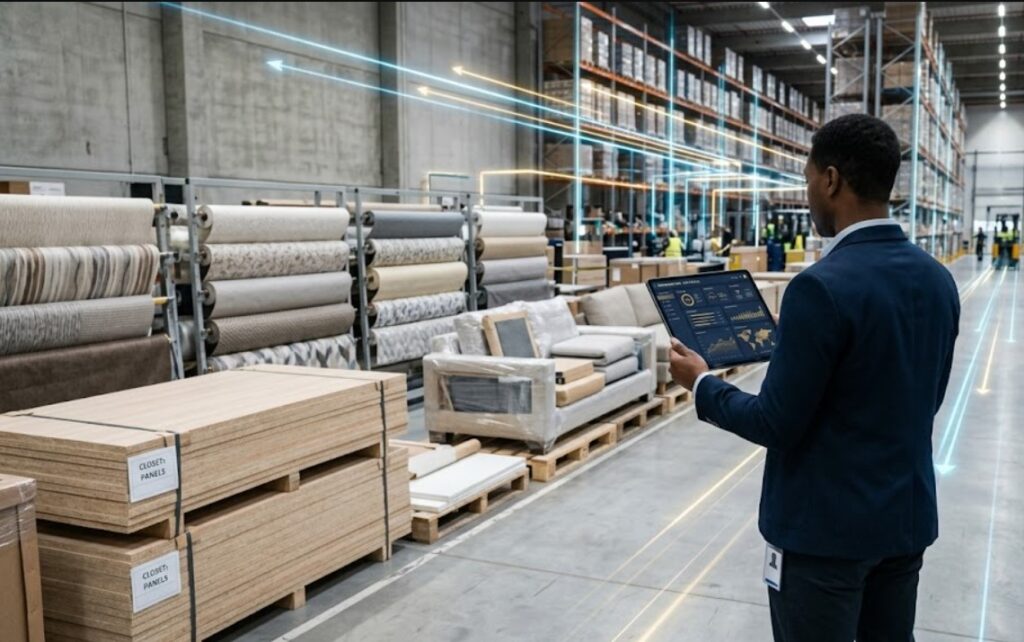
Perhaps the most significant benefit of an ERP system for furniture stores lies in inventory management. Furniture items are large, take up significant warehouse space, and often come in multiple boxes that must be tracked together.
Through real-time stock sync, your ERP ensures that the moment an item is sold in the showroom or online, the inventory levels are instantly updated across the entire network. This prevents double-selling and the dreaded scenario of having to call a customer to cancel their order due to a stockout. Additionally, the system can automatically generate purchase orders when stock levels for popular items fall below a predefined threshold.
4. Enhancing Finance and Accounting Accuracy
Manual reconciliation of sales, expenses, and supplier invoices is a tedious and error-prone task. An ERP system automates the flow of financial data. Every time a sale is made, inventory is received, or a supplier is paid, the general ledger is updated automatically.
For businesses operating in Saudi Arabia, compliance with local tax regulations, such as ZATCA’s regulations, is non-negotiable. Modern ERP solutions offer integrated e-invoicing capabilities, ensuring that every transaction is recorded correctly, taxes are calculated accurately, and your business remains fully compliant with governmental standards without requiring extra manual effort from your accounting team.
Traditional Management vs. Furniture ERP System
To clearly illustrate the transformative impact of upgrading your software infrastructure, let us compare traditional, fragmented management methods with a unified ERP approach.
| Business Function | Traditional / Fragmented Management | Integrated Furniture ERP System |
|---|---|---|
| Inventory Tracking | Manual spreadsheets; prone to human error and delayed updates. | Real-time stock sync; instant updates across all sales channels and warehouses. |
| Sales & Quoting | Paper quotes; high risk of misplacing customer data or pricing errors. | Digital quoting linked to customer profiles; instant conversion to sales orders. |
| Inter-branch Comms | Phone calls and emails to check stock in other locations; highly inefficient. | Centralized multi-branch control; full visibility of company-wide inventory in seconds. |
| Order Fulfillment | Manual handover from sales to warehouse; prone to miscommunication. | Automated routing; warehouse receives picking/packing slips instantly upon sale. |
| Accounting & Tax | Manual data entry at month-end; high risk of compliance failures. | Automated ledger updates; native support for Saudi e-invoicing standards. |
Deep Dive: Overcoming Stock and Inventory Challenges
Managing furniture inventory is uniquely challenging. Unlike a grocery store, a furniture retailer deals with products that have extensive matrices of attributes. A single chair model might come in five different wood finishes and twenty different fabric options.
Mastering Product Variants and Kits
A robust ERP software handles this complexity with ease by utilizing matrix inventory features. Instead of creating hundreds of separate, confusing SKUs for every possible combination, the system groups them logically.
Furthermore, furniture is often sold in kits or bundles (e.g., a dining table with six chairs). An advanced ERP allows you to bundle these items for a promotional price in the showroom while tracking the inventory of the individual components accurately in the warehouse. If one chair is damaged, the system knows that the complete set cannot be fulfilled and alerts the user immediately.
Barcode Scanning and Warehouse Routing
To drastically reduce human error in the warehouse, modern ERP systems integrate directly with barcode scanners. When a shipment arrives from a manufacturer, workers scan the items, instantly updating the system. When an order needs to be dispatched, the system generates an optimized picking route for the warehouse staff, reducing the time spent wandering the aisles searching for the correct box.
Unifying Your Retail Empire: Multi-Branch Control
As your furniture business grows across Saudi Arabia, you will likely open multiple showrooms and regional distribution centers. Managing a single store is hard enough; managing five or ten without a centralized system is nearly impossible.
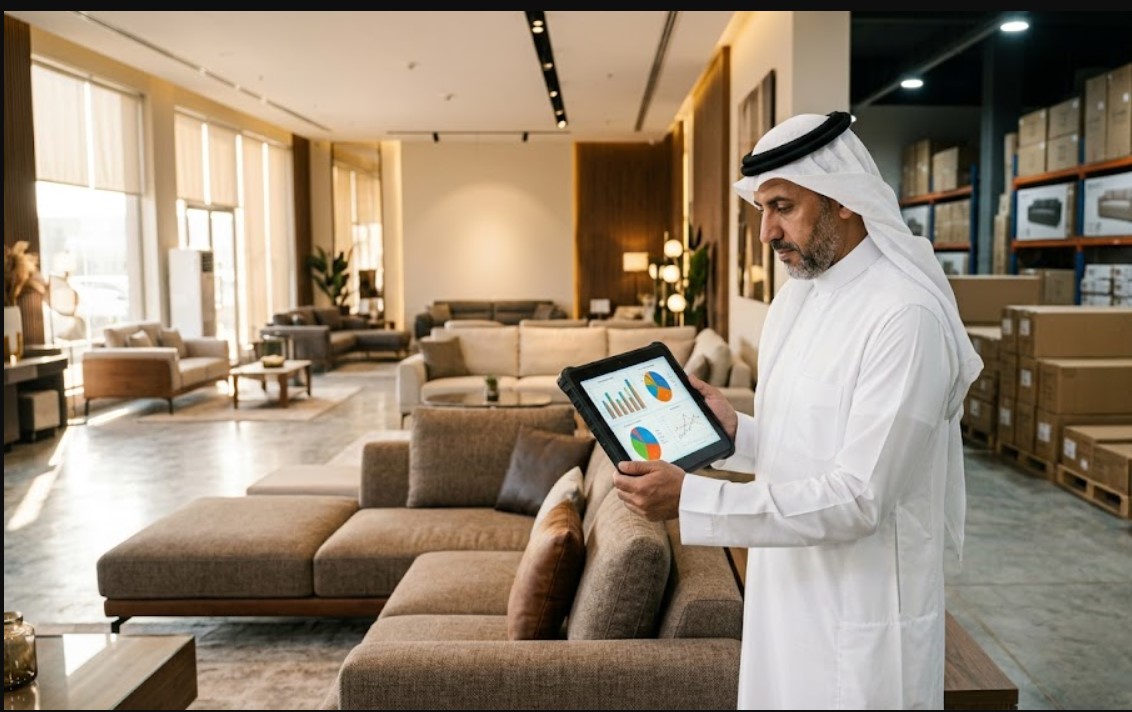
Multi-branch control is a defining feature of a top-tier retail ERP. It allows executive management at the headquarters to have a bird’s-eye view of the entire operation. You can analyze which products are performing well in Riyadh versus Dammam, allowing you to optimize your inventory distribution based on regional preferences.
If a customer in Jeddah wants a specific bed frame that is currently out of stock locally, the system allows the sales rep to locate the item in the Mecca branch and arrange an internal transfer or a direct delivery to the customer. This level of flexibility not only saves the sale but significantly enhances the customer experience.
Automating Daily Tasks with Workflow Automation
One of the greatest hidden costs in any retail business is the time wasted on repetitive, manual tasks. Workflow automation within an ERP system acts as an invisible, highly efficient assistant that works 24/7.
Consider the standard process of a special order. Without automation, a sales rep takes the order, emails the purchasing department, the purchasing department emails the supplier, and someone must manually track the expected delivery date to keep the customer informed.
With an ERP, this entire process is automated:
- The salesperson enters the custom order.
- The system automatically generates and sends a purchase order to the preferred supplier.
- Upon confirmation from the supplier, the system updates the expected delivery date.
- An automated SMS or email is dispatched to the customer, keeping them informed of their order status.
This automation eliminates the “human error” gap where emails are forgotten or dates are transcribed incorrectly. By automating these workflows, you free up your staff to focus on high-value activities: selling to customers and growing the business.
Key Features to Look for in a Retail ERP for Furniture Stores
When you are evaluating different solutions in the market, it is crucial to know which features will actually move the needle for your business. Here is a breakdown of the essential functionalities your chosen system must possess.
| Essential Feature | Why It Matters for Furniture Retailers |
|---|---|
| Matrix Inventory Management | Easily manage multiple variables like color, size, and fabric without database clutter. |
| Delivery & Routing Module | Schedule bulky furniture deliveries efficiently, optimizing driver routes to save on fuel and time. |
| Custom Order Management | Track bespoke items from the initial customer deposit through manufacturing to final delivery. |
| Omnichannel Integration | Connect your physical POS with your e-commerce website for unified sales and inventory data. |
| Localized Financials | Ensure the software supports Saudi Arabic language requirements and ZATCA tax compliance out-of-the-box. |
| Automated Purchasing | Set minimum stock alerts to automatically reorder fast-moving items before they run out. |
The Role of Seamless Integration in Expanding Your Business
A standalone system, no matter how powerful, has limitations. The true power of a modern furniture ERP lies in its ability to integrate seamlessly with the broader technology ecosystem of your business.
Connecting with E-Commerce Platforms
In today’s digital age, a significant portion of your customers will browse your inventory online before ever stepping foot in your showroom. Integrating your ERP with your e-commerce platform (like Magento, Shopify, or WooCommerce) guarantees that your website always reflects accurate stock levels and pricing. If an item is sold out in the physical store, the website updates instantly, preventing online customers from purchasing unavailable items.
Comprehensive Business Support
Finding the right software is only half the battle; partnering with a provider that understands the local market and offers robust support is equally crucial. Exploring comprehensive ERP software solutions tailored to your specific industry needs ensures that you receive not just a tool, but a strategic partnership aimed at long-term growth. Furthermore, transparency in investment is vital. Reviewing clear and structured pricing packages helps businesses of all sizes in Saudi Arabia forecast their digital transformation costs accurately.
How to Choose the Right ERP Software for Your Furniture Business
Making the leap to a new ERP system is a significant decision. Here are actionable steps to ensure you choose the best platform for your Saudi furniture business:
- Assess Your Specific Needs: Document your current pain points. Is it inventory loss? Slow checkout times? Inaccurate accounting? Knowing your biggest issues will help you prioritize ERP features.
- Prioritize Scalability: The system you choose should be able to grow with you. If you plan to open three new branches in the next five years, ensure the ERP handles multi-branch control effortlessly.
- Evaluate Cloud vs. On-Premise: Cloud-based ERPs are generally recommended for modern retailers. They offer lower upfront costs, automatic updates, and the ability to access your business data securely from anywhere in the world.
- Demand Local Compliance: Ensure the software is fully compliant with Saudi Arabian financial and tax laws, specifically regarding e-invoicing and Arabic language support for receipts and official documents.
- Test the User Interface: Your staff will be using this system every single day. If the interface is clunky and difficult to learn, adoption rates will be low, and errors will persist. Request a comprehensive demo focusing on day-to-day showroom operations.
Conclusion: How ERP Helps Furniture Stores Reduce Errors and Improve Efficiency
The furniture retail industry in Saudi Arabia is highly lucrative but equally demanding. Relying on outdated methods to manage complex inventory, multi-location showrooms, and intricate customer orders is a surefire way to lose market share to more agile competitors.
Implementing a robust furniture ERP system is not just an IT upgrade; it is a fundamental business transformation. By centralizing your data, automating tedious workflows, and ensuring absolute accuracy across your sales, inventory, and accounting departments, you empower your team to deliver exceptional customer experiences. In a market where reputation and reliability are everything, an ERP system is the invisible engine that drives your store toward sustained efficiency, fewer errors, and significantly higher profitability.
Frequently Asked Questions (FAQs)
The implementation timeline for an ERP system varies depending on the size of your business and the complexity of your operations. For a single-branch furniture store, a cloud-based system can often be deployed within 4 to 8 weeks. For larger enterprises with multiple showrooms and extensive data migration needs, the process can take anywhere from 3 to 6 months. Proper planning and partnering with an experienced implementation team are key to a swift and smooth transition.
Yes, modern ERP software is designed with robust APIs that allow for seamless integration with major e-commerce platforms. This integration is vital as it provides real-time stock sync, ensuring that your online customers see the same accurate inventory availability and pricing as the staff in your physical showrooms.
While a generic POS might handle basic transactions, it will struggle with the specific complexities of the furniture industry. Furniture retail involves matrix inventory (colors, sizes, fabrics), custom ordering, multi-box shipping, and complex delivery routing. A specialized furniture ERP is built to handle these specific challenges out-of-the-box, whereas generic systems require expensive customizations or clunky workarounds that often lead to errors.
Leading ERP providers serving the Saudi market have integrated ZATCA-compliant e-invoicing directly into their financial and sales modules. This means that every time a sale is processed, the system automatically generates an electronic invoice in the required XML format, applies the correct VAT, and includes the mandatory QR code. This completely automates your tax compliance, eliminating human error and protecting your business from potential fines.